Smart Factory Equipment Overview: Technologies, Trends & Future Ideas
Smart factory equipment is transforming manufacturing through automation, AI, robotics, and industrial IoT. This guide explains key technologies, recent trends, policies, and future ideas in simple language.
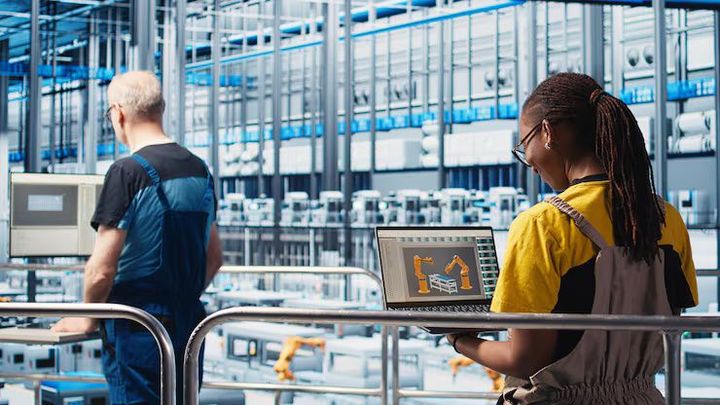
Smart factory equipment refers to machines, sensors, software systems, and automated tools that work together to improve manufacturing operations. Unlike traditional factory equipment that often needs constant human monitoring, smart equipment can collect data, analyze conditions, and adjust performance in real time.
The idea of a smart factory comes from the rise of Industry 4.0, a major shift toward digital manufacturing. It exists because factories today face growing pressure to improve productivity, reduce waste, lower downtime, and maintain consistent product quality.
Modern factories use advanced technologies such as:
- Industrial automation systems
- AI-powered predictive maintenance
- Industrial IoT sensors
- Robotics and machine vision
- Cloud manufacturing platforms
- Smart energy management systems
These technologies help factories become more connected and intelligent.
Core Types of Smart Factory Equipment
Different equipment plays different roles inside a smart manufacturing environment.
| Equipment Type | Main Function | Key Benefit |
|---|---|---|
| Industrial Sensors | Monitor temperature, vibration, pressure | Real-time visibility |
| Robotics Systems | Perform repetitive tasks | Higher precision |
| PLC Controllers | Machine control automation | Faster operations |
| Machine Vision Systems | Detect defects | Better quality control |
| Edge Computing Devices | Process data locally | Lower latency |
| Predictive Analytics Software | Forecast failures | Reduced downtime |
This combination creates a digital production ecosystem where machines communicate continuously.
Why Smart Factory Equipment Matters Today
Smart manufacturing has become important because global industries must operate faster and more efficiently than before. Supply chain disruptions, rising energy usage, and quality expectations have increased the need for better factory intelligence.
Smart equipment matters because it helps solve several major industrial challenges.
Reduced Downtime
Unexpected machine failures can interrupt production for hours or days. Predictive maintenance systems use machine learning and sensor data to detect early warning signs before breakdown happens.
Better Production Quality
Machine vision and AI inspection tools can detect tiny defects that human inspection may miss. This improves consistency and reduces rejected products.
Energy Efficiency
Smart energy monitoring systems help factories track power usage across machines. This supports better energy optimization and sustainability goals.
Improved Worker Safety
Sensors and automated safety systems reduce exposure to hazardous environments, especially in heavy manufacturing.
Industries benefiting the most include:
- Automotive manufacturing
- Electronics production
- Pharmaceutical manufacturing
- Food processing
- Packaging plants
- Heavy engineering
Recent Updates and Industry Trends
The smart factory sector has evolved rapidly during the past year.
AI Adoption Accelerated in 2025–2026
Since mid-2025, AI integration in industrial automation has grown significantly. More factories are using generative AI analytics to improve maintenance planning and process optimization.
AI now helps with:
- Failure prediction
- Production scheduling
- Energy forecasting
- Quality analysis
Digital Twins Gaining Popularity (2025)
Digital twin technology became a major trend in 2025. A digital twin is a virtual model of physical equipment or a factory floor.
Factories use digital twins to simulate:
- Equipment behavior
- Production flow
- Energy usage
- Maintenance scenarios
This allows better decision-making without disrupting real production.
Collaborative Robotics Expansion
In 2025 and early 2026, collaborative robots (cobots) saw broader adoption. These robots work alongside human operators and support flexible manufacturing.
Cybersecurity Became a Bigger Priority
As factories become more connected, cybersecurity risks have increased. Industrial cybersecurity tools now play a critical role in protecting operational technology networks from attacks.
Smart Factory Growth Trend
| Year | Estimated Smart Factory Adoption |
|---|---|
| 2023 | 32% |
| 2024 | 41% |
| 2025 | 52% |
| 2026 | 61% |
The trend shows strong global digital transformation across manufacturing sectors.
Laws and Policies Affecting Smart Factory Equipment
Government policies strongly influence smart factory development. Regulations often focus on safety, energy efficiency, digital standards, and industrial modernization.
Industrial Safety Regulations
Factories using automated machinery must follow workplace safety standards. These rules cover:
- Machine guarding
- Emergency shutdown systems
- Electrical protection
- Operator safety zones
Safety compliance becomes even more important when robotics are involved.
Data Protection Rules
Smart factories collect large amounts of machine and operational data. Countries increasingly enforce data governance and cybersecurity requirements.
Key policy areas include:
- Industrial data privacy
- Cloud data protection
- Network security standards
- Cyber incident reporting
Government Manufacturing Programs
Many countries now support industrial digitalization through national initiatives.
Examples include:
- Industry 4.0 modernization programs
- Smart manufacturing incentives
- Clean energy transition plans
- Industrial automation roadmaps
Such programs encourage digital transformation in manufacturing infrastructure.
Environmental Regulations
Environmental policies push factories toward energy-efficient systems and lower emissions. Smart monitoring tools help track resource consumption and waste generation.
Tools and Resources for Smart Factory Learning
Many tools help engineers and businesses understand smart manufacturing systems.
Useful categories include:
Monitoring Dashboards
These dashboards display machine performance, uptime, and energy usage.
Common features:
- Real-time alerts
- Production analytics
- Downtime reports
Predictive Maintenance Platforms
These platforms analyze sensor data and detect anomalies before equipment failure.
Industrial ROI Calculators
These calculators estimate the impact of automation and equipment upgrades based on productivity improvements.
Simulation Templates
Simulation tools model factory layouts and production workflows before implementation.
Training Platforms
Online learning platforms provide courses on:
- Industrial automation
- PLC programming
- Robotics
- IoT architecture
- Industrial AI
These resources help beginners understand smart factory systems without needing advanced engineering knowledge.
Frequently Asked Questions
What is the difference between a traditional factory and a smart factory?
A traditional factory relies heavily on manual monitoring and disconnected machines. A smart factory uses connected equipment, sensors, automation, and analytics for real-time decision-making.
Is smart factory equipment only for large industries?
No. Small and mid-sized manufacturers also adopt smart sensors, automation, and monitoring tools to improve productivity and efficiency.
Does smart equipment replace human workers?
Smart equipment mainly automates repetitive tasks. Human workers still remain important for supervision, decision-making, maintenance, and problem-solving.
What role does AI play in smart factories?
AI analyzes operational data to predict failures, optimize production, improve quality control, and reduce waste.
Why is industrial IoT important?
Industrial IoT connects machines and sensors so they can share data continuously. This creates better visibility and supports automation.
Conclusion
Smart factory equipment represents the future of manufacturing. By combining industrial automation, robotics, AI, machine vision, and IoT, factories can improve productivity, quality, and operational efficiency.
Recent advances such as digital twins, predictive analytics, and industrial cybersecurity are accelerating this transformation. At the same time, safety regulations, data protection rules, and sustainability policies continue shaping how smart factories evolve.