System on Chip in IoT Guide: Key Insights and Practical Applications Explained
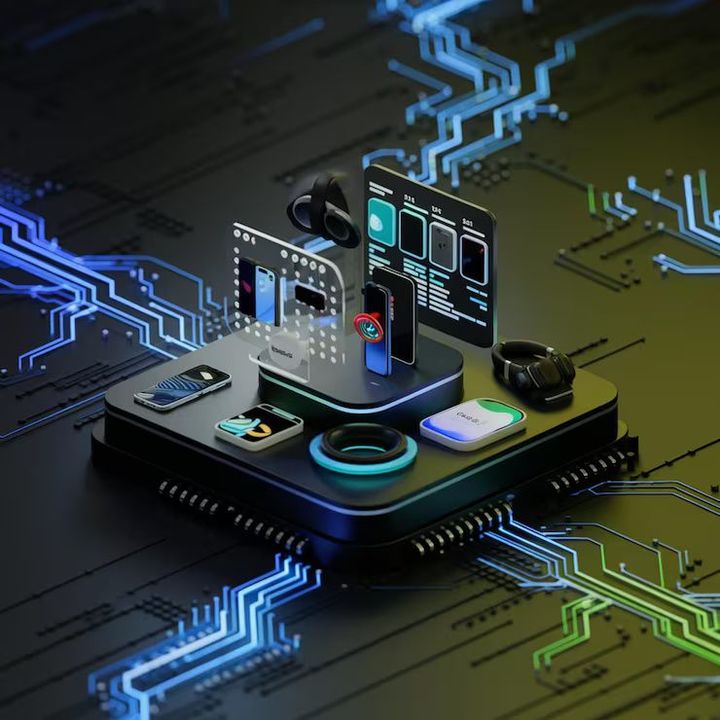
System on Chip (SoC) in IoT refers to an integrated circuit that combines all essential electronic components—such as CPU, memory, input/output interfaces, and communication modules—onto a single chip. This design simplifies hardware architecture and improves efficiency in Internet of Things (IoT) devices.
SoC technology exists to meet the growing need for compact, energy-efficient, and high-performance systems. Traditional hardware required multiple chips for different functions, which increased size, power consumption, and complexity.
With IoT devices becoming smaller and more connected, SoC enables seamless integration while reducing the physical footprint. Simply put, an SoC acts as the “brain” of IoT devices, handling processing, communication, and control within a single unit.
It is particularly useful in applications such as smart homes, wearable devices, industrial automation, and connected vehicles.
Why SoC in IoT Matters Today
The importance of SoC in IoT has grown due to the rapid expansion of connected devices worldwide. Industries adopt IoT solutions to improve efficiency, automate processes, and collect real-time data.
Key Benefits
-
Energy Efficiency
SoCs are designed to consume less power, ideal for battery-operated IoT devices. -
Compact Design
Integration of multiple components reduces device size. -
Cost Optimization
Fewer external components simplify manufacturing. -
Performance Enhancement
Faster data processing and communication improve device functionality. -
Scalability
Suitable for both small consumer devices and large industrial systems.
Industry Applications
- Healthcare: Wearable health monitors and remote patient tracking
- Manufacturing: Smart factories and predictive maintenance
- Agriculture: Sensor-based irrigation and monitoring systems
- Smart Cities: Traffic management, lighting, and environmental monitoring
SoC technology addresses challenges such as high power consumption, hardware complexity, and limited processing capabilities in traditional systems.
Recent Updates and Trends in SoC for IoT (2024–2025)
SoC technology has seen significant advancements driven by demand for smarter and more efficient IoT systems.
Key Trends
-
AI Integration in SoC (2025)
Built-in AI accelerators enable edge computing and local data processing. -
5G-Enabled SoCs (2024–2025)
5G connectivity improves real-time communication and reduces latency. -
Ultra-Low Power Designs (2024)
New architectures extend battery life for wearable and remote devices. -
Security Enhancements (2025)
Hardware-level encryption and secure boot protect against cyber threats. -
RISC-V Adoption (2024–2025)
Open-source processor architecture offers flexibility and customization.
Key Trends Overview Table
| Trend | Description | Impact on IoT |
|---|---|---|
| AI at Edge | Local data processing using AI cores | Faster decision-making |
| 5G Connectivity | High-speed communication | Real-time applications |
| Low Power Consumption | Energy-efficient chip design | Longer device lifespan |
| Enhanced Security | Built-in encryption and authentication | Safer data handling |
| Open Architectures | Flexible chip design (RISC-V) | Custom IoT solutions |
Laws and Policies Affecting SoC in IoT
The deployment of SoC-based IoT devices is influenced by various regulations and policies globally, including India.
Regulatory Considerations
-
Data Protection Laws
Secure handling of user data is required under digital data protection frameworks. -
Telecommunication Standards
Compliance with 5G and spectrum usage rules is necessary. -
Electronics Manufacturing Policies
Government initiatives encourage local semiconductor production. -
Cybersecurity Guidelines
Devices must follow standards to prevent unauthorized access and breaches. -
Environmental Regulations
Electronic waste management and energy efficiency standards impact SoC design.
Example Policy Impact Table
| Policy Area | Requirement | Effect on SoC Design |
|---|---|---|
| Data Privacy | Secure data storage and transfer | Built-in encryption modules |
| Telecom Compliance | Network compatibility | Integrated communication units |
| Manufacturing Support | Local production incentives | Increased domestic innovation |
| Cybersecurity | Protection against threats | Secure boot and firmware |
Tools and Resources for SoC in IoT
Developers use various tools and platforms to design, test, and deploy SoC-based IoT systems efficiently.
Development Platforms
- Arduino IDE
- PlatformIO
- Keil Embedded Development Tools
Simulation and Design Tools
- MATLAB for system modeling
- Proteus for circuit simulation
- Cadence for chip design
IoT Platforms
- AWS IoT Core
- Microsoft Azure IoT
- Google Cloud IoT
Hardware Debugging Tools
- JTAG Debuggers
- Oscilloscopes
- Logic Analyzers
Learning Resources
- Online courses on embedded systems
- Technical documentation from chip manufacturers
- Open-source communities and forums
These resources help developers build efficient, secure, and scalable IoT systems using SoC technology.
FAQs About SoC in IoT
What is the main function of an SoC in IoT devices?
It integrates processing, memory, and communication components into a single chip for efficient operation.
How is SoC different from a microcontroller?
A microcontroller is one component of an SoC. SoCs include additional elements like GPUs, communication modules, and advanced processing units.
Why is SoC important for low-power devices?
SoCs are optimized for energy efficiency, extending operational life in battery-powered devices.
Can SoC support AI applications?
Yes, modern SoCs include AI accelerators for edge computing and real-time data analysis.
Which industries benefit most from SoC in IoT?
Healthcare, manufacturing, agriculture, transportation, and smart city infrastructure benefit significantly.
Conclusion
System on Chip (SoC) technology is central to IoT evolution, enabling compact, energy-efficient, and high-performance devices.
Recent advancements such as AI integration, 5G connectivity, and enhanced security are shaping the future of connected systems. Regulatory frameworks ensure safe and responsible deployment, while development tools and platforms empower developers to create innovative solutions.
Understanding SoC in IoT equips individuals and businesses to leverage emerging technologies for smarter, more efficient applications across industries.