Oil refinery equipment refers to the specialized industrial machinery and processing units used to convert crude oil into usable petroleum products. Crude oil extracted from the earth contains a complex mixture of hydrocarbons that must be separated, treated, and transformed before becoming fuels and industrial materials.
Refineries exist because raw crude oil cannot be used directly in most applications. Through a series of refining processes—such as distillation, cracking, reforming, and treatment—different hydrocarbon components are separated and chemically adjusted to meet performance and safety standards.
Oil refinery equipment forms the backbone of this transformation process. Large industrial systems work together to heat crude oil, separate its components based on boiling points, modify chemical structures, and remove impurities. The result is a range of refined products such as gasoline, diesel, aviation fuel, lubricants, petrochemical feedstocks, and asphalt materials.
Without refinery equipment, the modern energy and transportation systems that rely on petroleum-based products would not function effectively.
Importance: Why Oil Refinery Equipment Matters Today
Oil refinery equipment plays a crucial role in the global energy system. The performance and reliability of refining machinery influence fuel availability, industrial production, and transportation infrastructure.
Key reasons this topic matters today include:
-
Energy supply stability: Refineries convert crude oil into fuels used in transportation and power systems.
-
Industrial production: Petrochemical feedstocks derived from refineries support manufacturing industries.
-
Quality control: Refinery equipment ensures fuels meet environmental and performance specifications.
-
Operational efficiency: Advanced machinery improves yield and reduces waste.
-
Environmental management: Modern equipment helps control emissions and process pollutants.
This topic affects refinery engineers, chemical engineers, energy planners, safety regulators, industrial operators, and environmental specialists. It helps solve challenges related to crude oil variability, product purity, fuel standards, and process safety.
As global energy demand evolves, refinery equipment continues to adapt to handle heavier crude grades, stricter emission standards, and more complex processing requirements.
Recent Updates: Industry Trends and Developments (2024–2025)
Over the past year, the petroleum refining industry has seen notable developments in technology and operational efficiency.
| Year | Development or Trend | Industry Impact |
|---|---|---|
| 2024 | Expansion of digital monitoring systems | Improved process optimization and equipment reliability |
| 2024 | Enhanced catalyst materials | Higher conversion efficiency in cracking units |
| 2025 | Increased energy-efficiency initiatives | Reduced fuel consumption within refineries |
| 2025 | Integration of emission control technologies | Better compliance with environmental regulations |
Recent studies in early 2025 highlighted the growing role of process automation in monitoring temperature, pressure, and flow rates across refining units. These systems support predictive maintenance and improved operational safety.
Another emerging trend is the modernization of older refineries through equipment upgrades designed to process heavier crude oils while maintaining efficiency and environmental compliance.
Laws, Regulations, and Policy Influence
Oil refinery equipment operates within strict regulatory frameworks because refining involves high temperatures, chemical reactions, and environmental considerations.
Key regulatory influences include:
-
Environmental protection regulations governing air emissions, wastewater discharge, and waste management
-
Industrial safety standards addressing high-pressure vessels and hazardous material handling
-
Fuel quality standards that define sulfur limits and performance requirements
-
Energy efficiency policies encouraging improved process design and reduced emissions
In many countries, refinery operations are monitored by national environmental and industrial safety agencies. Regulations often require continuous emission monitoring systems, safety inspections, and documented operational procedures.
These policies aim to protect workers, surrounding communities, and ecosystems while ensuring reliable energy production.
Major Types of Oil Refinery Equipment
Oil refineries consist of interconnected processing units, each designed to perform a specific stage of refining.
Common refinery machinery and units include:
| Equipment Type | Function | Process Stage |
|---|---|---|
| Distillation Columns | Separate crude oil into fractions based on boiling point | Primary separation |
| Heat Exchangers | Transfer heat between process streams | Energy efficiency |
| Catalytic Cracking Units | Break heavy hydrocarbons into lighter products | Conversion |
| Hydroprocessing Reactors | Remove impurities such as sulfur | Treatment |
| Storage Tanks | Store crude oil and refined products | Product handling |
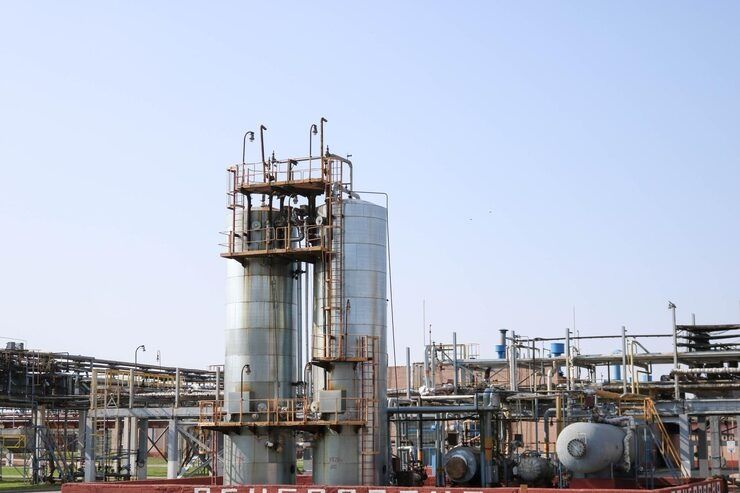
Distillation units are typically the first major stage of refining. Heated crude oil enters tall distillation columns where components separate into different layers depending on boiling temperature.
Conversion units, such as catalytic cracking systems, then transform heavier fractions into lighter and more valuable fuels.
Treatment units remove contaminants to ensure products meet environmental and performance standards.
Refining Processes: How Equipment Works Together
Oil refinery equipment operates in a sequence of processes that gradually transform crude oil into usable products.
Primary refining stages include:
-
Crude Distillation
Heated crude oil enters a distillation column where it separates into fractions such as gases, gasoline components, kerosene, diesel, and heavier residues. -
Conversion Processes
Heavy fractions undergo chemical changes through cracking or reforming processes to produce lighter fuels. -
Treatment and Purification
Chemical treatment removes sulfur, nitrogen compounds, and other impurities. -
Blending and Storage
Final products are blended to meet specific performance standards before storage and distribution.
These stages rely on coordinated operation of pumps, reactors, heat exchangers, compressors, and monitoring instruments.
Tools and Resources for Understanding Refinery Systems
Learning about oil refinery equipment is supported by technical resources and engineering references.
Helpful educational resources include:
-
Chemical engineering textbooks on petroleum refining
-
Industrial process design manuals
-
Energy industry research publications
-
Environmental engineering reports on refinery emissions
-
Engineering society technical papers
Practical reference tools:
-
Process flow diagrams (PFDs) for refinery units
-
Pressure and temperature monitoring charts
-
Catalyst performance data tables
-
Equipment maintenance inspection checklists
-
Energy efficiency calculation templates
These tools help engineers and learners understand the relationships between refinery equipment and process performance.
Frequently Asked Questions
What is the primary purpose of oil refinery equipment?
Its main purpose is to convert crude oil into usable petroleum products through controlled heating, separation, and chemical processing.
Why is distillation important in refining?
Distillation separates crude oil into different fractions based on boiling points, which allows further processing into specific fuels.
What role do catalysts play in refinery equipment?
Catalysts accelerate chemical reactions that break down heavy hydrocarbons into lighter fuel components.
Are oil refineries heavily regulated?
Yes. Refineries must comply with strict safety, environmental, and fuel quality regulations.
How is refinery efficiency improved?
Efficiency improvements come from advanced catalysts, better heat recovery systems, and optimized process monitoring.
Conclusion
Oil refinery equipment is a complex network of industrial machinery that transforms crude oil into essential fuels and petrochemical products. Through processes such as distillation, cracking, treatment, and blending, refineries convert raw hydrocarbons into materials that power transportation, manufacturing, and infrastructure.
As technology advances and environmental expectations increase, refinery equipment continues to evolve with improved automation, energy efficiency, and emission control systems. Understanding these machines and processes provides valuable insight into one of the most important sectors of global industrial activity.