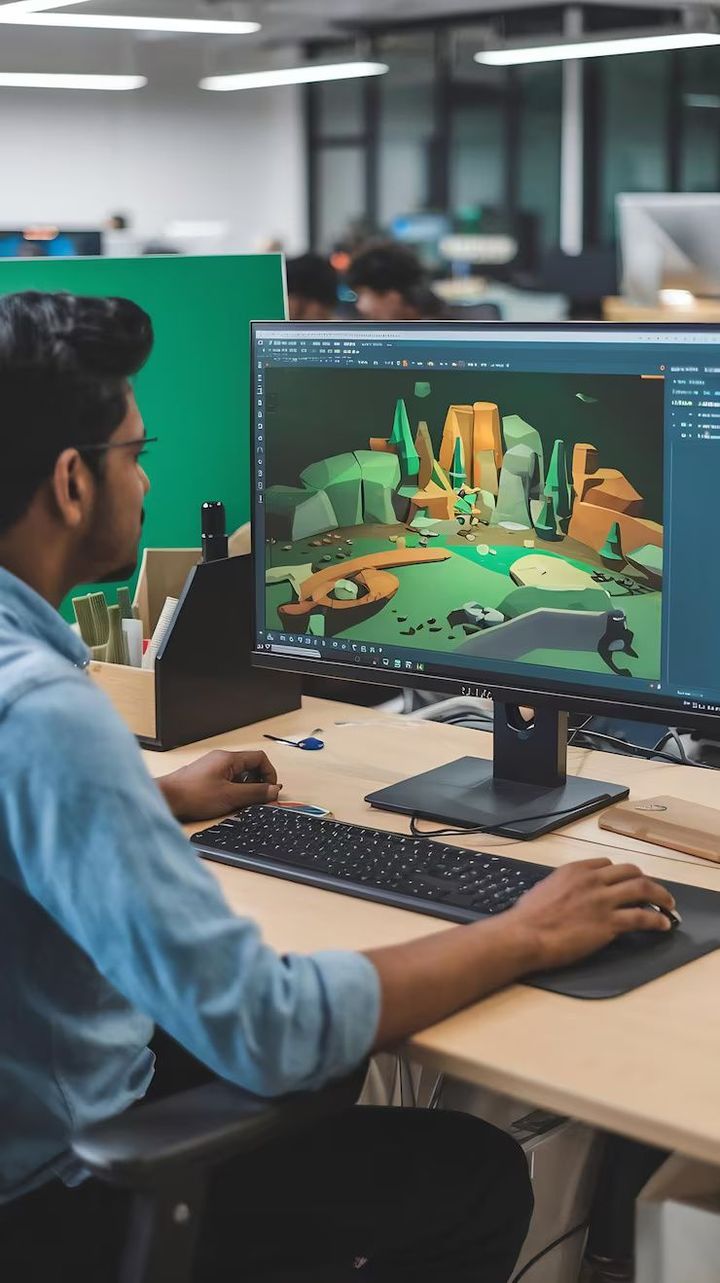
3D Graphics in Game Engines Explore Modern Rendering and Real Time Design
3D graphics in game engines refer to the technologies and techniques used to create three-dimensional visuals in interactive digital environments. These visuals simulate depth, lighting, textures, shadows, and movement to make games appear realistic or stylistically immersive.
Game engines such as Unity and Unreal Engine provide built-in rendering systems that help developers create and manage 3D scenes efficiently. These engines handle complex processes like geometry processing, physics simulation, lighting, animation, and shader execution.
The purpose of 3D graphics technology is to connect artistic design with computer science. Artists build models and environments, while developers ensure these elements render smoothly in real time across devices.
Modern 3D rendering relies heavily on GPUs, advanced shading languages, and optimized pipelines. Technologies like ray tracing, global illumination, and physically based rendering (PBR) have significantly improved realism.
Importance of 3D Graphics Today
3D graphics play a central role across multiple industries, especially gaming and simulation-based applications. They enable immersive experiences and realistic digital environments.
Key Applications
- Virtual reality (VR) and augmented reality (AR)
- Architectural visualization and urban planning
- Medical simulations and training
- Film production and animation
- Automotive and aerospace design
Problems Solved
- Enhancing immersion and realism
- Improving user engagement
- Optimizing performance across platforms
- Supporting cross-platform development
High-performance rendering is critical in multiplayer and competitive gaming, where stable frame rates directly impact gameplay. Developers must balance visual quality with performance, especially for mobile devices and VR systems.
Core Components of 3D Graphics Pipelines
Understanding the rendering pipeline helps developers optimize performance and reduce latency.
| Component | Function | Impact on Performance |
|---|---|---|
| Geometry Processing | Transforms 3D models into screen space | High GPU usage |
| Shaders | Control lighting and surface effects | Moderate to high |
| Lighting Systems | Simulate light interaction | High in real-time |
| Texturing | Adds surface detail | Memory dependent |
| Post-Processing | Applies effects like bloom and motion blur | Moderate |
Each component contributes to how efficiently a scene is rendered and displayed.
Recent Updates in 3D Graphics (2024–2025)
The past year has introduced significant advancements in real-time rendering technologies.
Engine Innovations
- Unreal Engine 5 enhancements such as Nanite (virtualized geometry) and Lumen (dynamic lighting)
- Unity improvements in High Definition Render Pipeline (HDRP) and ray tracing support
Hardware Advancements
- Next-generation GPUs from NVIDIA and AMD with better ray tracing acceleration
- AI-based upscaling technologies like DLSS improving performance and visual quality
Emerging Trends
- Increased adoption of real-time path tracing
- Better GPU optimization for cross-platform development
- Integration of AI-driven rendering techniques
These developments are pushing the boundaries of realism and efficiency in interactive applications.
Laws and Policies Affecting 3D Graphics
While 3D graphics technology itself is not heavily regulated, its applications are influenced by various laws and policies.
Key Regulatory Areas
- Data Protection Laws: Regulations like GDPR affect games that collect user data
- Content Rating Systems: ESRB and similar bodies influence visual content standards
- Export Controls: May apply to advanced simulation and rendering technologies
- Accessibility Standards: Require inclusive visual design and interface adjustments
Developers must ensure compliance when designing graphics systems, especially for global distribution.
Tools and Resources for Development
A wide range of tools supports 3D graphics creation and optimization.
Game Engines
- Unity
- Unreal Engine
3D Modeling Software
- Blender
- Autodesk Maya
Graphics APIs
- OpenGL
- DirectX
- Vulkan
Performance Tools
- GPU profiling tools
- Frame debuggers
- RenderDoc
Learning Resources
- Official engine documentation
- Computer graphics courses
- Open-source shader libraries
- Developer forums and whitepapers
These tools enable efficient workflows from modeling to final rendering.
Common Rendering Techniques
Different rendering techniques are used depending on performance and realism requirements.
| Technique | Description | Typical Use Case |
|---|---|---|
| Rasterization | Fast conversion of 3D to 2D images | Real-time games |
| Ray Tracing | Simulates realistic light behavior | High-end systems |
| Path Tracing | Advanced ray tracing for realism | Cinematic visuals |
| Global Illumination | Simulates indirect lighting | Realistic environments |
Rasterization remains widely used due to speed, while ray tracing adoption continues to grow.
Frequently Asked Questions
What is the difference between a game engine and a graphics engine?
A game engine includes multiple systems like physics and networking, while a graphics engine focuses only on rendering visuals.
What is ray tracing in games?
Ray tracing simulates how light interacts with objects to create realistic reflections, shadows, and lighting.
Why is GPU performance important?
GPUs handle parallel processing required for rendering, directly affecting frame rate and visual quality.
Are 3D graphics only used in gaming?
No. They are also used in film, architecture, engineering, VR, and medical simulations.
What skills are needed for 3D graphics development?
Knowledge of mathematics, programming, shaders, and design principles is important.
Conclusion
3D graphics in game engines combine artistic creativity with advanced computational techniques. They power immersive environments across gaming, simulation, and interactive media industries.
Recent advancements in ray tracing, AI-driven rendering, and real-time lighting continue to improve realism and efficiency. At the same time, developers must consider performance constraints, legal requirements, and accessibility standards.
Understanding rendering pipelines, graphics APIs, and modern engine capabilities provides a strong foundation for working in this field. As technology evolves, 3D graphics will remain a key driver of innovation in digital experiences.