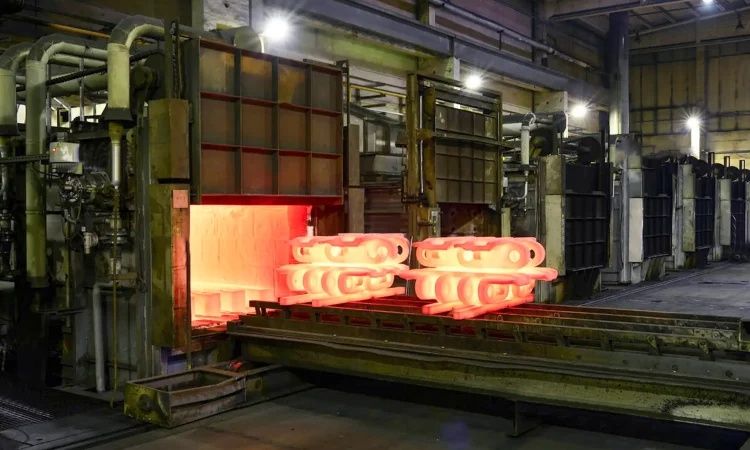
Industrial furnaces are large-scale heating systems designed to process materials at extremely high temperatures. They are used across manufacturing, metallurgy, ceramics, petrochemicals, and energy sectors. The purpose is to alter the physical or chemical properties of substances such as metals, glass, and minerals.
Unlike household heating systems, industrial furnaces operate under controlled conditions to achieve precise temperature regulation, uniform heating, and energy efficiency. They are critical in processes like smelting, annealing, hardening, refining, and calcination. These systems exist because industries require reliable and scalable heating solutions that can support continuous production and ensure product quality.
Why Industrial Furnaces Matter
The importance of industrial furnaces extends to several areas of modern life. They support the global supply chain by enabling the production of essential goods such as steel for construction, glass for electronics, and ceramics for healthcare equipment.
Key reasons they matter include:
-
Material transformation – Furnaces make it possible to harden, melt, or purify raw materials.
-
Energy efficiency – Advanced designs reduce fuel usage and greenhouse gas emissions.
-
Innovation support – New technologies like aerospace alloys and renewable energy materials depend on furnace-based production.
-
Economic relevance – Industries like automotive, power generation, and electronics rely on furnace-based processes to remain competitive.
Industrial furnaces also address environmental challenges. Modern systems integrate waste heat recovery, low-emission burners, and digital monitoring to align with sustainability goals. This makes them a key part of the transition to greener industrial practices.
Recent Updates and Developments
In the past year, there have been notable developments in furnace design and operation. In 2024, manufacturers increasingly focused on hydrogen-based heating systems as a replacement for natural gas, aiming to cut carbon emissions. Pilot projects in Europe and Asia have shown promising results, particularly in steelmaking.
Digitalization has also gained momentum. By mid-2024, many industrial operators adopted AI-driven monitoring and IoT-enabled sensors to predict equipment failures and optimize energy usage. This shift reduces downtime and improves safety.
Another significant update relates to thermal efficiency improvements. Research published in March 2024 highlighted advances in ceramic fiber insulation materials, which lower heat loss and extend furnace lifespan. Industries are also exploring hybrid designs that combine electric heating with conventional fuel-based systems for better flexibility.
Laws, Standards, and Regulations
Industrial furnaces are governed by strict regulations, as they involve high energy consumption and environmental impact. Different countries and regions apply their own policies, but some common themes exist.
-
Environmental compliance – Agencies such as the U.S. Environmental Protection Agency (EPA) and the European Environment Agency (EEA) require furnaces to meet emission standards for nitrogen oxides, carbon dioxide, and particulate matter.
-
Energy efficiency programs – Governments often promote efficiency through incentives or mandatory reporting. For example, the European Union’s Energy Efficiency Directive outlines requirements for large-scale industrial heating systems.
-
Workplace safety laws – Occupational safety standards ensure operators are trained and facilities meet thermal protection and fire safety requirements.
-
Material-specific regulations – Industries such as food processing or pharmaceuticals must follow specialized heating standards to ensure product safety and compliance.
These regulations encourage industries to invest in more efficient and environmentally responsible technologies, pushing innovation forward.
Tools and Resources for Learning
Several tools and resources are available for those interested in exploring industrial furnaces in more detail:
-
Thermodynamic calculators – Online tools that help estimate energy consumption, heat loss, and efficiency.
-
Industry associations – The Industrial Heating Equipment Association (IHEA) publishes guides, standards, and educational resources.
-
Simulation software – Programs like ANSYS or COMSOL assist engineers in modeling heat transfer and optimizing furnace design.
-
Research portals – Academic journals such as the Journal of Thermal Science and Metallurgical and Materials Transactions provide technical studies.
-
Government websites – Agencies like the U.S. Department of Energy and the International Energy Agency offer data, reports, and policy updates.
These resources help professionals, students, and researchers deepen their understanding of furnace operations and keep track of industry trends.
Frequently Asked Questions
What is the difference between a furnace and a kiln?
A furnace is generally used in industrial metal and energy processes, while a kiln is primarily used in ceramics, glass, and some chemical processes. Furnaces typically operate at higher capacities and broader temperature ranges.
Which industries depend most on industrial furnaces?
Key sectors include steel and metallurgy, cement production, glass manufacturing, petrochemicals, and energy. These industries rely on furnaces for large-scale heating and transformation processes.
How do modern furnaces reduce environmental impact?
New designs use cleaner fuels, waste heat recovery, and digital controls to lower emissions and energy consumption. Some industries are also testing hydrogen or electricity-based systems.
Are industrial furnaces only fuel-based?
No. While many still use natural gas or oil, electric arc furnaces and hybrid systems are increasingly common, especially in recycling and specialty material production.
What safety measures are necessary in furnace operation?
Safety protocols include protective equipment, heat-resistant materials, automated monitoring systems, and compliance with workplace safety standards to prevent accidents and injuries.
Conclusion
Industrial furnaces are central to global industry, shaping the materials and products that define modern life. Their role is not only technological but also environmental and economic. As industries aim for greater efficiency and reduced emissions, innovations in design, fuel use, and digital monitoring are reshaping how furnaces operate.
Understanding industrial furnaces provides insight into the backbone of manufacturing, energy, and infrastructure. With continued research, regulations, and digital transformation, these systems are evolving into safer, smarter, and more sustainable solutions for the future.