A Simple Guide to Proximity Sensors in Modern Machines
Proximity sensors are small but important devices used in many everyday machines and systems. Their main role is to detect the presence of an object without needing physical contact. In simple terms, a proximity sensor can “notice” when something comes close and then send a signal so a machine or system can respond.
These sensors are now common in homes, vehicles, factories, smartphones, and public spaces. You may use them without realizing it. For example, a phone screen that turns off when held near your ear, an automatic door that opens as you approach, or a parking system that warns a driver about nearby obstacles all rely on some form of proximity sensing.
Because they work without direct contact, proximity sensors help reduce wear and tear, improve safety, and support automation. They also help machines react faster and more consistently than manual monitoring in many situations. As industries continue to automate routine tasks, the role of these sensors keeps growing.
This guide explains what proximity sensors are, how they work, the main types available, where they are used, and what factors matter when choosing one for a machine or system.

What Is a Proximity Sensor?
A proximity sensor is an electronic sensor designed to detect the presence, movement, or distance of an object when it comes within a certain range. Unlike a push button or mechanical switch, it does not need to touch the object to know it is there.
When an object enters the sensor’s detection area, the sensor produces an electrical signal. That signal can trigger an action such as stopping a machine, opening a gate, turning on a light, counting items on a conveyor, or sending a warning.
Proximity sensors are especially useful in situations where physical contact would be difficult, unsafe, or damaging. For example, in dusty industrial settings, high-speed production lines, or applications involving fragile materials, non-contact detection is often more practical than mechanical switching.
How Does a Proximity Sensor Work?
The exact working method depends on the sensor type, but the basic idea is similar across most models. A proximity sensor creates or monitors a field—such as an electromagnetic, electric, light, or sound field—and watches for changes caused by a nearby object.
Here is a simple step-by-step view of how it works:
- The sensor creates a detection zone in front of it.
- An object enters that zone.
- The object changes the sensor’s field or reflects a signal to it.
- The sensor detects that change.
- It sends an output signal to a control system or machine.
That signal can then be used for different tasks, such as starting a motor, pausing a conveyor, counting products, or activating an alarm.
Main Types of Proximity Sensors
There are several types of proximity sensors, and each works in a slightly different way. The right choice depends on the material being detected, the sensing distance, and the environment.
Inductive Proximity Sensors
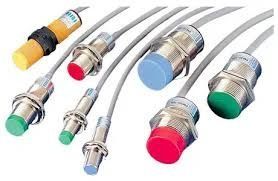
Inductive sensors are mainly used to detect metal objects. They create an electromagnetic field in front of the sensor. When a metal object enters that field, the field changes, and the sensor detects it.
These sensors are common in manufacturing equipment, metalworking machines, and automated assembly lines. They are valued for their reliability in harsh environments and their ability to detect metal parts without touching them.
Common uses:
- Detecting metal components on conveyors
- Position sensing in industrial machinery
- Counting metal items during production
Capacitive Proximity Sensors
Capacitive sensors can detect both metallic and non-metallic objects. They work by sensing changes in capacitance when an object enters the detection zone. This makes them useful for detecting materials such as plastic, glass, wood, powder, grain, and liquids.
Because of this flexibility, capacitive sensors are often used in packaging, food handling systems, and level detection in containers.
Common uses:
- Detecting plastic or glass containers
- Monitoring fill levels in tanks or bins
- Sensing paper, powder, or granules
Photoelectric Proximity Sensors
Photoelectric sensors use light to detect objects. A beam of light is sent from the sensor, and the sensor checks whether that light is reflected or interrupted by an object.
These sensors are useful when longer sensing distances are needed. They are common in packaging lines, automatic doors, object counting systems, and warehouse equipment.
Common uses:
- Detecting products moving on a conveyor
- Opening doors automatically
- Counting boxes or packages
Ultrasonic Proximity Sensors
Ultrasonic sensors use sound waves instead of light or electromagnetic fields. They send out high-frequency sound waves and measure how long it takes for the sound to bounce back after hitting an object.
This makes them useful for measuring distance and detecting objects regardless of color or transparency. They are often used in vehicles, water level systems, and industrial automation.
Common uses:
- Vehicle parking assistance
- Liquid level monitoring
- Detecting objects at variable distances
Magnetic Proximity Sensors
Magnetic sensors detect the presence of a magnetic field. They are often paired with a magnet attached to a moving part, such as a door or machine component. When the magnet comes close to the sensor, it triggers a response.
These sensors are often found in security systems, door position detection, and equipment monitoring.
Common uses:
- Door and window status detection
- Machine position monitoring
- Safety interlock systems
Where Proximity Sensors Are Used
Proximity sensors are found in many sectors because they support non-contact detection, automation, and safety.
Industrial Machinery
Factories use proximity sensors to monitor machine positions, detect materials, count parts, and improve production line control. They help reduce manual checking and allow systems to respond quickly when materials move into place.
Automotive Systems
Vehicles use proximity sensors in parking support, obstacle detection, door systems, and manufacturing processes. In vehicle assembly plants, sensors help track parts and guide automated equipment.
Consumer Electronics
Smartphones and tablets often use proximity sensors to detect when the device is near the user’s face. This can turn off the screen during a call and help save battery power.
Building and Home Systems
Automatic doors, smart lighting systems, and security devices may all use proximity sensing. A sensor can detect when a person approaches and trigger the appropriate action.
Packaging and Material Handling
Warehouses and packaging lines use sensors to detect boxes, bottles, labels, and other items moving through the system. This helps maintain flow and supports automated counting and sorting.
Advantages of Proximity Sensors
Proximity sensors are widely used because they provide several practical benefits.
Non-Contact Operation
Since they do not need to touch the object, there is less physical wear compared with mechanical switches. This can help reduce maintenance needs over time.
Fast Response
Many proximity sensors react quickly, making them suitable for high-speed machines and moving production lines.
Reliable Detection
When matched correctly to the application, these sensors can detect objects consistently and support stable machine performance.
Support for Automation
Proximity sensors are a key part of automation because they allow machines to sense their environment and respond without human intervention.
Better Safety
They can help stop machinery, detect obstacles, or monitor access points, which can support safer operations in industrial and public environments.
Limitations to Keep in Mind
Although proximity sensors are useful, they are not all suited to the same tasks.
- Material limitations: Some sensor types only detect certain materials well.
- Range limits: Detection distance can vary significantly between sensor types.
- Environmental effects: Dust, moisture, heat, and vibration may affect performance if the wrong sensor is used.
- Mounting position matters: Poor placement can reduce accuracy or cause false readings.
For this reason, sensor selection should match the object type, environment, and machine requirements.
What to Consider When Choosing a Proximity Sensor
When selecting a proximity sensor for a machine or system, several factors should be reviewed.
Object Material
Is the target object metal, plastic, glass, liquid, wood, or something else? This affects whether an inductive, capacitive, photoelectric, ultrasonic, or magnetic sensor is suitable.
Sensing Distance
Different applications need different detection ranges. A sensor for a small machine part may only need a short range, while a warehouse application may need a longer one.
Environment
Dust, water, oil, heat, vibration, and outdoor exposure can all influence performance. The sensor should be designed for the actual working conditions.
Output Type
The sensor must be compatible with the machine’s control system or PLC. Output type, voltage, and wiring configuration all matter.
Mounting Space
The available installation space may affect sensor size, shape, and orientation.
Final Thoughts
Proximity sensors may seem like small components, but they play a major role in modern machines, devices, and automated systems. Their ability to detect objects without contact makes them useful in manufacturing, transportation, electronics, buildings, and many other environments.
Understanding the different types—inductive, capacitive, photoelectric, ultrasonic, and magnetic—makes it easier to see why no single sensor fits every situation. Each type has strengths, limitations, and ideal applications.
For general users, the key idea is simple: proximity sensors help machines notice nearby objects and react in a controlled way. That function supports convenience, efficiency, and safety in many parts of daily life and industry. As automation continues to expand, proximity sensors will remain an important part of how machines interact with the world around them.