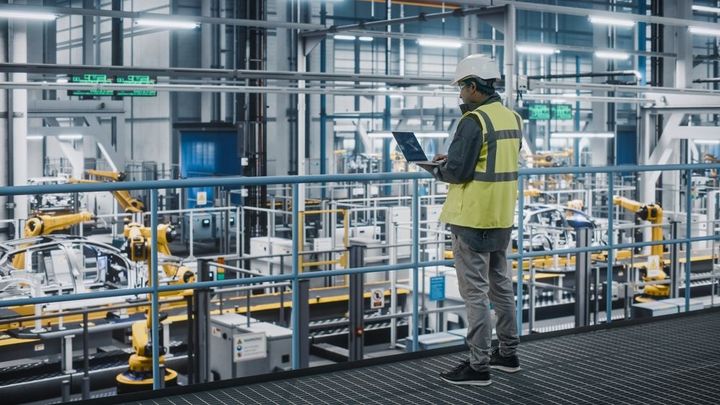
What You Should Know About Warehouse Management and Modern Logistics
Efficient warehousing is a fundamental component of modern supply chains. As businesses handle increasing volumes of inventory and customer expectations continue to rise, effective Warehouse Management has become essential for maintaining operational efficiency, inventory accuracy, and timely order fulfillment.
From manufacturing facilities and retail distribution centers to e-commerce operations and third-party logistics providers, warehouse management plays a critical role in supporting the movement of goods from suppliers to customers.

Today's warehouse operations rely on advanced technologies such as automation, cloud-based software, barcode scanning, robotics, artificial intelligence, and real-time inventory tracking. Understanding warehouse management can help organizations improve productivity, reduce operational inefficiencies, and strengthen overall supply chain performance.
Note: Warehouse processes, technologies, regulations, and operational requirements vary by industry, facility size, and geographic location. This article is intended for general educational purposes only.
What Is Warehouse Management?
Warehouse Management refers to the processes, strategies, and technologies used to control and optimize the storage, movement, tracking, and distribution of inventory within a warehouse or distribution center.
Warehouse management involves coordinating multiple activities, including:
Receiving inventory
Inventory storage
Stock tracking
Order processing
Picking and packing
Shipping operations
Returns management
Inventory reporting
The goal is to ensure products move efficiently through the facility while maintaining accurate inventory records.
Why Warehouse Management Matters
Effective warehouse operations support the broader supply chain.
Potential benefits include:
Improved inventory accuracy
Faster order fulfillment
Better space utilization
Reduced operational delays
Enhanced inventory visibility
Improved customer satisfaction
Better labor productivity
More efficient logistics coordination
Results depend on operational processes, technology adoption, and workforce management.
Core Functions of Warehouse Management
Modern warehouses perform several essential functions.
Inventory Receiving
Incoming goods are inspected, verified, and entered into inventory management systems.
Storage Management
Products are stored in designated locations to maximize space utilization and accessibility.
Inventory Tracking
Real-time tracking technologies help monitor inventory levels and movement throughout the facility.
Order Fulfillment
Warehouse teams pick, pack, and prepare customer orders for shipment.
Shipping Coordination
Finished orders are organized and dispatched through transportation networks.
Returns Processing
Returned products are inspected, restocked, repaired, or processed according to company procedures.
Warehouse Management Systems (WMS)
Many organizations use specialized software to improve warehouse operations.
A Warehouse Management System (WMS) may provide:
Real-time inventory visibility
Barcode scanning support
Automated task management
Order tracking
Workforce performance monitoring
Reporting and analytics
Integration with transportation systems
Supply chain data sharing
WMS platforms help improve operational control and decision-making.
Technologies Transforming Modern Warehouses
Digital transformation continues to reshape warehousing operations.
Barcode and RFID Tracking
Enable faster inventory identification and improved accuracy.
Warehouse Automation
Automated systems assist with material movement and repetitive tasks.
Robotics
Robotic technologies support picking, sorting, and transportation activities.
Artificial Intelligence
AI helps optimize inventory placement, forecasting, and workflow management.
Internet of Things (IoT)
Connected devices provide real-time operational visibility and monitoring.
Cloud Computing
Cloud-based systems improve accessibility and data integration.
These technologies support more efficient and scalable warehouse operations.
Industries That Rely on Warehouse Management
Warehouse management supports a wide range of industries.
Examples include:
Retail
E-commerce
Manufacturing
Healthcare
Food and beverage
Automotive
Consumer goods
Third-party logistics (3PL)
Each sector has unique storage, compliance, and distribution requirements.
Warehouse Management Overview
| Function | Primary Purpose |
|---|---|
| Receiving | Verify incoming inventory |
| Storage | Organize inventory efficiently |
| Tracking | Maintain inventory visibility |
| Order Fulfillment | Process customer orders |
| Shipping | Coordinate product delivery |
| Returns Management | Handle returned inventory |
Best Practices for Efficient Warehouse Operations
Successful warehouse management requires continuous improvement.
Helpful recommendations include:
Maintain accurate inventory records.
Optimize warehouse layouts regularly.
Use barcode or RFID tracking systems.
Monitor key performance indicators (KPIs).
Train employees consistently.
Implement safety procedures throughout the facility.
Conduct regular inventory audits.
Leverage automation where appropriate.
These practices help improve efficiency and reduce operational errors.
Current Trends in Warehouse Management
Warehousing continues to evolve through technological innovation.
Recent developments include:
Artificial intelligence-powered inventory optimization
Autonomous mobile robots (AMRs)
Predictive analytics for demand forecasting
Smart warehouse systems
Digital twin technology
Real-time inventory visibility platforms
Sustainable warehouse operations
Cloud-based logistics management
These advancements support greater flexibility, efficiency, and scalability.
Looking Ahead
The future of Warehouse Management is expected to include increased automation, AI-driven decision-making, advanced robotics, and greater integration with end-to-end supply chain platforms. As logistics networks become more complex, warehouses will continue to serve as critical hubs that support inventory management, order fulfillment, and customer service.
Why Understanding Warehouse Management Matters
Understanding Warehouse Management helps organizations evaluate strategies and technologies that improve inventory control, operational efficiency, and logistics performance. Well-managed warehouses contribute to stronger supply chain resilience and support business growth in increasingly competitive markets.
Conclusion
Warehouse Management is a vital function within modern supply chains, helping businesses control inventory, fulfill orders efficiently, and maintain operational visibility. Through the use of warehouse management systems, automation, robotics, and data-driven decision-making, organizations can improve productivity while supporting customer expectations. As technology continues to advance, warehouse management will remain a cornerstone of effective logistics and supply chain operations.