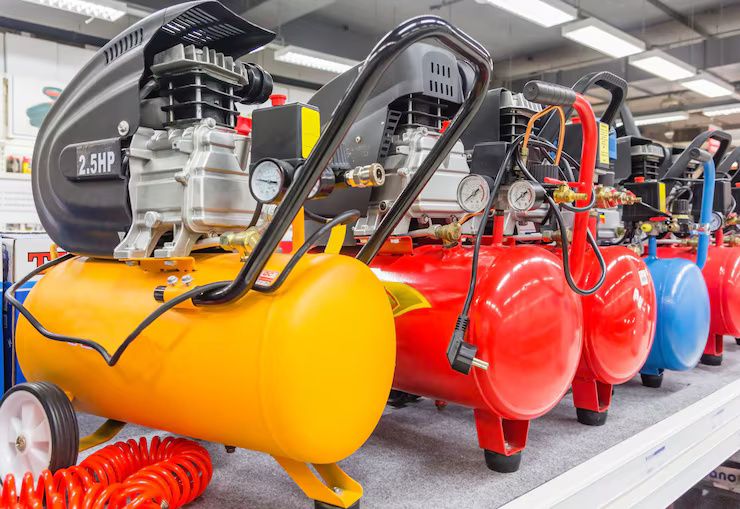
Air compressors are machines designed to increase the pressure of air and store it for later use. The idea is simple: draw in atmospheric air, compress it into a smaller volume, and release it when power is needed. This concept exists because compressed air is a convenient and flexible way to transmit energy without electricity at the point of use.
Compressed air systems appear in manufacturing plants, workshops, healthcare facilities, construction sites, and even in household tools. Instead of relying on direct electrical connections everywhere, systems use pressurized air to run equipment such as pneumatic tools, control valves, and automated machinery.
At its core, an air compressor system converts mechanical energy into potential energy stored in pressurized air. When released, this stored energy performs work. This makes compressed air systems an essential part of modern industrial infrastructure.
Importance
Compressed air systems matter because they support productivity, safety, and operational continuity across many sectors. Their importance has grown as automation, precision manufacturing, and energy efficiency have become priorities.
Key reasons air compressors remain relevant today include:
-
Reliable power source for pneumatic equipment
-
Safe operation in environments where electrical sparks are risky
-
Support for continuous production processes
-
Compatibility with automation and control systems
-
Wide adaptability across industries
Industries such as manufacturing, food processing, pharmaceuticals, automotive, and construction depend heavily on compressed air. In healthcare, compressed air supports ventilation systems and medical equipment. In agriculture, it helps with spraying, irrigation controls, and machinery operation.
Problems that compressed air systems help solve include:
-
Power delivery in remote or confined spaces
-
Consistent tool performance without overheating
-
Reduced risk in explosive or dusty environments
-
Flexible energy distribution across large facilities
Because of these advantages, air compressor technology continues to be refined rather than replaced.
Recent Updates
Over the past year, compressed air systems have seen steady technical improvements focused on efficiency, monitoring, and environmental impact.
Energy efficiency improvements (2025)
Manufacturers have introduced improved variable speed drive (VSD) compressors. These models automatically adjust output to match air demand, reducing energy waste during low-load periods.
Digital monitoring and predictive maintenance (2024–2025)
Smart sensors and cloud-based dashboards are now more common. These systems track pressure, temperature, airflow, and moisture levels in real time. Predictive alerts help prevent downtime by identifying issues early.
Oil-free compression advancements (2024)
Oil-free air compressors have gained attention in industries requiring clean air, such as food processing and electronics. New designs improve durability and reduce contamination risks.
Heat recovery integration (2025)
Modern systems increasingly capture waste heat from compressors and reuse it for space heating or process water, improving overall energy utilization.
These updates reflect a broader trend toward sustainability, operational transparency, and system optimization.
Laws or Policies
Compressed air systems are influenced by safety, energy, and environmental regulations. In many countries, standards ensure safe operation and efficient use of pressurized equipment.
Common regulatory themes include:
-
Pressure vessel safety rules
-
Workplace safety and noise limits
-
Energy efficiency guidelines
-
Air quality and emissions compliance
International standards from International Organization for Standardization define technical benchmarks for compressor performance, testing, and safety. In industrial environments, workplace safety frameworks often reference compressed air handling practices to reduce injury risks.
In countries such as India, the United States, and members of the European Union, pressure equipment directives and factory safety regulations guide inspection intervals, pressure limits, and maintenance documentation.
Energy-focused programs encourage the adoption of efficient systems and regular audits to reduce power consumption associated with compressed air generation.
Tools and Resources
Several tools and resources help users understand, monitor, and improve compressed air systems.
Helpful options include:
-
Compressed air calculators
-
Estimate airflow requirements (CFM or m³/min)
-
Compare system pressure needs
-
Analyze energy consumption patterns
-
-
Energy audit frameworks
-
Identify air leaks and pressure drops
-
Evaluate system sizing accuracy
-
Support efficiency benchmarking
-
-
Monitoring dashboards
-
Track real-time pressure and flow
-
Log temperature and moisture data
-
Generate maintenance alerts
-
-
Technical reference guides
-
Compressor selection charts
-
Pneumatic system design manuals
-
Maintenance checklists
-
These resources support better planning, operation, and long-term reliability of compressed air systems.
Key Components of a Compressed Air System
Understanding how compressed air systems work starts with knowing their main components.
| Component | Function |
|---|---|
| Air Intake Filter | Removes dust and particles from incoming air |
| Compressor Element | Increases air pressure |
| Electric Motor | Provides mechanical energy |
| Air Receiver Tank | Stores compressed air |
| Dryer | Removes moisture |
| Filters | Improve air quality |
| Distribution Piping | Delivers air to end points |
Each component plays a role in ensuring consistent pressure, clean air, and safe operation.
How Compressed Air Systems Work
The working process can be explained step by step:
-
Ambient air enters through an intake filter
-
The compressor element reduces air volume, raising pressure
-
Pressurized air flows into a receiver tank
-
Moisture and contaminants are removed through dryers and filters
-
Air travels through piping to tools and equipment
Different compressor types use different compression methods:
| Compressor Type | Working Principle |
|---|---|
| Reciprocating | Uses pistons to compress air |
| Rotary Screw | Uses rotating screws for continuous compression |
| Centrifugal | Uses high-speed impellers |
Each type suits different pressure ranges and airflow requirements.
FAQs
What is compressed air used for?
Compressed air powers tools, controls automation systems, supports cleaning processes, and assists in material handling across many industries.
How is air pressure measured in compressors?
Pressure is commonly measured in PSI (pounds per square inch) or bar, indicating how tightly air molecules are packed.
Why is moisture removal important in compressed air systems?
Moisture can cause corrosion, equipment damage, and reduced efficiency. Dryers and filters protect system components.
What affects compressed air efficiency the most?
System leaks, incorrect pressure settings, poor maintenance, and oversized equipment have the greatest impact on efficiency.
How long do air compressors typically last?
With proper maintenance, industrial air compressors can operate reliably for many years, depending on usage conditions and design.
Conclusion
Compressed air systems are a foundational technology that quietly supports modern industry and infrastructure. By converting mechanical energy into stored air pressure, air compressors provide a flexible and reliable way to deliver power where it is needed.
Recent developments emphasize efficiency, digital monitoring, and environmental responsibility, making compressed air systems smarter and more sustainable than before. Regulations and standards guide safe operation, while tools and resources help users understand and optimize system performance.
A clear understanding of how compressed air systems work helps organizations and individuals make informed decisions about operation, maintenance, and energy use. As industries continue to evolve, compressed air will remain a practical and adaptable solution for many applications.