Aluminum Panels Overview: Uses, Designs and Materials
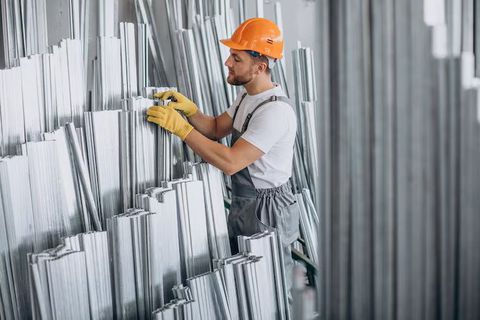
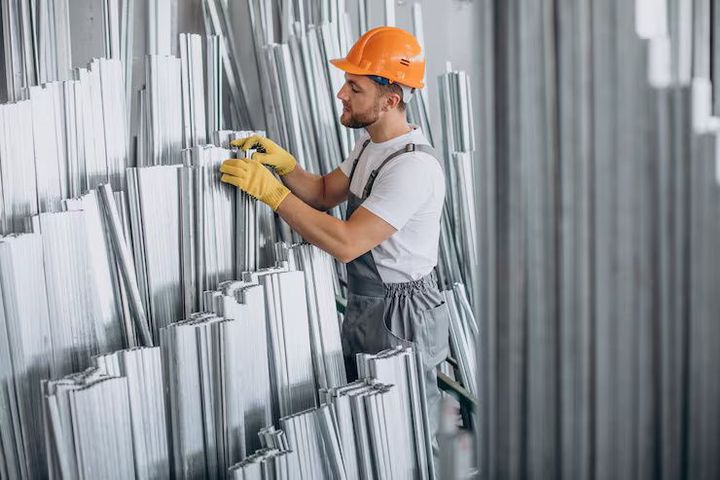
Aluminum panels are lightweight building and design materials used for exterior facades, interior walls, ceilings, partitions, signage, and other architectural applications.
They can be produced as solid aluminum sheets, composite panels, perforated panels, or shaped systems, depending on the required appearance and performance.
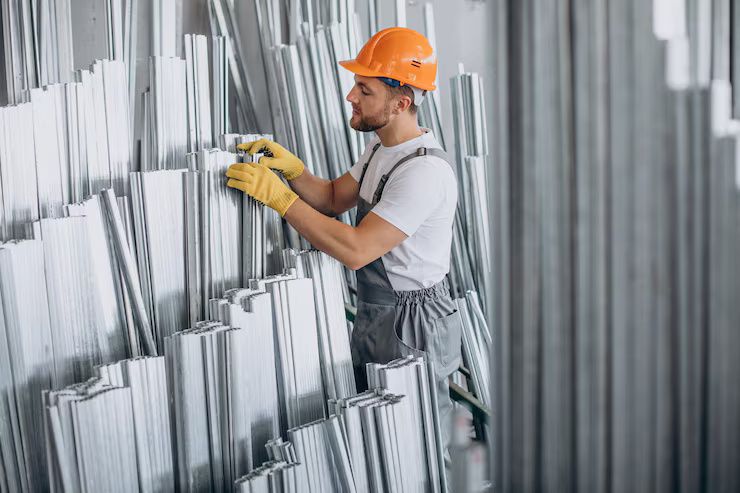
An aluminum panels overview helps explain the different materials, designs, applications, and technical considerations involved in selecting panels. Their relatively low weight, corrosion resistance, formability, and recyclability have made aluminum an important material in modern construction and architectural design.
Context – What Are Aluminum Panels?
Aluminum panels are flat or formed components made primarily from aluminum sheet or aluminum-based composite structures. They may be used as a visible surface layer, a protective exterior covering, or part of a larger wall and facade assembly.
Common aluminum panel types include solid aluminum panels, aluminum composite panels, insulated panels, perforated panels, corrugated panels, and custom-shaped architectural panels. The appropriate type depends on factors such as building location, structural requirements, weather exposure, fire performance, insulation needs, and design objectives.
Aluminum alloys are commonly selected according to the required strength, formability, corrosion resistance, and fabrication method. Panels can also receive finishes such as anodizing, powder coating, or factory-applied protective coatings.
| Panel Type | Main Characteristics | Common Applications |
|---|---|---|
| Solid aluminum | Strong, durable, formable | Facades, walls, roofing |
| Aluminum composite | Multiple layers with a core | Cladding, signage, interiors |
| Perforated aluminum | Open patterns and ventilation | Screens, ceilings, facades |
| Corrugated aluminum | Ribbed or shaped surface | Roofing, walls, industrial buildings |
| Insulated panel | Aluminum skins with insulating core | Building envelopes, controlled spaces |
| Custom formed panel | Fabricated into specific shapes | Architectural features |
The design of aluminum panels can range from simple flat surfaces to complex geometric patterns. CNC cutting, bending, routing, perforation, and other fabrication techniques allow designers to create controlled shapes and repeating patterns.
Importance – Why Aluminum Panels Matter
Aluminum panels affect both the appearance and technical performance of a building envelope. Their lightweight nature can reduce the amount of supporting structure required compared with some heavier facade materials, although the complete wall assembly must still be engineered for wind, seismic, impact, and other applicable loads.
For architects and designers, aluminum provides considerable flexibility in color, texture, shape, and surface pattern. For building owners and occupants, properly designed panels can contribute to weather protection and long-term durability.
The material also has relevance for sustainability. The Aluminum Association notes that aluminum is lightweight, durable, corrosion resistant, and highly recyclable, while some building products can remain in use for many decades.
Important considerations include:
- Fire performance of the complete panel assembly
- Panel thickness and alloy selection
- Wind and structural loading
- Moisture management and drainage
- Thermal movement
- Surface finish and ultraviolet exposure
- Compatibility with adjacent materials
- Inspection and maintenance requirements
Aluminum panels can therefore affect architects, engineers, contractors, building owners, facility managers, and occupants. The correct specification requires consideration of the complete facade system rather than the panel alone.
Recent Updates – Trends and Developments from 2024–2026
From 2024 through 2026, aluminum panel discussions have increasingly focused on fire safety, environmental information, recycled content, and circular construction.
Fire performance has received particular attention for exterior wall systems. In the European Union, Commission Delegated Regulation (EU) 2024/1681 established classes of performance related to resistance to fire for construction products under the earlier Construction Products Regulation framework. In 2026, Commission Delegated Regulation (EU) 2026/557 established fire-resistance performance classes under the newer Regulation (EU) 2024/3110.
The EU also adopted Regulation (EU) 2024/3110 in November 2024. The regulation establishes harmonised rules for construction products and includes environmental and safety performance considerations, including life-cycle assessment.
Another important development is greater attention to recycled aluminum and embodied carbon. The U.S. Environmental Protection Agency's Recycled Content Tool can help evaluate changes in recycled content and estimate associated embodied-carbon effects.
Recycling infrastructure is also developing. The Aluminum Association reported that recycled or secondary aluminum production in the United States reached record levels in 2025, while highlighting improved sorting technologies and increased use of recovered scrap as areas of development.
For aluminum panels, these developments mean that future specifications are increasingly likely to consider both technical performance and documented environmental characteristics.
Laws or Policies – Relevant Rules and Regulations
Rules for aluminum panels vary significantly by country, state, city, building type, and application. There is no single worldwide aluminum panel regulation. Designers should therefore check the building code and fire requirements applicable to the specific project.
In the European Union, Regulation (EU) 2024/3110 establishes harmonised rules for construction products and replaces Regulation (EU) No 305/2011 as the principal framework. It addresses product performance, safety, environmental information, and related obligations.
Fire classification is particularly relevant when aluminum composite panels or other facade systems are used on buildings. The European Commission's 2024 and 2026 delegated regulations provide updated frameworks for declaring fire-related performance of construction products.
In India, fire safety provisions are also relevant to exterior facade materials. A 2025 Bureau of Indian Standards draft document addressing fire safety included provisions concerning aluminum composite panels used as external facades, including requirements relating to mineral-core content and specified fire tests. Because this was a draft document, project teams should verify the current adopted code and applicable local requirements before relying on it.
In general, project teams should review:
- Applicable national and local building codes
- Fire and reaction-to-fire classifications
- Structural and wind-load requirements
- Product testing and technical documentation
- Environmental declarations where required
- Local planning or facade requirements
Tools and Resources – Useful Information Sources
Several technical resources can help people understand aluminum panels and compare material characteristics.
The Aluminum Association provides information about aluminum in building and construction, including environmental product declarations and green-building resources.
The U.S. EPA provides the Recycled Content Tool, which can be used to examine scenarios involving different levels of recycled material and their potential embodied-carbon implications.
For European projects, the European Commission's Construction Products Regulation resources provide information about harmonised construction-product requirements, technical performance, and regulatory developments.
Useful project documentation can include:
- Product technical data sheets
- Fire-test and classification reports
- Environmental Product Declarations
- Material safety documentation
- Installation drawings
- Structural calculations
- Maintenance instructions
These resources should be reviewed alongside the requirements of the project location and the complete wall or facade assembly.
FAQs – Aluminum Panels
What are aluminum panels mainly used for?
Aluminum panels are commonly used for building facades, wall cladding, ceilings, partitions, screens, signage, roofing elements, and architectural features. Their application depends on panel type and technical requirements.
What materials are used in aluminum panels?
Panels may use solid aluminum sheets, aluminum alloys, composite constructions, insulating cores, coatings, and supporting components. Aluminum composite panels generally contain aluminum skins around a central core.
Are aluminum panels suitable for exterior use?
Many aluminum panels are designed for exterior applications because aluminum has useful corrosion-resistance and weathering characteristics. However, suitability depends on the alloy, coating, panel construction, climate, installation method, and required performance.
Why is fire performance important for facade panels?
A facade can include several materials, cavities, insulation layers, joints, and fixing systems. Fire behavior therefore needs to be assessed for the relevant assembly and according to the applicable building regulations rather than assuming that an aluminum surface alone determines overall fire performance.
Can aluminum panels be recycled?
Yes. Aluminum is highly recyclable, and recovered aluminum can be processed into new aluminum products. The Aluminum Association reports that recycling aluminum requires substantially less energy than producing primary aluminum.
Conclusion
Aluminum panels combine lightweight construction, design flexibility, durability, and recyclability, making them useful across many architectural and building applications. Understanding panel types, materials, finishes, structural requirements, fire performance, and environmental information is important when evaluating their suitability.
Recent developments from 2024–2026 show increased attention to fire classification, construction-product regulation, recycled content, and life-cycle information. These trends are encouraging more detailed evaluation of aluminum panels as part of complete building systems.
For any project, specifications should be based on the applicable building code, local fire requirements, structural conditions, and verified technical documentation. Product characteristics should also be considered together with the supporting structure, insulation, fixings, joints, and installation details.
As construction practices continue to emphasize resource efficiency and documented environmental performance, information about recycled content and life-cycle impacts is becoming increasingly relevant. Tools such as environmental product declarations and recycled-content calculators can help provide a more complete picture of material selection.