AR in Manufacturing & Assembly Guide for Smart Factory Workflows
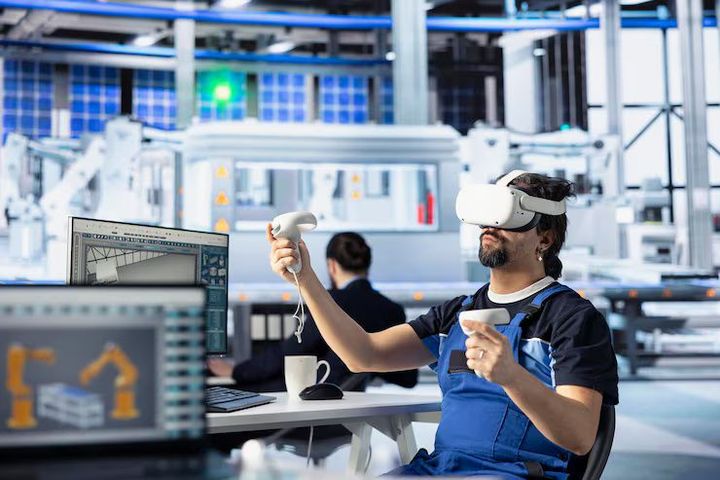
Augmented Reality in Manufacturing refers to the use of digital overlays such as 3D models, instructions, and data projected onto real-world factory environments through smart glasses, tablets, or mobile devices. In assembly operations, AR helps workers visualize step-by-step guidance directly on components and equipment.
Augmented Reality (AR) exists to bridge the gap between digital design and physical production. As factories adopt Industrial Automation and Smart Factory systems, large volumes of data are generated from machines, sensors, and enterprise platforms. AR converts this data into real-time visual instructions that workers can easily understand.
In manufacturing and assembly lines, AR enhances operational efficiency by guiding workers through complex processes. It integrates with CAD software, IoT sensors, and enterprise systems to support Digital Transformation across industries such as automotive, aerospace, electronics, and heavy engineering.
Common Applications of AR in Manufacturing
AR is widely used across multiple stages of manufacturing and assembly, focusing on accuracy, error reduction, and productivity:
- Step-by-step assembly guidance
- Quality inspection and compliance checks
- Equipment maintenance and troubleshooting
- Workforce training and onboarding
- Remote expert collaboration
Why AR in Manufacturing Matters Today
Manufacturing environments are becoming more complex due to advanced components, shorter production cycles, and stricter quality standards. AR addresses these challenges by providing real-time, context-aware guidance.
Key Advantages
- Reduced Human Error: Visual overlays guide workers on part placement, orientation, and torque values
- Enhanced Quality Control: Minimizes rework and improves compliance
- Faster Workforce Training: Interactive instructions accelerate onboarding, especially in regions with skilled labor shortages
- Connected Industrial Automation: Operators can access live machine data, sensor readings, and performance metrics without leaving their workstations
Key Benefits and Business Impact
| Application Area | Operational Benefit | Business Impact |
|---|---|---|
| Assembly Guidance | Step-by-step digital instructions | Reduced errors and faster cycles |
| Quality Inspection | Visual defect comparison | Improved compliance and reporting |
| Maintenance Support | Real-time diagnostics overlay | Lower downtime |
| Workforce Training | Interactive simulations | Faster onboarding |
| Remote Collaboration | Live expert annotation | Quicker issue resolution |
In Smart Factory environments, AR acts as a human-machine interface, complementing automation technologies to improve accuracy, safety, and productivity.
Recent Updates and Industry Trends (2025–2026)
AR adoption in manufacturing has accelerated due to advancements in hardware, cloud computing, and artificial intelligence.
Key Developments
- Support for advanced wearable devices such as Microsoft HoloLens 2 with wider field-of-view and cloud-based rendering
- AI-powered visual recognition to identify components and verify assembly steps in real time
- Integration with digital twin technology to overlay live operational data onto physical equipment
- Increased adoption of cloud-based AR collaboration tools
- Improved battery life and durability of industrial smart glasses
- Expansion of AI-powered defect detection systems
- Stronger cybersecurity protocols for connected devices
Manufacturers are also leveraging analytics dashboards to track improvements in error rates, training time, and production efficiency.
Laws, Regulations, and Policy Considerations
AR implementation in manufacturing must comply with workplace safety, data protection, and industry regulations.
Key Policy Considerations
- ISO standards for Quality Management Systems
- Cybersecurity compliance for connected devices
- Industry-specific certifications (automotive, aerospace)
- Safety audits for wearable technology
In India, AR headsets must not obstruct vision or interfere with protective equipment, and companies must comply with the Digital Personal Data Protection Act, 2023 for data privacy. Global manufacturers must also consider European regulatory frameworks when handling operational or worker-related data.
Tools and Resources for AR in Manufacturing
Various tools and platforms support AR implementation, enabling content creation, system integration, and real-time monitoring.
Commonly Used Tools
- Industrial AR platforms for enterprise deployment
- Digital twin software for virtual modeling
- IoT dashboards for real-time data visualization
- 3D modeling applications for AR asset creation
- Learning Management Systems (LMS) for training modules
Supporting Systems
- Manufacturing Execution Systems (MES)
- Enterprise Resource Planning (ERP) systems
- Cybersecurity monitoring tools
- Safety compliance documentation templates
These tools ensure smooth integration and operation of AR technologies in industrial environments.
Frequently Asked Questions
What is Augmented Reality in Manufacturing?
It refers to digital overlays such as instructions, diagrams, and data projected onto physical equipment during manufacturing processes.
How does AR improve Quality Control?
AR compares real-world components with digital models in real time, helping identify incorrect assembly, missing parts, or alignment issues before final inspection.
Is AR only used in large factories?
No, small and mid-sized manufacturers also use AR for training, maintenance guidance, and workflow optimization.
Does AR replace human workers?
No, AR supports human operators by providing real-time information, improving decision-making, and reducing repetitive errors.
Which industries use AR in assembly operations?
Industries such as automotive, aerospace, electronics, medical devices, and heavy equipment manufacturing commonly use AR technologies.
Conclusion
Augmented Reality in Manufacturing and Assembly is a critical component of Digital Transformation and Industrial Automation. By converting complex data into visual instructions, AR improves workforce efficiency, enhances Quality Control, and supports Smart Factory goals.
Advancements in AI, digital twins, and wearable devices have expanded AR applications, making manufacturing processes more accurate and efficient. AR does not replace workers but enables smarter, safer, and more productive operations aligned with modern industry standards.