Autonomous Drone Technologies Overview: How Smart Drones Work and Their Real Uses
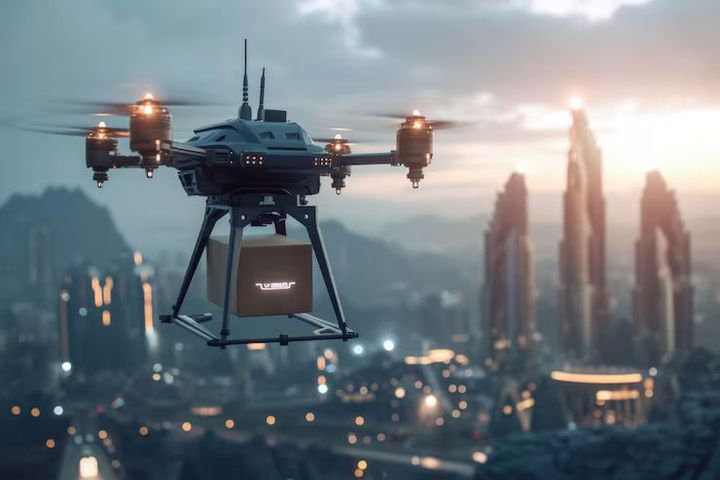
Autonomous drone technologies refer to unmanned aerial systems that can perform tasks with minimal or no human control. These drones use advanced technologies such as artificial intelligence, machine learning, sensors, and satellite navigation to operate independently.
Traditional drones require a human operator using a remote controller, while autonomous drones rely on onboard computing systems to analyze data in real time. These drones can make decisions about flight paths, obstacle avoidance, and task execution without continuous human input .
The development of autonomous drone technology has been driven by the demand for efficient aerial data collection, environmental monitoring, infrastructure inspection, and mapping.
Key Components of Autonomous Drones
Autonomous drones combine multiple advanced technologies to function effectively. These components work together to enable intelligent navigation and automation.
- Global Navigation Satellite Systems (GNSS)
- Computer vision and image recognition
- Artificial intelligence algorithms
- LiDAR and radar sensors
- Autonomous flight control software
These systems allow drones to operate in complex environments while collecting valuable data across industries .
Importance of Autonomous Drones
Autonomous drone technology plays a critical role in modern industries by supporting data-driven decision-making and automation. These systems provide an aerial perspective that helps organizations gather accurate and timely information.
Key Benefits
Autonomous drones are widely used because they support several important functions:
- Infrastructure monitoring
- Environmental data collection
- Smart agriculture practices
- Disaster management and emergency response
- Mapping and geospatial analysis
For example, energy companies use drones to inspect power lines and renewable energy installations. This helps detect maintenance issues early and improves overall infrastructure reliability .
In agriculture, drones assist with crop monitoring, soil analysis, and irrigation planning. They enable farmers to identify problem areas and improve productivity.
Industry Applications
Below is an overview of how different industries use autonomous drones:
| Industry | Key Applications |
|---|---|
| Agriculture | Crop monitoring, precision farming |
| Construction | Site mapping, progress tracking |
| Energy | Infrastructure inspection |
| Environmental Research | Wildlife tracking, forest monitoring |
| Telecommunications | Tower inspection, network surveys |
These applications demonstrate how drones improve efficiency, safety, and data accuracy across sectors .
Recent Updates
Autonomous drone technology has seen rapid advancements in 2025, with several innovations improving performance and scalability.
Key Developments
Recent updates in the industry include:
- AI-powered navigation systems that enable real-time decision-making
- Drone swarm technology for coordinated multi-drone operations
- Improved battery systems for longer flight durations
- Autonomous drone corridors for safer airspace integration
- AI-driven aerial data analytics for actionable insights
These developments are making drones more reliable and better integrated into digital ecosystems .
Laws and Policies
Autonomous drone operations are regulated to ensure safety, privacy, and responsible usage. Aviation authorities across countries have established frameworks to manage drone activities.
Regulatory Requirements
In India, drone regulations are governed by the Directorate General of Civil Aviation (DGCA) under the Drone Rules 2021, with updates introduced in 2024 and 2025.
Common regulatory requirements include:
- Drone registration through digital platforms
- Unique Identification Number (UIN)
- Compliance with geofencing rules
- Restrictions in sensitive or restricted areas
- Certification requirements for certain operations
Many countries also implement Unmanned Traffic Management (UTM) systems to coordinate drone flights and prevent conflicts with manned aircraft .
Tools and Resources
Various digital tools support autonomous drone operations by assisting in navigation, planning, and data analysis.
Common Tools Used
Key tools used in drone technology include:
- Drone flight planning software
- Geographic Information System (GIS) platforms
- Drone simulation software
- AI-based aerial data analytics tools
- Satellite positioning systems
- Mapping and photogrammetry software
Core Components Table
Below is a table showing important technological components and their functions:
| Component | Function |
|---|---|
| GPS / GNSS | Provides navigation and positioning |
| LiDAR Sensors | Measures distance using laser scanning |
| Computer Vision | Detects obstacles and recognizes objects |
| AI Algorithms | Enables decision-making and automation |
| Flight Controllers | Stabilizes and controls drone movement |
These tools improve operational safety and enhance data accuracy in drone missions .
Additional Insights
Autonomous drone systems consist of several integrated modules that work together for seamless operation.
System Architecture
Typical modules in a drone system include:
- Navigation system
- Sensor network
- Data processing unit
- Communication system
- Power management system
Operational Workflow
The workflow of an autonomous drone mission typically follows these steps:
| Step | Process |
|---|---|
| Mission Planning | Define flight path and objectives |
| Autonomous Takeoff | Drone launches and stabilizes |
| Navigation | AI guides flight path |
| Data Collection | Sensors capture information |
| Data Processing | Software analyzes collected data |
Many systems also use cloud-based platforms for processing aerial data and generating insights .
Frequently Asked Questions
What is an autonomous drone?
An autonomous drone is an unmanned aerial system that can operate and perform tasks automatically using AI, sensors, and navigation technologies.
How do autonomous drones avoid obstacles?
They use sensors such as cameras, LiDAR, radar, and ultrasonic systems to detect objects and adjust their flight path accordingly.
Which industries benefit most?
Industries such as agriculture, construction, energy, environmental research, telecommunications, and mapping benefit significantly from drone technology.
Are autonomous drones fully independent?
Most drones require some level of human supervision or mission planning. Fully independent systems are still under development.
How accurate is drone mapping?
Drone mapping can produce highly accurate aerial maps and 3D models when combined with GPS and photogrammetry software .
Conclusion
Autonomous drone technology represents a major advancement in aerial automation and data collection. By combining artificial intelligence, sensors, and navigation systems, these drones can perform complex tasks efficiently.
Industries worldwide are increasingly adopting drones for inspection, mapping, and monitoring. With ongoing advancements in AI, energy systems, and regulatory frameworks, autonomous drones are expected to play an even larger role in future technological ecosystems