Battery Manufacturing System Overview: From Raw Material to Output
The battery manufacturing system is a complex and highly controlled process that transforms raw materials into reliable energy storage solutions. With growing demand for best solar battery storage, industrial solar battery systems, and electric vehicles, manufacturers are continuously improving production efficiency and quality. Understanding how batteries are made helps explain their performance, safety, and long-term usability.
This article provides a complete overview of the battery manufacturing process, from raw material preparation to battery pack assembly systems and final output. It also explores how solar storage battery companies and EV battery producers maintain consistent quality across large-scale production.
Raw Materials and Their Role in Battery Production
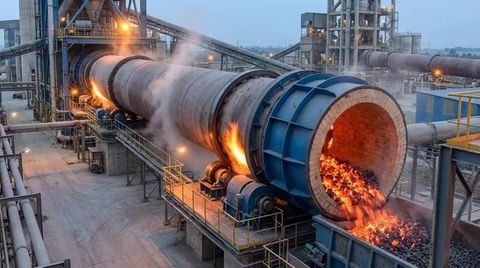
Battery manufacturing begins with sourcing and refining raw materials. The type of battery determines the materials used, but most modern systems rely heavily on lithium-ion chemistry.
Key raw materials include:
- Lithium compounds for energy storage capacity
- Nickel, cobalt, and manganese for cathode stability
- Graphite for anode conductivity
- Electrolytes that enable ion movement
- Separators that prevent short circuits
Each material must meet strict purity and performance standards. Even minor impurities can affect battery lifespan or safety. This is why suppliers and manufacturers maintain tight quality checks at this stage.
Electrode Manufacturing Process
Electrode production is one of the most critical stages in the battery manufacturing process. It involves creating the cathode and anode layers that store and release energy.
Cathode and Anode Preparation
The cathode is typically made by mixing lithium compounds with conductive materials and binders. Similarly, the anode is prepared using graphite and other additives. These mixtures are turned into slurries.
The slurry is then coated onto metal foils:
- Aluminum foil for cathodes
- Copper foil for anodes
After coating, the electrodes go through drying ovens to remove solvents and ensure proper adhesion. Precision is essential, as uneven coating can reduce battery efficiency.
Calendering and Cutting
Once dried, the electrodes are compressed through rollers in a process called calendering. This step improves density and conductivity.
After compression:
- Electrodes are cut into specific shapes
- Thickness and uniformity are checked
- Defects are removed
These prepared electrodes move to the next stage of cell assembly.
Cell Assembly and Electrolyte Filling
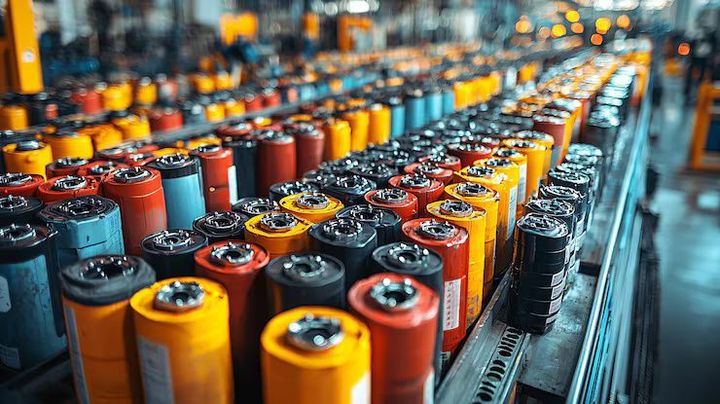
Cell assembly is where the battery starts to take its recognizable form. This stage requires controlled environments, often clean rooms, to prevent contamination.
Cell Formation Techniques
Different battery formats use different assembly methods:
- Cylindrical cells are wound into rolls
- Prismatic cells are stacked in layers
- Pouch cells are sealed in flexible materials
Separators are placed between cathode and anode layers to prevent short circuits while allowing ion flow.
After assembly, the electrolyte is injected into the cell. This liquid enables the movement of lithium ions between electrodes, which is essential for charging and discharging.
Formation, Testing, and Aging
Once assembled, cells undergo a process known as formation. This step activates the battery and stabilizes its chemistry.
During formation:
- Cells are charged and discharged multiple times
- Internal chemical reactions are optimized
- Initial capacity is measured
After formation, cells enter an aging phase. This allows manufacturers to identify defects such as leakage, self-discharge, or performance inconsistencies.
Quality testing includes:
- Capacity and voltage checks
- Internal resistance measurements
- Safety tests under different conditions
Only cells that pass these tests proceed to battery pack assembly systems.
Battery Pack Assembly System
Battery pack assembly combines individual cells into functional units used in solar storage or electric vehicles. This stage integrates electrical, mechanical, and thermal components.
Key Components in Battery Packs
A typical battery pack includes:
- Multiple cells arranged in modules
- Battery management system (BMS)
- Cooling systems for temperature control
- Protective casing for safety
The battery management system plays a crucial role. It monitors voltage, temperature, and current to ensure safe operation.
Assembly Process
The battery pack assembly system involves:
- Grouping cells into modules
- Connecting modules using busbars
- Installing sensors and control units
- Sealing the pack for durability
Automation is widely used to maintain consistency and reduce human error. This is especially important in industrial solar battery and electric vehicle battery production processes.
Electric Vehicle Battery Production Process
The electric vehicle battery production process requires higher precision due to performance and safety demands. EV batteries must deliver high energy density while maintaining long cycle life.
Key differences in EV battery production include:
- Advanced thermal management systems
- High-capacity cell configurations
- Enhanced safety testing standards
Manufacturers also focus on scalability, as EV demand continues to grow globally. Automation, robotics, and digital monitoring systems are essential in modern EV battery plants.
Solar Storage Battery Manufacturing
Solar storage batteries are designed to store energy generated from solar panels for later use. These systems are crucial for residential, commercial, and industrial energy solutions.
Solar storage battery companies focus on:
- Long cycle life for repeated charging
- High efficiency in energy retention
- Compatibility with solar inverters
Industrial solar battery systems are larger and require more robust designs. They often include advanced cooling and monitoring systems to handle continuous operation.
Quality Control in Battery Manufacturing
Quality control is integrated throughout the battery manufacturing system. Every stage, from raw materials to final assembly, includes testing and inspection.
Key quality measures include:
- Automated inspection systems
- Real-time data monitoring
- Traceability of materials and components
Manufacturers use advanced analytics to detect patterns and prevent defects. This ensures consistent performance across large production volumes.
Environmental and Safety Considerations
Battery manufacturing involves chemicals and processes that require careful handling. Safety and environmental standards are critical.
Manufacturers implement:
- Controlled waste management systems
- Recycling processes for used materials
- Safety protocols for handling hazardous substances
Sustainability is becoming a major focus. Many companies are working on reducing emissions and improving recycling efficiency.
Battery Manufacturing Process Summary Table
| Stage | Key Activities | Importance |
|---|---|---|
| Raw Material Preparation | Refining lithium, graphite, metals | Ensures purity and performance |
| Electrode Production | Coating, drying, calendering | Defines energy capacity |
| Cell Assembly | Layering, electrolyte filling | Forms the battery structure |
| Formation and Testing | Charging cycles, quality checks | Stabilizes and validates cells |
| Pack Assembly | Module integration, BMS installation | Creates usable battery systems |
| Final Inspection | Safety and performance testing | Ensures reliability |
Future Trends in Battery Manufacturing
The battery manufacturing industry is evolving rapidly. Innovations are shaping how batteries are produced and used.
Emerging trends include:
- Solid-state battery development
- Improved recycling technologies
- AI-driven manufacturing systems
- Higher energy density materials
These advancements aim to improve efficiency, safety, and sustainability. As demand for best solar battery storage and electric vehicles grows, manufacturing systems will continue to evolve.
Conclusion
The battery manufacturing system is a detailed and multi-step process that requires precision, quality control, and advanced technology. From raw materials to final battery pack assembly systems, each stage plays a critical role in determining performance and reliability.
Whether it is for industrial solar battery applications or the electric vehicle battery production process, manufacturers must balance efficiency with safety and sustainability. Understanding this process helps users appreciate the complexity behind modern energy storage solutions and the innovation driving the industry forward.