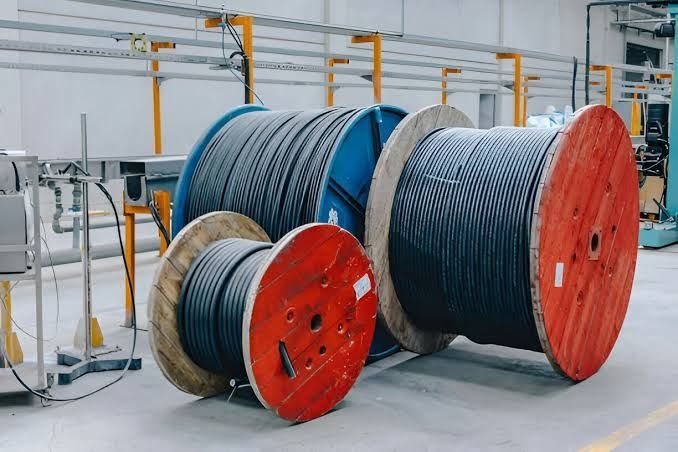
Cable & Wire Manufacturing Guide: Materials, Processes, Equipment, and Quality Control
Cable & wire manufacturing is the industrial process of turning conductive metals and protective materials into wires, cables, assemblies, and harnesses used to carry electricity or signals.
Modern cable manufacturing and wire manufacturing support homes, factories, transport systems, communication networks, renewable energy systems, and electronic equipment.
A typical electrical wire manufacturer begins with conductive material such as copper or aluminium. The conductor is drawn into the required diameter and then covered with insulation. More complex industrial wire and cable products may include several conductors, shielding, armour, fillers, and an outer protective jacket.
Materials and Manufacturing Processes
Copper is widely used because of its electrical conductivity and flexibility, while aluminium is common where lower weight is important. Insulation materials may include PVC, polyethylene, cross-linked polyethylene, rubber compounds, and other polymers selected for temperature, voltage, flexibility, and environmental conditions.
The basic production sequence varies according to the cable design:
| Production Stage | Main Purpose | Typical Equipment |
|---|---|---|
| Wire drawing | Reduces conductor diameter | Drawing machine |
| Annealing | Improves flexibility | Annealing unit |
| Stranding | Combines conductor wires | Stranding machine |
| Insulation | Adds electrical protection | Extrusion line |
| Cabling | Combines insulated cores | Cabling machine |
| Jacketing | Adds an outer protective layer | Extruder |
| Testing | Checks electrical and physical properties | Testing instruments |
Custom cable manufacturing may involve additional steps for unusual dimensions, connectors, shielding arrangements, or environmental requirements. A custom cable assembly may also include cutting, stripping, crimping, connector attachment, labelling, and electrical testing.
Importance
Reliable cables are essential because electricity and electronic signals depend on stable conductive paths. Poor insulation, damaged conductors, weak connections, or incorrect dimensions can contribute to equipment failure, overheating, signal loss, or electrical hazards.
Different industries have different requirements. A power cable manufacturer may focus on energy transmission and distribution, while a specialty cable manufacturer may produce cables for automation, transportation, data systems, harsh environments, or specialised machinery.
Wire harness manufacturing is particularly important in vehicles, industrial machines, appliances, and electronic systems. A custom wire harness manufacturer arranges multiple wires into an organised assembly so that power and signals can move between components efficiently.
Quality Control and Testing
Quality control is integrated throughout production rather than limited to the final stage. Manufacturers may inspect raw materials, conductor dimensions, insulation thickness, surface condition, electrical resistance, and finished cable construction.
Common checks include:
- Conductor resistance testing to examine electrical performance.
- High-voltage testing to identify insulation weaknesses.
- Dimensional measurement to check conductor and insulation size.
- Tensile testing to examine material strength and elongation.
- Spark testing to detect possible insulation defects.
- Continuity testing to confirm correct electrical paths in assemblies and harnesses.
For high voltage power cable systems, testing can be more extensive because insulation performance and construction accuracy are critical to safe operation.
Recent Updates
From 2024 to 2026, the general direction of cable & wire manufacturing has included greater automation, digital production monitoring, material traceability, and inspection based on real-time data. Modern extrusion and drawing lines increasingly use sensors to track dimensions, temperature, speed, and other production conditions.
Demand related to electric mobility, renewable energy, data infrastructure, factory automation, and expanding power networks has also influenced product development. A high voltage cable manufacturer may need to address higher transmission requirements, while a cable assembly manufacturer may work with increasingly compact and complex connection layouts.
Another trend is increased attention to material efficiency and recyclability. Manufacturers are examining conductor usage, polymer selection, production waste, and traceability while maintaining required electrical and mechanical properties.
Laws or Policies
In India, cable and wire products may be affected by standards, electrical safety rules, environmental requirements, and product certification requirements depending on their type and intended application. The Bureau of Indian Standards publishes standards covering various electrical wires and cables, while certain regulated products may require conformity assessment and the Standard Mark.
Requirements can differ for building wires, flexible cables, power cables, high-voltage products, industrial applications, and specialised assemblies. Manufacturers may also need to consider environmental rules related to waste handling and restricted materials.
An industrial cable manufacturer or electrical wire manufacturer therefore needs to identify the standards that apply to each product category. International markets may also require compliance with IEC, ISO, UL, or other regional frameworks, depending on the destination and application.
Tools and Resources
Several technical resources support cable design, production planning, and quality control. Useful resources include conductor size calculators, voltage-drop calculators, cable sizing tools, technical data sheets, test records, and standards databases.
Manufacturing teams may also use computer-aided design tools for cable layouts and harness drawings. Production management platforms can record material batches, machine settings, inspection results, and traceability information. A custom cable assembly or wire harness manufacturing process may also use digital drawings, connector databases, and automated test equipment.
FAQs
What is cable & wire manufacturing?
Cable & wire manufacturing is the process of producing conductive wires and cables through drawing, stranding, insulation, cabling, jacketing, and testing. The exact process depends on voltage level, application, materials, and construction.
How does custom cable manufacturing differ from standard production?
Custom cable manufacturing follows specifications created for a particular application. Differences may involve conductor size, insulation material, shielding, connectors, length, flexibility, or environmental resistance.
What does a cable assembly manufacturer produce?
A cable assembly manufacturer combines cables or wires with connectors, terminals, protective coverings, labels, and related components. The completed assembly is designed to connect specific parts of an electrical or electronic system.
What is the role of a high voltage cable manufacturer?
A high voltage cable manufacturer produces cables designed to carry electricity at elevated voltage levels. These products require carefully controlled conductor construction, insulation systems, shielding, and testing.
Why is quality control important in industrial wire and cable production?
Quality control helps confirm that dimensions, materials, electrical properties, and construction match defined requirements. It can also identify defects before finished products enter their intended applications.
Conclusion
Cable & wire manufacturing combines conductive materials, insulation, specialised machinery, assembly methods, and structured quality control. Production methods vary from basic wire manufacturing to complex custom cable assembly and high voltage power cable systems. Standards, testing, automation, and traceability help shape how modern cables and wire harnesses are produced for different applications.