Chocolate Coating Machines: Explore Advanced Techniques and Production Insights
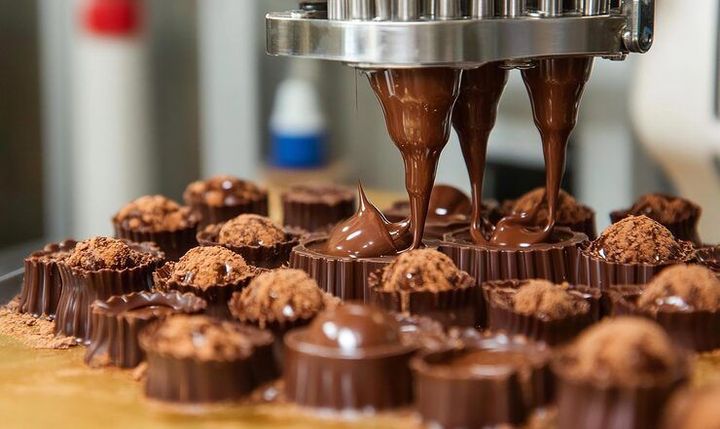
Chocolate coating machines are specialized equipment designed to evenly apply chocolate onto confectionery, nuts, fruits, or baked goods. They have become essential in modern confectionery production for achieving consistent quality, enhancing product appeal, and improving operational efficiency.
Chocolate coating machines apply a uniform layer of chocolate to products using techniques like enrobing, drizzling, and pan-coating. Enrobing passes items under a curtain of liquid chocolate, while pan-coating rotates products in a drum for even coverage.
The choice of machine depends on factors such as product type, desired finish, and production scale. These machines are widely used in confectionery production to ensure consistency and efficiency.
Why Chocolate Coating Machines Are Important Today
The demand for chocolate-coated products continues to grow due to consumer preference for premium snacks and convenience foods. These machines play a key role in meeting that demand efficiently.
Key Benefits
- Uniform Coating: Ensures consistent appearance and quality
- Increased Production Speed: Reduces manual labor and boosts output
- Material Optimization: Minimizes chocolate waste
- Hygiene Maintenance: Supports food safety standards
- Product Innovation: Enables specialty coatings and creative designs
Industries such as chocolate manufacturing, bakeries, snack production, and catering rely on these machines. Small and medium businesses also benefit by achieving professional-level consistency.
Recent Trends and Developments
Technological advancements in 2025–2026 have improved the performance and flexibility of chocolate coating machines. These innovations focus on automation, sustainability, and adaptability.
Key Trends
- Automation and Smart Controls: Touchscreens, programmable settings, and sensors monitor viscosity and temperature
- Energy-Efficient Designs: Reduced power consumption and better heat retention
- Multi-Functionality: Single machines performing enrobing, drizzling, and molding
- Support for Alternative Chocolates: Adaptation for vegan, sugar-free, and organic chocolate
- Improved Supply Chains: Better sourcing enhances consistency in coating processes
These developments make production more efficient and adaptable to changing consumer preferences.
Regulatory Considerations and Policies
Chocolate coating machines must comply with food safety and equipment regulations. These rules ensure hygiene, safe processing, and product quality.
Key Regulations
- Food-Grade Materials: Use of stainless steel or approved coatings for contact surfaces
- Cleanability Requirements: Machines must allow easy cleaning to prevent contamination
- Temperature Control Standards: Maintain safe processing conditions
-
Regional Compliance:
- United States: FDA CGMP and 21 CFR Part 110
- Europe: EC 1935/2004 and food hygiene regulations
Local governments may also support modernization through incentives for adopting advanced food-processing technologies.
Tools, Resources, and Support Systems
Efficient operation of chocolate coating machines requires supporting tools and systems. These help maintain quality and optimize performance.
Key Tools
- Chocolate tempering machines for proper crystallization
- Viscosity meters to monitor flow consistency
- Thermal sensors for temperature control
- Production management software for tracking output
- Recipe databases for formulation guidance
Tools Overview Table
| Tool / Resource | Purpose |
|---|---|
| Chocolate Tempering Machine | Maintains chocolate consistency |
| Viscosity Meter | Ensures uniform coating thickness |
| Thermal Sensor | Monitors chocolate temperature |
| Production Management Software | Tracks performance and quality |
| Recipe Database | Provides ingredient ratios and techniques |
Comparison of Coating Techniques
Different coating methods are suited for different applications. Choosing the right technique improves efficiency and product quality.
| Technique | Application | Advantages | Limitations |
|---|---|---|---|
| Enrobing | Chocolate bars, large items | Uniform coverage, high speed | Requires precise tempering |
| Pan Coating | Nuts, small candies | Smooth finish, minimal waste | Slower for larger products |
| Drizzling | Decorative toppings | Visual appeal, creative flexibility | Limited coverage |
Practical Tips for Using Chocolate Coating Machines
Proper operation ensures consistent results and extends machine lifespan. Following best practices improves efficiency and product quality.
Best Practices
- Preheat Properly: Bring chocolate to the correct working temperature
- Adjust Flow Settings: Match flow rate to product size and viscosity
- Monitor Cooling: Ensure even cooling to avoid cracks or streaks
- Clean Regularly: Prevent residue buildup and contamination
- Test Small Batches: Refine settings before full-scale production
Innovations Enhancing Chocolate Coating Processes
Recent innovations are transforming how chocolate coating machines operate. These advancements improve efficiency and integration.
Key Innovations
- IoT-Enabled Machines: Allow remote monitoring and predictive maintenance
- Modular Equipment: Expandable systems for increased production capacity
- Eco-Friendly Processes: Reduced energy and water usage
- Packaging Integration: Direct transfer of coated products to packaging lines
These innovations streamline production and reduce operational costs.
Frequently Asked Questions
What types of chocolate coating machines are available?
Common types include enrobers, pan coaters, and drizzling machines. Each is designed for specific applications and product sizes.
How can I prevent chocolate from becoming grainy?
Maintaining proper temperature and tempering is essential. Machines with built-in controls help stabilize chocolate consistency.
Can these machines handle alternative chocolate types?
Yes, modern machines support vegan, sugar-free, and organic chocolates with proper adjustments to settings.
What maintenance is required?
Regular cleaning, lubrication, and inspection of sensors and temperature controls are necessary to ensure performance and hygiene.
Is operator training necessary?
Yes, operators should understand tempering, machine settings, hygiene practices, and troubleshooting to maintain consistent quality.
Conclusion
Chocolate coating machines are essential in modern confectionery production. They improve efficiency, ensure consistent quality, and support creative product development.
By following best practices, using the right tools, and staying updated with innovations, manufacturers can optimize production. These machines play a critical role in delivering high-quality, visually appealing chocolate products in a competitive market.