Collaborative Robots and AMRs Overview: Essential Facts, Technologies, and Industrial Applications
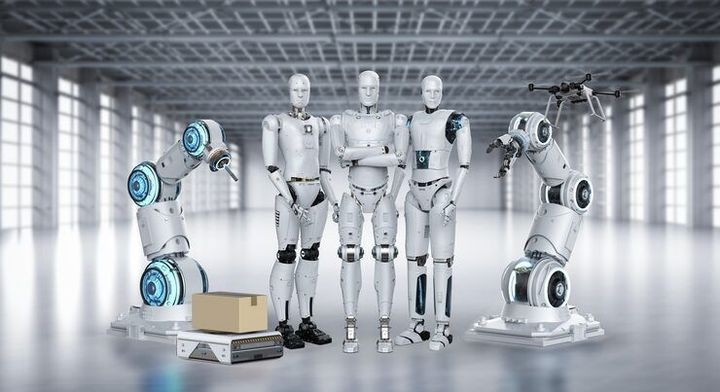
Collaborative robots, often called cobots, are industrial robots designed to operate alongside people in shared workspaces. Unlike many traditional industrial robots that usually work inside safety enclosures, collaborative robots include safety features that allow them to assist human operators in suitable production environments.
Autonomous Mobile Robots (AMRs) are robotic vehicles that move independently using sensors, cameras, mapping systems, and onboard software. Unlike fixed conveyor systems or guided vehicles that follow predefined tracks, AMRs can navigate changing environments and adjust their routes when obstacles appear.
Today, collaborative robot manufacturers and AMR manufacturers develop equipment for manufacturing, warehousing, healthcare, logistics, electronics, automotive production, and many other industries. These technologies are becoming an important part of industrial automation robots used in modern production facilities.
Why These Technologies Were Developed
Manufacturing has gradually become more automated as production volumes increased and product designs became more complex. Businesses sought equipment that could perform repetitive tasks while allowing people to focus on supervision, quality inspection, and specialized operations.
Collaborative robots were introduced to support safe interaction with workers, while AMRs were developed to improve material movement without requiring fixed transport infrastructure. Together, these technologies contribute to flexible automation systems.
Common Industrial Applications
Collaborative robots and AMRs are used for many activities, including:
- Assembly operations
- Machine tending
- Inspection and testing
- Packaging
- Material transport
- Warehouse movement
- Inventory support
- Production line assistance
Many facilities also integrate robotic material handling systems with robotic palletizing systems and robotic picking and packing solutions to improve workflow across different departments.
Importance
Why Collaborative Robots and AMRs Matter
Modern manufacturing depends on efficient movement of materials and consistent production quality. Collaborative robots help automate repetitive production tasks, while AMRs improve transportation inside factories and warehouses.
Together, these technologies help organize workflows and reduce unnecessary manual movement. Rather than replacing every human activity, they often perform repetitive operations while employees manage planning, monitoring, maintenance, and quality control.
Supporting Manufacturing Operations
Industrial automation robots are widely used in industries such as automotive production, electronics, food processing, pharmaceuticals, and consumer products.
Collaborative robots may assist with:
- Assembly
- Fastening
- Inspection
- Packaging
- Quality checking
- Loading and unloading machines
AMRs often transport materials between workstations without requiring permanent guide rails or floor tracks.
Improving Material Movement
Material handling is one of the largest operational activities inside factories. Moving components between storage, production, inspection, and shipping areas takes time and coordination.
Robotic material handling systems automate many of these movements, helping facilities organize internal logistics more efficiently.
Flexible Production
Many factories now produce multiple product variations instead of one standardized product. Flexible automation has therefore become more valuable.
Collaborative robots can often be reprogrammed for different production tasks, while AMRs can change travel routes based on current factory conditions.
Supporting Worker Safety
Some repetitive tasks involve awkward lifting, repetitive motion, or continuous transportation between departments.
Collaborative robots and AMRs may reduce the amount of repetitive manual handling performed by workers. Workplace safety still depends on proper planning, equipment design, operator training, and compliance with applicable regulations.
Main Types of Collaborative Robots and AMRs
Collaborative Robotic Arms
These robotic arms assist with assembly, machine loading, testing, packaging, and inspection. They usually include multiple joints that provide flexibility during operation.
Autonomous Mobile Robots
AMRs transport materials between different locations without following fixed pathways. They use onboard navigation systems that continuously monitor the surrounding environment.
Robotic Palletizing Systems
Robotic palletizing systems stack cartons, boxes, or packaged products onto pallets according to programmed patterns.
These systems are widely used in manufacturing and warehouse operations where repeated lifting occurs.
Robotic Picking and Packing Solutions
Picking and packing robots identify products, collect them, and place them into shipping containers or packaging stations.
These systems often combine cameras, sensors, and robotic arms to improve handling accuracy.
Material Transport Robots
Some AMRs specialize in moving carts, containers, pallets, or production materials between departments within industrial facilities.
Common Automation Technologies
| Technology | Primary Function | Typical Application |
|---|---|---|
| Collaborative robots | Human-assisted automation | Assembly and inspection |
| Autonomous Mobile Robots | Internal transportation | Warehouses and factories |
| Robotic palletizing systems | Product stacking | Shipping preparation |
| Robotic picking and packing solutions | Order preparation | Distribution centers |
| Robotic material handling systems | Material movement | Manufacturing logistics |
Recent Updates
Increased Artificial Intelligence Integration
Recent developments have brought more artificial intelligence into collaborative robots and AMRs. Vision systems can identify products, detect obstacles, and assist navigation with greater accuracy than earlier systems.
These improvements continue to expand the types of production environments where automation can operate.
Better Navigation Technology
Modern AMRs increasingly use simultaneous localization and mapping (SLAM), laser scanners, cameras, and sensor fusion technologies.
These navigation methods allow robots to move through changing factory layouts while avoiding temporary obstacles.
Improved Human-Robot Collaboration
Collaborative robot manufacturers continue improving force sensing, motion control, and collision detection.
These improvements support safer interaction between robots and nearby workers when properly configured within established workplace procedures.
Digital Factory Integration
Industrial automation robots are increasingly connected with factory software platforms that monitor production, maintenance schedules, inventory movement, and equipment performance.
This integration supports broader digital manufacturing initiatives.
Growth of Advanced Autonomous Robotics Technologies
Advanced autonomous robotics technologies increasingly combine robotics, artificial intelligence, cloud computing, and industrial sensors.
These systems help coordinate multiple robots working together across manufacturing and warehouse environments.
Laws or Policies
Machinery Safety Regulations
Collaborative robots and AMRs must operate within machinery safety regulations established in many countries.
These rules typically address emergency stopping systems, protective functions, risk assessments, and operator safety procedures.
International Standards
Several international standards guide collaborative robot safety and industrial robot operation.
These standards help manufacturers, system integrators, and facility operators evaluate appropriate operating conditions.
Workplace Safety Requirements
Factories using industrial automation robots generally follow occupational safety regulations covering:
- Equipment inspection
- Operator training
- Maintenance procedures
- Emergency response
- Safe operating distances
- Risk assessments
These requirements vary by country and industry.
Data and Cybersecurity
As robots become more connected through industrial networks, cybersecurity has become increasingly important.
Organizations often establish policies covering network access, software updates, user permissions, and data protection for connected robotic equipment.
Tools and Resources
Simulation Software
Simulation software allows engineers to create virtual production layouts before installing collaborative robots or AMRs.
This helps evaluate robot movement, workspace utilization, and production flow.
Robot Programming Platforms
Modern collaborative robots often include graphical programming tools that simplify task configuration and operation.
These interfaces allow operators to adjust workflows without extensive programming knowledge.
Fleet Management Software
Facilities operating multiple AMRs often use fleet management platforms to coordinate robot movement, battery charging, and transportation priorities.
Digital Twin Technology
Digital twin software creates virtual models of manufacturing systems.
Engineers use these models to analyze workflow, predict equipment performance, and test production changes before implementation.
Training Materials
Technical documentation, operating manuals, engineering standards, and educational courses help engineers and operators understand collaborative robotics and autonomous mobile systems.
FAQs
What are collaborative robots?
Collaborative robots are industrial robots designed to operate alongside human workers while performing tasks such as assembly, inspection, packaging, and machine tending under appropriate safety conditions.
What do AMR manufacturers produce?
AMR manufacturers develop autonomous mobile robots that transport materials inside factories, warehouses, hospitals, and logistics facilities using onboard navigation technology.
How do robotic material handling systems improve manufacturing?
Robotic material handling systems automate the movement of products, components, and materials between workstations, helping organize production workflows more efficiently.
What are robotic palletizing systems used for?
Robotic palletizing systems automatically arrange boxes, cartons, or packaged products onto pallets according to programmed stacking patterns.
What are advanced autonomous robotics technologies?
Advanced autonomous robotics technologies combine robotics, sensors, artificial intelligence, navigation software, and automation systems that enable robots to perform increasingly independent industrial tasks.
Conclusion
Collaborative robots and AMRs have become important technologies within modern industrial automation. Collaborative robots assist people with production activities, while autonomous mobile robots improve internal transportation across manufacturing and warehouse facilities. Recent developments in artificial intelligence, sensing, navigation, and digital integration continue expanding the capabilities of industrial automation robots. Understanding these technologies provides useful insight into how modern factories improve efficiency, flexibility, and production management.