Commercial Landscaping and Irrigation Overview for Healthy and Functional Green Spaces
Well-designed outdoor environments contribute to the appearance, functionality, and long-term sustainability of commercial properties.
Whether surrounding office buildings, educational campuses, healthcare facilities, retail centers, hotels, or public spaces, carefully planned landscapes create welcoming environments while supporting environmental health. An essential part of this process is commercial landscaping and irrigation, which combines landscape design with efficient water management to maintain healthy green spaces.
Modern commercial landscapes go beyond aesthetics. They are designed to improve usability, encourage biodiversity, manage stormwater, reduce maintenance challenges, and support responsible water conservation. At the center of these efforts are landscape irrigation systems that deliver water efficiently while adapting to changing weather conditions and plant requirements.
This guide explains the fundamentals of commercial landscaping and irrigation, explores key design principles, highlights modern irrigation technologies, and discusses best practices for maintaining healthy and functional outdoor environments.
What Is Commercial Landscaping and Irrigation?
Commercial landscaping and irrigation refers to the planning, installation, and long-term management of outdoor spaces surrounding commercial, institutional, and public properties. It combines landscape design with irrigation systems to support healthy vegetation while using water responsibly.
Unlike residential landscaping, commercial projects often involve larger areas, greater plant diversity, more complex drainage requirements, and higher expectations for long-term durability and maintenance.
Typical commercial landscapes may include:
- Office complexes
- Business parks
- Educational institutions
- Hospitals
- Hotels
- Shopping centers
- Industrial campuses
- Municipal parks
- Transportation facilities
- Mixed-use developments
Each environment requires landscaping solutions that balance appearance, functionality, and environmental responsibility.
Why Commercial Landscaping Matters
Commercial landscaping serves several important purposes beyond improving visual appeal.
A thoughtfully designed landscape can help:
- Create welcoming outdoor environments
- Improve pedestrian accessibility
- Support employee and visitor comfort
- Enhance biodiversity
- Reduce soil erosion
- Improve stormwater management
- Promote environmental sustainability
- Increase the usability of outdoor spaces
Healthy landscapes also contribute to more pleasant surroundings that complement the architecture and purpose of a property.
Understanding Commercial Irrigation
Commercial irrigation focuses on supplying water to landscaped areas efficiently while minimizing waste.
Unlike manual watering methods, modern commercial irrigation systems deliver water through automated equipment that can adjust watering schedules according to environmental conditions and landscape requirements.
The primary goals include:
- Maintaining healthy plants
- Conserving water
- Supporting consistent growth
- Improving operational efficiency
- Reducing unnecessary runoff
Proper irrigation planning is essential for maintaining landscape quality throughout changing seasons.
Main Components of Landscape Irrigation Systems
Modern landscape irrigation systems include several interconnected components that work together to distribute water efficiently.
Water Supply
The water source provides the foundation for the entire irrigation system. Depending on the property, this may involve municipal supplies, storage tanks, reclaimed water systems, or other approved water sources.
Pipes and Distribution Network
Underground piping transports water throughout the landscape while protecting the system from weather exposure and minimizing visual impact.
Valves
Valves regulate water flow to different irrigation zones, allowing each landscape area to receive water based on its specific needs.
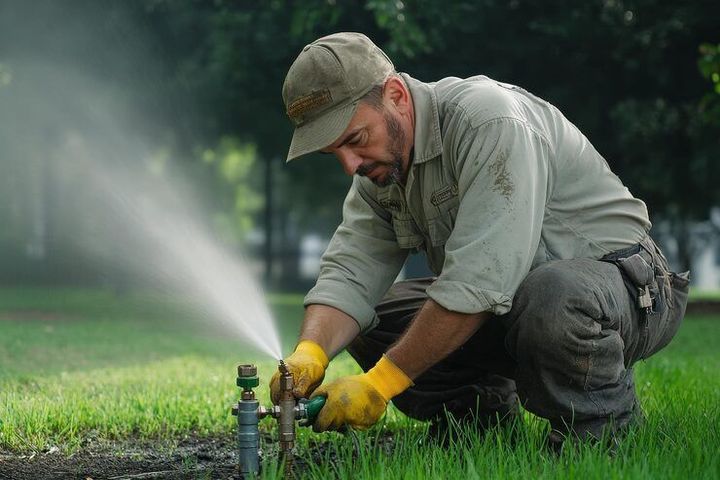
Sprinklers and Emitters
Different irrigation devices are selected according to plant type, soil conditions, and landscape layout.
Common options include:
- Spray heads
- Rotary sprinklers
- Drip irrigation
- Bubblers
- Micro-sprayers
Each application is designed to distribute water efficiently while reducing unnecessary evaporation or runoff.
Controllers
Irrigation controllers automate watering schedules and coordinate system operation across multiple landscape zones.
Modern controllers often integrate with weather data and environmental sensors to improve watering efficiency.
Types of Commercial Irrigation Systems
Different landscapes require different irrigation approaches.
| Irrigation System | Best Application | Primary Benefit |
|---|---|---|
| Spray Irrigation | Lawns and open green areas | Broad water coverage |
| Rotary Sprinklers | Large commercial landscapes | Efficient distribution over wide areas |
| Drip Irrigation | Trees, shrubs, and planting beds | Water delivered directly to roots |
| Micro Irrigation | Decorative planting areas | Precise water application |
| Subsurface Irrigation | Selected turf applications | Reduced evaporation |
Selecting the appropriate irrigation method depends on landscape design, vegetation, soil characteristics, and environmental conditions.
Smart Irrigation Systems in Modern Landscapes
Technology has transformed commercial irrigation over the past decade.
Smart irrigation systems use digital technologies to improve water efficiency while supporting healthier landscapes.
Common features include:
- Weather-based scheduling
- Soil moisture monitoring
- Automatic watering adjustments
- Remote management
- Leak detection
- Flow monitoring
- Performance reporting
- Mobile device integration
Rather than operating on fixed schedules alone, smart irrigation systems respond to changing environmental conditions, helping reduce unnecessary watering while maintaining healthy plant growth.
Landscape Design Principles
Successful commercial landscaping begins with careful planning.
Several design principles guide effective landscape development.
Functionality
Outdoor spaces should support pedestrian movement, accessibility, recreation, and practical property use.
Plant Selection
Choosing plants suited to local climate and soil conditions supports healthier growth while reducing irrigation demands.
Water Efficiency
Landscape layouts should encourage efficient water use through zoning, plant grouping, and appropriate irrigation methods.
Sustainability
Modern landscapes increasingly emphasize biodiversity, native vegetation, and environmentally responsible practices.
Long-Term Maintenance
Selecting durable materials and manageable plant varieties contributes to easier maintenance over time.
Choosing Plants for Commercial Landscapes
Plant selection significantly influences irrigation requirements and long-term landscape performance.
Factors commonly considered include:
- Climate compatibility
- Soil conditions
- Sunlight exposure
- Water requirements
- Growth rate
- Seasonal appearance
- Maintenance needs
Grouping plants with similar watering needs into shared irrigation zones helps improve water efficiency.
Sustainable Landscaping Practices
Environmental sustainability has become an important focus in commercial landscaping.
Common sustainable practices include:
- Native plant selection
- Rainwater management
- Mulching
- Soil improvement
- Efficient irrigation scheduling
- Drought-tolerant landscaping
- Pollinator-friendly planting
- Reduced chemical use
These approaches support healthy ecosystems while promoting responsible resource management.
Maintaining Commercial Landscapes
Regular maintenance helps preserve the appearance and health of commercial green spaces.
Typical maintenance activities include:
- Lawn care
- Tree and shrub pruning
- Irrigation inspections
- Seasonal planting
- Soil management
- Weed control
- Mulch replacement
- Drainage inspections
Routine evaluations allow landscape managers to identify irrigation adjustments and maintenance needs before larger problems develop.
Common Challenges in Commercial Irrigation
Commercial irrigation systems must operate under changing environmental conditions throughout the year.
Common challenges include:
Water Conservation
Balancing healthy landscapes with responsible water use requires careful planning and efficient irrigation technology.
Weather Variability
Rainfall, temperature, wind, and seasonal changes all influence irrigation requirements.
Soil Differences
Different soil types absorb and retain water differently, affecting irrigation performance.
System Maintenance
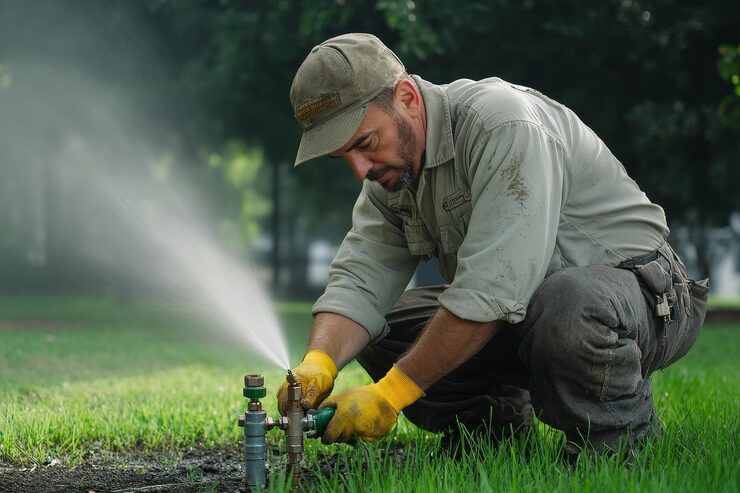
Valves, sprinklers, controllers, and underground piping require regular inspection to maintain reliable operation.
Landscape Growth
As trees and shrubs mature, irrigation patterns often require adjustment to meet changing plant needs.
Benefits of Smart Irrigation Systems
Smart irrigation systems provide several advantages for commercial properties.
These include:
- Improved water efficiency
- Automated scheduling
- Reduced runoff
- Better plant health
- Enhanced monitoring
- Faster identification of system issues
- Greater operational consistency
- Support for sustainability goals
The combination of digital monitoring and automated control helps optimize irrigation without requiring constant manual adjustments.
Future Trends in Commercial Landscaping
Landscape design continues to evolve as technology and sustainability become increasingly important.
Emerging trends include:
- Artificial intelligence-assisted irrigation management
- Internet of Things (IoT) landscape sensors
- Climate-responsive irrigation scheduling
- Native landscape restoration
- Green infrastructure integration
- Smart environmental monitoring
- Water-efficient landscape planning
- Biodiversity-focused landscape design
These innovations support healthier green spaces while encouraging more efficient use of natural resources.
Frequently Asked Questions
What is commercial landscaping and irrigation?
Commercial landscaping and irrigation involves designing, installing, and maintaining outdoor spaces while using irrigation systems to support healthy vegetation and efficient water management.
Why are landscape irrigation systems important?
Landscape irrigation systems provide controlled water distribution that helps maintain healthy plants, conserve water, reduce runoff, and improve landscape performance.
What are smart irrigation systems?
Smart irrigation systems use weather information, soil sensors, automated scheduling, and digital monitoring to optimize watering based on actual landscape conditions.
How does commercial irrigation support sustainability?
Commercial irrigation promotes efficient water use, minimizes waste, supports healthy vegetation, and helps maintain environmentally responsible landscapes.
What factors influence landscape irrigation design?
Design decisions depend on plant selection, soil conditions, climate, property layout, water availability, drainage, and long-term maintenance requirements.
Conclusion
Commercial landscaping and irrigation play an essential role in creating outdoor environments that are attractive, functional, and environmentally responsible. By combining thoughtful landscape design with efficient landscape irrigation systems, commercial properties can support healthy vegetation while using water more effectively.
As smart irrigation systems, sustainable landscaping practices, and digital monitoring technologies continue to advance, commercial landscapes are becoming more adaptable, resource-efficient, and easier to maintain. Understanding the principles of commercial landscaping, plant selection, irrigation planning, and ongoing maintenance helps property owners, facility managers, and industry professionals create green spaces that remain healthy, practical, and visually appealing for years to come.