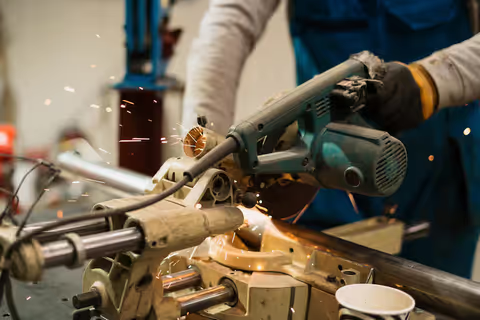
Condom Manufacturing Machines Overview: Technologies Shaping Medical Product Manufacturing
A condom manufacturing machine is specialized industrial equipment used to produce protective barrier products made primarily from natural latex or synthetic materials.
These machines form part of larger production systems that include material preparation, shaping, drying, testing, packaging, and quality control processes.
The history of condom production has evolved significantly over the past century. Early methods relied heavily on manual techniques, while modern facilities use automated systems designed to maintain consistency and meet strict safety requirements. Today, condom manufacturing equipment suppliers support industries that prioritize public health, quality assurance, and standardized production methods.
Latex condom production machines typically work through a dipping process. Ceramic or glass molds are coated with liquid latex, dried under controlled conditions, and then processed further before testing and packaging. Automated technologies have improved precision across these stages.
An automated condom production line integrates multiple functions into a continuous workflow. Such systems reduce manual handling and support uniform manufacturing outcomes. OEM condom machine manufacturers and organizations involved in turnkey condom manufacturing solutions often focus on system integration, digital monitoring, and quality verification methods.
Main Components of Production Equipment
| Equipment Category | Primary Function | Typical Role |
|---|---|---|
| Latex Preparation Units | Material mixing and conditioning | Raw material handling |
| Dipping Systems | Forming product shapes | Initial production stage |
| Drying Ovens | Controlled curing | Material stabilization |
| Condom Testing Equipment | Quality verification | Safety assessment |
| Packaging Machinery | Final preparation | Distribution readiness |
These technologies form the foundation of modern condom manufacturing operations.
Importance
Supporting Public Health Goals
Condom production contributes to reproductive health programs and disease prevention efforts around the world. Reliable manufacturing processes help maintain consistent product quality and support public health initiatives.
Industrial standards and testing protocols play important roles throughout the manufacturing cycle.
Advancing Manufacturing Technology
The development of latex condom production machines demonstrates broader trends in industrial automation. Precision controls, sensors, and digital monitoring tools have transformed production environments across many sectors.
Condom manufacturing represents one example of how specialized machinery evolves over time.
Encouraging Quality Assurance
Condom testing equipment is essential because even small variations in thickness or integrity can affect performance. Automated inspection systems help identify defects during production rather than after packaging.
Quality assurance frameworks influence equipment design and operational procedures.
Reducing Material Waste
An automated condom production line can improve resource management through controlled material usage and process optimization. Digital systems monitor variables such as temperature, humidity, and production speed.
Efficient resource use supports environmental and operational objectives.
Strengthening Global Manufacturing Networks
Condom manufacturing equipment suppliers operate within broader industrial ecosystems involving materials science, automation engineering, and regulatory compliance. International cooperation contributes to knowledge exchange and technological development.
Manufacturing advancements often extend beyond a single industry sector.
Production Process Overview
Raw Material Preparation
Natural latex remains a common material in many facilities. Before production begins, latex undergoes filtering, mixing, and stabilization procedures.
Material consistency is important for maintaining uniform product characteristics throughout manufacturing.
Mold Dipping Operations
Latex condom production machines commonly use dipping technology. Ceramic molds move through tanks containing prepared latex mixtures.
The thickness of the final product depends on factors such as immersion time and drying conditions.
Drying and Curing
After dipping, products pass through temperature-controlled drying systems. This stage removes moisture and supports material stability.
Controlled environments help maintain consistency across large production volumes.
Rolling and Finishing
Machines create the rolled edge that facilitates handling and use. Additional finishing steps may include lubrication and inspection procedures.
Automation reduces variability during these processes.
Testing and Packaging
Condom testing equipment evaluates characteristics such as air pressure resistance, electrical integrity, and physical dimensions. Products that meet established requirements proceed to packaging stages.
Testing remains one of the most critical components of manufacturing operations.
Recent Updates
Increased Automation
Between 2024 and 2026, automated condom production line technologies continued integrating advanced sensors and digital controls. Real-time monitoring systems allow manufacturers to observe production variables more efficiently.
Automation supports consistency and process transparency.
Artificial Intelligence Applications
Machine learning tools increasingly assist with defect identification and predictive maintenance. Visual inspection systems can recognize irregularities that might otherwise require extensive manual review.
These developments reflect wider industrial trends.
Sustainable Manufacturing Practices
Environmental considerations have encouraged research into energy efficiency and material optimization. Some facilities explore methods that reduce water consumption and improve waste management.
Sustainability discussions influence equipment design and operational planning.
Enhanced Testing Technologies
Modern condom testing equipment incorporates sophisticated measurement techniques. Automated systems evaluate multiple quality indicators simultaneously.
Continuous improvement in testing methods supports public health objectives.
Digital Production Management
OEM condom machine manufacturers increasingly integrate digital dashboards that display operational information in real time. Data analysis tools help facilities understand production patterns and maintenance requirements.
Digital transformation continues shaping industrial manufacturing environments.
Laws or Policies
International Quality Standards
Many countries follow internationally recognized standards related to condom manufacturing and testing. Organizations such as ISO publish technical requirements that address dimensions, integrity, packaging, and quality control.
Compliance with these frameworks supports consistency across global markets.
Medical Device Regulations
In numerous jurisdictions, condoms are regulated as medical devices. Manufacturing facilities must adhere to specific requirements concerning documentation, testing, and traceability.
Regulatory oversight contributes to consumer safety.
Workplace Safety Rules
Industrial environments involving latex processing, heating equipment, and automated machinery operate under occupational safety regulations. Worker protection measures include ventilation systems, training programs, and equipment safeguards.
Safety considerations influence facility design and daily operations.
Environmental Requirements
Manufacturing activities may be subject to environmental policies regarding emissions, wastewater treatment, and material disposal. Responsible resource management forms an important part of industrial planning.
Environmental standards vary according to national frameworks.
Import and Export Controls
Global distribution networks involve customs regulations and product certification procedures. Documentation requirements help maintain consistency across international trade channels.
Manufacturers often coordinate with multiple regulatory authorities.
Tools and Resources
Industrial Automation Platforms
Software platforms monitor production speed, temperature conditions, and equipment performance. These tools support operational analysis and maintenance planning.
Digital monitoring contributes to informed decision-making.
Quality Management Systems
Many facilities use structured quality management frameworks to document processes and inspection activities. Standardized procedures support consistency throughout manufacturing operations.
Documentation remains an important aspect of industrial practice.
Technical Standards Publications
Engineering organizations publish guidelines covering testing methods, materials science, and manufacturing principles. These references help professionals understand evolving requirements.
Academic institutions also contribute valuable research.
Training Materials
Educational resources explain topics such as latex chemistry, machine operation, and quality assurance principles. Learning materials support workforce development within manufacturing sectors.
Knowledge sharing encourages continuous improvement.
Simulation Software
Industrial simulation tools allow engineers to study production workflows before implementing changes. Virtual modeling helps identify bottlenecks and optimize equipment layouts.
Digital planning methods continue expanding across modern manufacturing.
Equipment Categories in Modern Facilities
Latex Processing Systems
These systems prepare raw materials for production. Mixing equipment, filtration units, and storage tanks ensure stable processing conditions.
Material preparation influences later manufacturing stages.
Automated Handling Equipment
Conveyor systems and robotic components move products between different phases of production. Automation reduces direct manual contact and supports consistent timing.
Integrated workflows improve operational coordination.
Condom Testing Equipment
Testing technologies evaluate structural integrity and dimensional accuracy. Common approaches include air pressure testing and electronic inspection methods.
Quality verification remains essential throughout the manufacturing cycle.
Packaging Machinery
Packaging equipment prepares finished products for distribution. Automated systems apply labels, seals, and protective wrapping according to established standards.
Packaging also contributes to product preservation.
Digital Control Systems
Modern facilities rely on computerized controls to manage temperatures, production rates, and maintenance schedules. These systems generate valuable operational information for continuous improvement efforts.
Digital integration supports efficient coordination among equipment components.
FAQs
What is a condom manufacturing machine?
A condom manufacturing machine is specialized industrial equipment used to produce condoms through processes such as latex preparation, dipping, drying, testing, and packaging.
How do latex condom production machines operate?
Latex condom production machines generally use ceramic molds that pass through liquid latex, drying systems, finishing stages, and quality inspections before packaging.
Why is condom testing equipment important?
Condom testing equipment helps verify structural integrity, dimensions, and other quality indicators that support compliance with recognized standards.
What is included in an automated condom production line?
An automated condom production line may include latex preparation units, dipping systems, drying ovens, inspection technologies, packaging machinery, and digital monitoring tools.
What do OEM condom machine manufacturers and condom manufacturing equipment suppliers contribute to the industry?
OEM condom machine manufacturers and condom manufacturing equipment suppliers develop machinery, automation systems, and integrated technologies that support standardized production environments.
Conclusion
The evolution of the condom manufacturing machine reflects broader developments in automation, quality assurance, and industrial engineering. Latex condom production machines and automated condom production line systems now incorporate digital monitoring, advanced testing methods, and integrated workflows. Regulatory frameworks, international standards, and condom testing equipment contribute to consistent manufacturing practices. As technology progresses, innovation continues shaping the future of specialized production systems within this important sector.
Disclaimer: The information provided in this article is for informational purposes only. We do not make any claims or guarantees regarding the accuracy, reliability, or completeness of the information presented. The content is not intended as professional advice and should not be relied upon as such. Readers are encouraged to conduct their own research and consult with appropriate professionals before making any decisions based on the information provided in this article.