Continuous Casting Machines: A Guide to Casting Processes, Mould Design, Cooling and Steel Production
Continuous casting machines are industrial systems used to transform molten metal into semi-finished shapes through a controlled, continuous process.
Instead of pouring molten metal into separate molds and waiting for each piece to solidify, continuous casting allows liquid metal to enter a water-cooled mold and gradually become a solid strand that can be cut or further processed.
The process became important as metal producers sought methods for improving production flow and reducing the number of separate handling stages between melting and forming. Continuous casting is now widely associated with steel production, although related casting methods are also used with other metals and alloys.
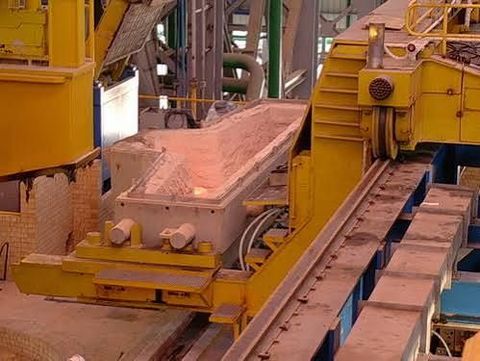
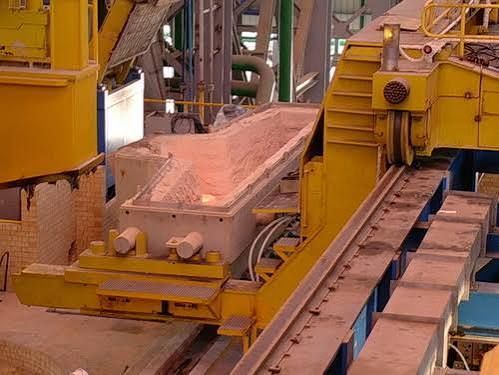
A typical continuous casting machine connects several stages of metal production. Molten metal is transferred from a furnace into a ladle, then into a tundish that regulates the flow into the casting mold. Inside the mold, the outer layer of the metal begins to solidify while the strand continues moving downward or along a curved path.
After leaving the mold, the partially solidified strand passes through secondary cooling zones. Water sprays remove additional heat while support rolls guide the material. Once solidification is sufficiently advanced, cutting equipment divides the continuous strand into sections according to the production requirements.
Main casting stages
The basic sequence can be summarized as:
- Molten metal preparation: Metal is heated and adjusted to the required composition.
- Ladle transfer: Molten metal is transported from the furnace to the casting area.
- Tundish flow control: The tundish distributes molten metal toward the mold.
- Primary cooling: A water-cooled mold begins solidification at the strand surface.
- Secondary cooling: Controlled sprays remove additional heat.
- Strand support: Rolls guide and support the partially solidified material.
- Cutting: The solidified strand is divided into manageable lengths.
The exact configuration depends on the metal, product shape, production capacity, and metallurgical requirements.
Importance
Continuous casting machines play an important role in modern metal production because they connect liquid-metal processing with the production of semi-finished forms. These forms can include slabs, blooms, billets, and other cross-sectional shapes used in later manufacturing stages.
Why continuous casting matters
Traditional ingot casting requires molten metal to solidify in individual molds. The ingots then need additional reheating and forming before becoming suitable for many downstream processes. Continuous casting can combine solidification and initial shaping into a more connected production sequence.
The process also provides greater control over several variables that influence metal quality. Temperature, casting speed, cooling intensity, mold conditions, and molten-metal flow can all affect the resulting strand.
For operators and engineers, important considerations include:
- Metal temperature
- Casting speed
- Mold cooling
- Secondary cooling
- Strand support
- Mold level
- Chemical composition
- Solidification behavior
- Cutting accuracy
Common product forms
| Product form | Typical cross-section | Common downstream uses |
|---|---|---|
| Slab | Wide and relatively thin | Plate and flat steel products |
| Bloom | Large square or rectangular | Structural and heavy sections |
| Billet | Smaller square or rectangular | Bars, rods and other long products |
| Beam blank | Shape resembling an I-section | Structural beam production |
The dimensions and applications vary according to the plant and the metal grade being produced.
Recent Updates
Automation and process monitoring
Between 2024 and 2026, continuous casting operations have continued to incorporate digital monitoring, automation, sensors, and data analysis. These technologies can provide operators with information about mold conditions, temperatures, casting speed, cooling water, and other process variables.
Modern control systems can collect information from different parts of the casting line and display it through centralized interfaces. This can make it easier to identify changes in operating conditions and compare production data across casting sequences.
AI and predictive analysis
Artificial intelligence and machine-learning techniques are increasingly being investigated for metallurgical process analysis. Data from previous casting sequences can be examined to identify relationships between operating conditions and events such as surface defects, breakout risks, or variations in strand quality.
These systems depend heavily on accurate historical and real-time data. They supplement engineering controls rather than removing the need for human oversight.
Improved cooling control
Cooling remains one of the central areas of continuous casting technology. Modern systems increasingly use sensors and automated controls to adjust cooling conditions according to casting parameters.
The objective is to maintain appropriate solidification behavior while limiting thermal stresses and defects. Cooling requirements can vary according to steel grade, strand dimensions, casting speed, and equipment configuration.
Equipment developments
Current continuous casting equipment can incorporate technologies such as:
- Automated mold-level control
- Electromagnetic stirring
- Improved mold oscillation systems
- Automated torch or mechanical cutting
- Digital process monitoring
- Water-flow monitoring
- Condition monitoring for rolls and mechanical components
The adoption of these technologies differs between plants because existing equipment, production requirements, and modernization plans vary.
Laws or Policies
Continuous casting machines operate within industrial, environmental, occupational safety, and metallurgical requirements. The specific rules depend on the country where the plant operates and the characteristics of its production process.
Industrial safety requirements
A continuous casting area contains several hazards, including extremely hot metal, moving machinery, high-pressure water systems, electrical equipment, and heavy components. Industrial facilities therefore need procedures for worker protection, equipment guarding, emergency response, and controlled access.
In India, industrial facilities can be subject to requirements under occupational safety legislation and rules administered by central and state authorities. Environmental requirements may also apply to emissions, water use, waste handling, and industrial operations.
Environmental considerations
Continuous casting uses substantial quantities of cooling water. Plants may therefore use circulation systems that collect, cool, filter, and return water to the process.
Other environmental considerations can include:
- Furnace and process emissions
- Cooling-water management
- Sludge and scale handling
- Noise
- Energy consumption
- Solid industrial waste
Environmental permissions and operating requirements depend on the plant location, production activity, and applicable regulatory framework.
Product and quality standards
Metal products may also need to meet national or international specifications covering chemical composition, dimensions, mechanical properties, and other characteristics. Standards can influence how casting parameters are monitored and how finished material is inspected.
Tools and Resources
Process monitoring systems
Industrial control systems monitor variables such as mold level, casting speed, cooling-water flow, temperatures, and equipment conditions. Operators can use these measurements to maintain the process within defined operating ranges.
Metallurgical analysis
Metallurgical laboratories can examine samples to determine chemical composition, microstructure, mechanical characteristics, and other properties. This information helps connect casting conditions with the characteristics of the resulting metal.
Simulation software
Casting simulation tools can model heat transfer, fluid movement, and solidification. Engineers may use these models when studying mold geometry, cooling arrangements, casting speed, or potential defect mechanisms.
Maintenance records
Maintenance management systems can track inspections and equipment history for components such as:
- Mold assemblies
- Cooling-water systems
- Support rolls
- Oscillation equipment
- Cutting equipment
- Hydraulic systems
- Sensors and control equipment
Accurate records can help identify recurring equipment conditions and support planned maintenance activities.
Key process variables
| Variable | Why it matters |
|---|---|
| Metal temperature | Influences flow and solidification |
| Casting speed | Affects production rate and heat removal |
| Mold level | Influences metal flow into the mold |
| Cooling-water flow | Controls heat extraction |
| Mold oscillation | Helps manage strand withdrawal and surface behavior |
| Roll alignment | Supports strand movement and shape control |
FAQs
What are continuous casting machines used for?
Continuous casting machines convert molten metal into continuously formed semi-finished products such as slabs, billets, blooms, and beam blanks. These products can then undergo rolling, forging, cutting, or other downstream processes.
How does a continuous casting machine work?
Molten metal moves from a ladle into a tundish and then into a water-cooled mold. The outer portion solidifies first, while the strand is continuously withdrawn through cooling and support equipment until sufficient solidification occurs for cutting.
What metals can continuous casting machines process?
Steel is the most widely associated material, but continuous casting principles are also used for metals such as aluminum, copper, and certain alloys. Equipment configuration depends on the material's melting and solidification characteristics.
What is the role of cooling in continuous casting?
Cooling removes heat from the molten metal as it becomes solid. Primary cooling occurs in the mold, while secondary cooling uses controlled water sprays or related methods after the strand leaves the mold.
What causes defects in continuous casting?
Defects can result from several factors, including unsuitable temperature, unstable metal flow, inappropriate cooling, casting-speed changes, mold conditions, chemical composition, or mechanical alignment. The specific cause depends on the defect and operating conditions.
Conclusion
Continuous casting machines connect molten-metal processing with the production of semi-finished metal forms through controlled solidification and continuous withdrawal. Their operation depends on coordinated control of metal temperature, mold conditions, cooling, strand movement, and cutting. Developments from 2024 to 2026 have included greater use of automation, sensors, digital monitoring, and data analysis. Safety, environmental requirements, product standards, and process control remain important considerations for continuous casting facilities.