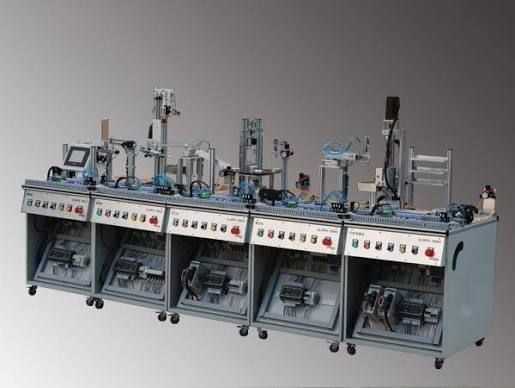
Modular Flexible Manufacturing Machines: An Overview of Production Systems, Reconfigurable Automation and Industrial Efficiency
Modern manufacturing faces constant pressure from fluctuating demand, shorter product life cycles, and the need for greater customization.
Traditional dedicated production lines deliver high volume and low cost for a single product but struggle when markets shift. Fully flexible systems can handle variety but often at higher cost and lower throughput. Modular flexible manufacturing machines and reconfigurable systems sit between these extremes. They combine modular hardware, programmable automation, and intelligent control to adjust capacity and functionality quickly and cost-effectively. This overview examines the core concepts, key technologies, benefits, and practical considerations for industrial efficiency.
Understanding Production System Types
Manufacturing systems have evolved to balance volume, variety, and responsiveness.
Dedicated Manufacturing Systems
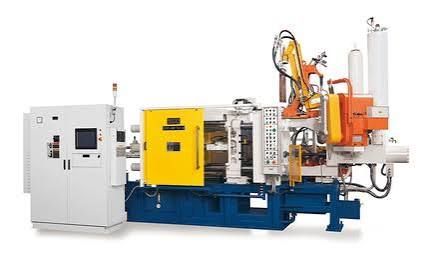
Dedicated or fixed automation systems are optimized for high-volume production of a limited range of products. Transfer lines and purpose-built machines deliver high throughput and low unit cost when demand is stable. Changing products usually requires significant redesign or replacement of equipment, making them less suitable for volatile markets.
Flexible Manufacturing Systems
A Flexible Manufacturing System (FMS) uses computer-controlled machines, automated material handling, and software to produce a family of related products with relatively little downtime for changeovers. Flexibility is largely achieved through programming, tool changes, and routing options. FMS supports medium-volume, higher-variety production and improves machine utilization compared with purely dedicated lines. However, the initial investment is often high, and overall throughput is typically lower than dedicated systems for the same capital outlay.
Reconfigurable Manufacturing Systems
Reconfigurable Manufacturing Systems (RMS) were developed to combine the high productivity of dedicated lines with the adaptability of flexible systems. An RMS is designed from the outset for rapid adjustment of production capacity and functionality by rearranging or changing its modules. Changes can involve machines, tooling, fixtures, control software, or material-handling elements. The goal is to provide exactly the capacity and capability needed, exactly when needed, at lower cost and with shorter lead times than traditional approaches.
Core Principles of Modular and Reconfigurable Design
Modularity underpins both flexible and reconfigurable systems.
Modularity
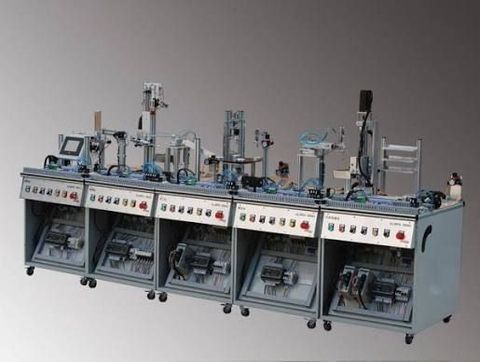
Machines and systems are built from standardized, interchangeable modules—mechanical, electrical, and software. Modules can be added, removed, or repositioned without redesigning the entire system. This supports incremental upgrades and reduces the need for complete equipment replacement when products or volumes change.
Key Characteristics of Reconfigurable Systems
Well-designed RMS typically emphasize several core traits:
- Modularity — hardware and software components that can be mixed and matched.
- Integrability — modules connect easily through standardized interfaces.
- Convertibility — the ability to switch between product variants or functions with minimal disruption.
- Diagnosability — rapid detection of quality or process issues.
- Scalability — capacity can be increased or decreased by adding or removing modules.
- Customization — the system is tailored to a specific product family rather than offering unlimited general flexibility.
These characteristics enable faster response to market changes while maintaining higher productivity than fully general-purpose flexible systems.
Reconfigurable Automation Technologies
Automation in modular systems goes beyond traditional fixed or programmable controls.
Hardware Modules and Machine Tools
Reconfigurable machine tools use interchangeable spindles, axes, fixtures, and tooling. Material-handling systems, robots, and fixtures are also modular so that layouts can be altered. This physical reconfigurability distinguishes RMS from pure software-based flexibility in classic FMS.
Control and Software Systems
Modern systems rely on modular controllers, programmable logic, and higher-level manufacturing software. Distributed and decentralized control architectures allow individual modules or cells to operate with greater independence while remaining coordinated. Recipe-driven or model-based changeovers reduce the time needed to switch products.
Integration with Digital Technologies
Industry 4.0 elements strengthen reconfigurability. Sensors and industrial IoT provide real-time data on machine status and process performance. Digital twins allow virtual testing of new configurations before physical changes. Artificial intelligence and analytics support predictive maintenance, optimal routing, and automated decision-making during reconfiguration. These tools help minimize downtime and improve overall equipment effectiveness.
Benefits for Industrial Efficiency
Modular flexible and reconfigurable systems deliver measurable advantages in dynamic environments.
Responsiveness and Agility
Companies can adjust capacity for demand surges or reduce it during slowdowns without major capital projects. New product variants within a family can be introduced more quickly because the system is already designed for change.
Cost and Resource Efficiency
By scaling capacity and functionality only as needed, manufacturers avoid over-investment in fixed capacity or the high cost of highly general flexible systems. Reduced changeover times and better machine utilization improve return on assets. Modular upgrades also extend the useful life of existing equipment.
Support for Mass Customization and High-Mix Production
The ability to handle product variety efficiently supports customer-driven markets. High-mix, lower-volume production becomes more viable without sacrificing too much throughput.
Reduced Risk and Longer System Life
Factories become more resilient to market uncertainty, supply disruptions, or regulatory changes. Systems can evolve over time rather than becoming obsolete when products change.
Implementation Considerations and Challenges
Adopting modular flexible manufacturing requires careful planning.
Design and Planning
Successful systems start with clear definition of the product family and expected range of variation. Interfaces between modules must be standardized. Digital simulation and digital twins help validate configurations before physical deployment.
Integration and Skills
Hardware, software, and control systems from different suppliers must work together. Workforce skills in system integration, programming, and data analysis become more important. Changeover procedures need to be well documented and practiced.
Investment and Phased Deployment
While the long-term cost profile can be favorable, initial investment in modular equipment, sensors, and software may be significant. Many organizations adopt reconfigurable principles gradually—starting with modular cells or specific product lines—rather than converting an entire plant at once.
Limitations
Reconfigurability is typically optimized for a defined product family rather than unlimited variety. Extreme product changes may still require more substantial redesign. Achieving the full benefit depends on disciplined engineering of modules and interfaces.
Outlook and Emerging Trends
The combination of modular hardware, advanced automation, and digital technologies continues to advance. Microfactories and highly automated modular cells illustrate how smaller, distributed production units can deliver agility. Further progress in AI-driven control, collaborative robots, additive manufacturing integration, and open modular standards is expected to make reconfiguration even faster and more autonomous. As product life cycles shorten and customization demand grows, modular flexible manufacturing machines and reconfigurable systems offer a practical path to higher industrial efficiency without the extremes of pure dedicated or fully general-purpose approaches.
By designing production systems for change rather than treating change as an exception, manufacturers can respond more effectively to market dynamics while maintaining competitive productivity and cost performance.