Rebar Cutting Machines: A Guide to Cutting Mechanisms, Automation Technology and Construction Applications
Rebar cutting machines are used to cut reinforcing steel bars, commonly called rebar, into specific lengths for construction projects.
Rebar is placed inside concrete structures to improve their ability to withstand tensile forces. It is widely used in buildings, bridges, foundations, roads, retaining walls and other infrastructure.
On construction sites, reinforcing bars must be prepared according to structural drawings and reinforcement schedules. These documents specify details such as bar diameter, length, shape and quantity. Rebar cutting machines help workers prepare the required lengths more consistently than manual cutting methods, particularly when projects involve large quantities of steel.
Rebar cutting equipment ranges from portable machines for smaller construction tasks to stationary industrial machines designed for repeated cutting. Some models use mechanical blades, while others rely on hydraulic force to cut steel bars. The appropriate machine depends on bar diameter, steel grade, cutting volume, available power and site conditions.
How Rebar Cutting Machines Work
Most rebar cutting machines hold a reinforcing bar in a designated cutting area. A powered mechanism moves a cutting blade against the steel, applying enough force to separate the bar at the selected position. The cut bar is then removed, and the process is repeated.
Hydraulic machines use pressurised fluid to generate force, while mechanical designs use systems such as motors, gears and linkages. Although their mechanisms differ, both types require suitable blade condition, correct bar positioning and operation within the manufacturer's stated capacity.
Common Types of Rebar Cutting Machines
Different machine designs serve different construction and fabrication requirements.
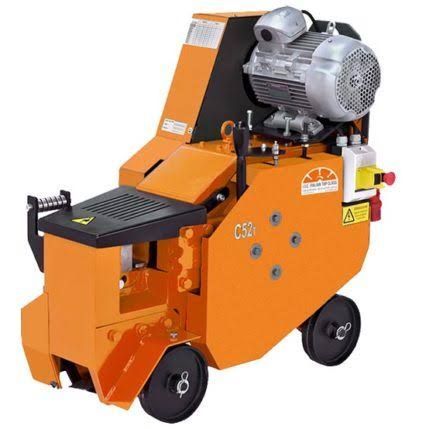
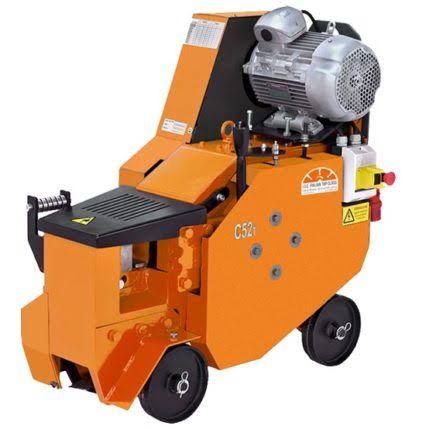
Portable electric cutters: Compact equipment used for cutting reinforcing bars at construction sites or in smaller fabrication areas.
Stationary mechanical cutters: Machines designed for repeated cutting operations in workshops and reinforcement preparation facilities.
Hydraulic rebar cutters: Equipment that uses hydraulic pressure to cut bars within its specified capacity.
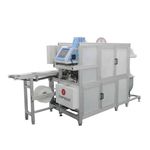
Automatic cutting machines: Systems that feed, measure and cut reinforcing bars with limited manual handling.
CNC reinforcement processing systems: Computer-controlled equipment that may combine cutting with bending or other bar preparation tasks.
Each machine has defined limits. Bar diameter alone does not determine suitability; steel grade, blade condition, duty cycle and manufacturer specifications also affect performance.
Importance
Rebar cutting machines support construction by helping prepare reinforcing steel according to project requirements. Accurate bar lengths are important because reinforcement must fit within formwork and maintain the positions and spacing specified in structural drawings.
Incorrectly prepared bars can cause material waste, delays and difficulties during installation. Cutting equipment helps standardise repeated operations, but accuracy still depends on measurement, machine setup, operator training and inspection of the finished bars.
Construction Accuracy and Productivity
Large construction projects may require thousands of reinforcing bars in different lengths. Preparing them through a controlled cutting process can make it easier to organise materials and supply reinforcement to the correct work areas.
Cutting accuracy also matters when bars are assembled into reinforcement cages or connected with other structural components. Workers must follow the approved reinforcement schedule rather than estimating dimensions at the cutting station.
Worker Safety
Rebar cutting involves sharp steel edges, powerful moving parts, electrical equipment and potential pinch points. A bar may move suddenly if it is not positioned securely, while discarded offcuts can create trip hazards or cause cuts.
Appropriate guards, emergency stops, stable machine placement and suitable personal protective equipment help control these hazards. Operators should never place hands near moving blades or attempt to remove jammed steel while the machine remains energised.
Material Management
Efficient cutting plans can help reduce offcuts and organise reinforcing steel by diameter, grade and required length. Remaining steel sections may be usable for other approved purposes if their dimensions and condition meet the project requirements.
However, cutting plans must account for structural specifications, available stock lengths and the characteristics of the reinforcement schedule. Reducing waste must not result in using bars that fail to meet design requirements.
Common Applications
Rebar cutting machines are used in several construction and manufacturing settings:
Building construction: Preparing reinforcement for columns, beams, slabs and foundations.
Infrastructure projects: Cutting bars for bridges, tunnels, roads and retaining structures.
Precast concrete production: Preparing reinforcement for factory-made concrete components.
Steel reinforcement workshops: Processing bars before delivery to construction sites.
Large infrastructure fabrication: Preparing high volumes of reinforcement in organised production lines.
Recent Updates
Rebar cutting technology increasingly incorporates automation, digital measurement, improved operator controls and integration with reinforcement planning systems. These developments reflect the wider use of mechanised fabrication in construction and the need to prepare different bar lengths with consistent processes.
Automation and Digital Measurement
Some modern machines use programmable length settings, digital displays and automatic feeding mechanisms. These features can reduce repeated manual measurement and help operators manage batches containing several required lengths.
Automated systems still require verification. Incorrectly entered dimensions, feeding errors, worn components or unsuitable settings can produce incorrectly sized bars, so sample checks and routine inspection remain important.
Integration with Construction Planning
Digital construction drawings and reinforcement schedules can help organise cutting requirements before fabrication begins. In facilities with integrated equipment, production data may be transferred from planning software to cutting systems, depending on compatibility.
This approach can help coordinate bar dimensions, quantities and cutting sequences. It also requires accurate source drawings and clear revision control so that outdated measurements are not used during fabrication.
Energy Use and Maintenance Monitoring
Manufacturers continue to refine machine controls, hydraulic systems and motor arrangements. Some facilities also record operating cycles, maintenance history and recurring faults to help plan inspections and component replacement.
These practices do not eliminate mechanical wear. Cutting blades, hydraulic seals, electrical components and moving parts still require inspection according to operating conditions and manufacturer instructions.
Flexible Reinforcement Production
Construction projects often use bars with different diameters and lengths. Programmable cutting equipment can help manage these variations, particularly in fabrication workshops handling multiple project schedules.
The benefits depend on production volume, machine configuration and the quality of the data entered. Smaller projects may use simpler machines where the setup and capacity match the work.
Laws or Policies
In India, rebar cutting machines are affected by workplace safety requirements, electrical safety provisions, construction rules and standards relevant to reinforced concrete structures. The specific requirements depend on the workplace, equipment and type of construction project.
Workplace and Machinery Safety
The Occupational Safety, Health and Working Conditions Code, 2020, forms part of India's consolidated framework for occupational safety and working conditions. Its application should be checked against current commencement notifications, applicable rules and relevant state-level requirements.
Construction and fabrication workplaces may also need to follow applicable factory rules, electrical safety provisions and site-specific safety procedures. These can address machine guarding, safe access, operator training, equipment maintenance and protection from moving parts.
Practical safety controls commonly include:
Installing machines on stable surfaces with adequate working space.
Checking guards, controls and electrical connections before operation.
Securing reinforcing bars before cutting.
Keeping hands and loose clothing away from moving mechanisms.
Isolating energy sources before clearing jams or conducting maintenance.
Storing offcuts safely and maintaining clear walkways.
The required controls should be determined by the equipment instructions and the workplace risk assessment.
Construction Standards and Reinforcement Specifications
The Bureau of Indian Standards publishes standards relevant to reinforcing steel and reinforced concrete construction. IS 1786 addresses high-strength deformed steel bars and wires for concrete reinforcement, while IS 456 covers general requirements for plain and reinforced concrete.
These standards relate to materials and structural construction rather than providing a universal operating procedure for every cutting machine. Project drawings, approved reinforcement schedules, relevant specifications and the engineer's instructions determine the required bar dimensions and placement.
Documentation and Quality Checks
Construction teams may retain reinforcement schedules, material certificates, cutting lists and inspection records. These documents help confirm that the prepared bars correspond to the specified steel grade, diameter and dimensions.
Where a project requires traceability, bar identification should remain clear during cutting, storage and movement to the installation area. Any discrepancy between the cutting list and approved drawings should be resolved through the project's established technical process.
Tools and Resources
Rebar cutting work involves machine specifications, measuring instruments, maintenance tools and construction documentation. The tools required depend on the machine design, reinforcement size and production arrangement.
Machine Selection and Measuring Tools
Important equipment details include the permitted bar diameter, steel-grade limitations, cutting rate, motor or hydraulic requirements, duty cycle and installation space. Operators should consult the manufacturer's technical documentation rather than assuming that all machines with similar dimensions have the same capacity.
Measuring tapes, steel rulers, calibrated stops and digital length displays may be used to set and verify bar dimensions. Regular measurement checks help identify feeding errors or changes caused by machine wear.
Maintenance and Inspection Resources
Maintenance records can track blade replacement, hydraulic leaks, abnormal noise, electrical faults and machine downtime. Inspection checklists help operators confirm that guards, switches and other protective devices are in suitable condition.
The table below summarises common machine types and their typical uses.
| Machine type | Operating method | Typical application |
|---|---|---|
| Portable electric cutter | Powered cutting mechanism | Small or mobile construction tasks |
| Mechanical cutter | Motor-driven mechanical force | Repeated workshop cutting |
| Hydraulic cutter | Pressurised fluid generates cutting force | Cutting within specified bar limits |
| Automatic cutter | Powered feeding and programmed cutting | Repeated batch production |
| CNC processing system | Computer-controlled processing | Integrated reinforcement fabrication |
These descriptions are general. Actual capacity and suitable applications vary by model.
Technical and Training Resources
Useful information may be obtained from the Bureau of Indian Standards, the relevant state factory authority, equipment manuals and construction project documentation. Training materials should cover machine operation, electrical hazards, blade inspection, emergency procedures and safe handling of reinforcing steel.
A maintenance plan should reflect the equipment's actual use, operating environment and manufacturer guidance. Records are especially useful when machines are shared among several operators or used across different construction projects.
FAQs
What are rebar cutting machines used for?
Rebar cutting machines cut reinforcing steel bars into specified lengths for concrete construction. They are used in buildings, bridges, foundations, precast production and reinforcement fabrication workshops.
What types of rebar cutting machines are available?
Common types include portable electric cutters, stationary mechanical cutters, hydraulic cutters, automatic cutting machines and CNC reinforcement processing systems. Their suitability depends on bar dimensions, steel properties and production requirements.
How do hydraulic rebar cutting machines work?
Hydraulic rebar cutting machines use pressurised fluid to move a cutting mechanism against the steel bar. The machine must operate within its specified capacity, and hydraulic components require inspection for leaks and wear.
How can rebar cutting accuracy be maintained?
Accuracy depends on correct measurement, suitable machine settings, secure bar positioning and regular inspection. Operators should verify cut lengths against approved reinforcement schedules and check for signs of blade wear or feeding errors.
What safety precautions are needed when operating rebar cutting machines?
Operators should use suitable guards and protective equipment, secure the bar, keep clear of moving blades and follow established isolation procedures during maintenance. Damaged controls or protective devices should be addressed before normal operation resumes.
Final Thoughts
Rebar cutting machines prepare reinforcing steel for a wide range of concrete construction activities. Their design and capacity determine which bar sizes and production tasks they can handle, while accurate measurements and suitable maintenance support consistent results. In India, workplace safety requirements and construction specifications influence how cutting operations are managed. Safe operation depends on trained personnel, appropriate machine settings, equipment inspections and adherence to approved reinforcement drawings.