Conveyor belt systems are mechanical assemblies that transport materials from one point to another. They are widely used in industries such as manufacturing, mining, agriculture, logistics, and food processing. The primary purpose of a conveyor system is to move heavy or bulk items efficiently, replacing manual labor and reducing the risk of workplace injuries.
The idea of moving goods with belts dates back to the late 19th century, with early designs made from leather or canvas. Over time, materials like rubber, synthetic polymers, and steel were introduced to increase strength, durability, and flexibility. Today, conveyor systems exist in many variations—flat belt, roller, modular, magnetic, and overhead systems—each designed to handle different loads, surfaces, and environments.
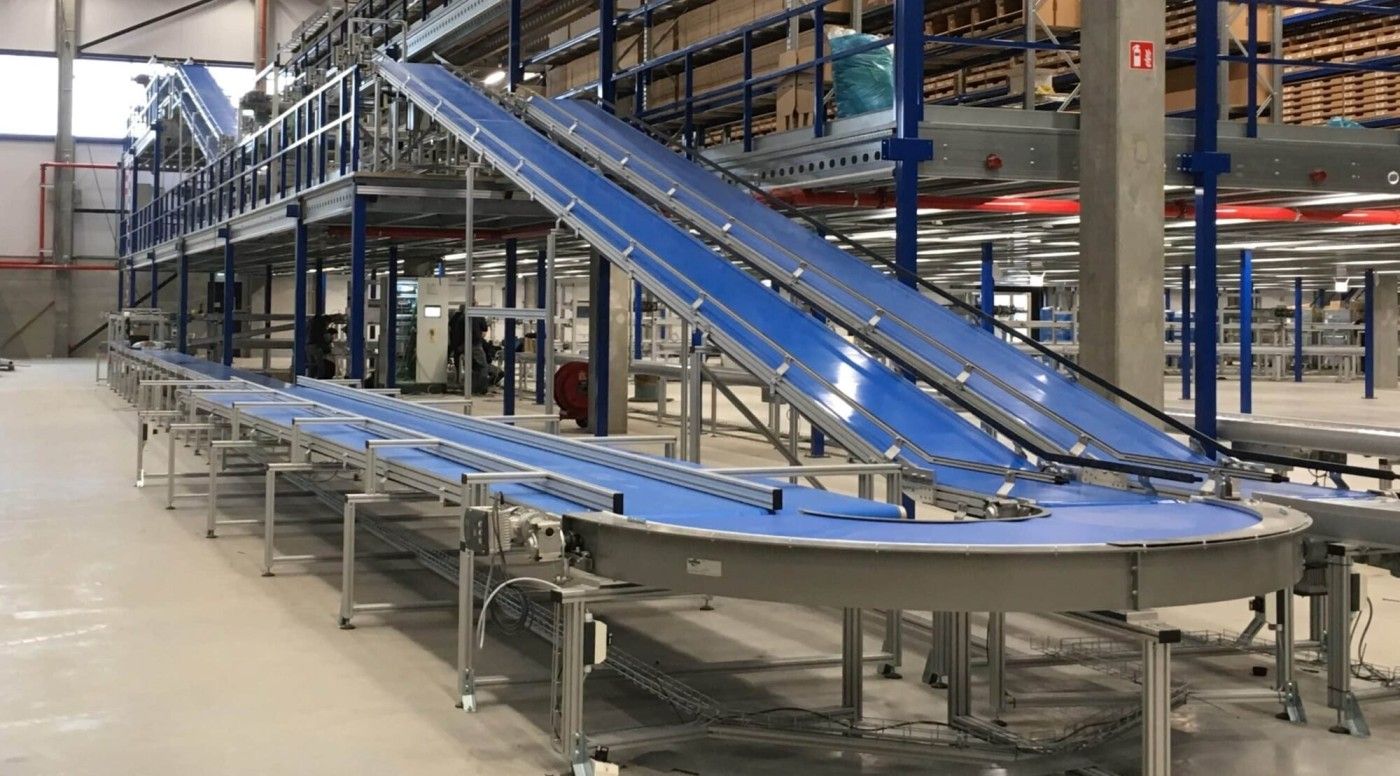
Conveyors are not only used in heavy industries but also in everyday places. Airports rely on conveyor belts for luggage handling, supermarkets use them at checkout counters, and warehouses depend on automated belts to manage online orders.
The importance of conveyor belt systems today
Conveyor systems have become essential to modern infrastructure because they solve challenges linked to time, efficiency, and safety.
-
Manufacturing: Factories depend on conveyor belts to keep production lines continuous and reduce downtime.
-
Mining and construction: These systems make it possible to transport raw materials like coal, ore, or gravel without requiring fleets of trucks.
-
Food industry: Hygiene-friendly conveyor systems ensure safe and controlled food handling.
-
E-commerce and retail: Warehouses process thousands of packages daily, and conveyors support rapid sorting and distribution.
By automating repetitive movement, conveyor belts reduce the need for manual lifting, which minimizes injuries and speeds up workflows. They also contribute to sustainability by using less energy than traditional transport vehicles within a facility.
The systems directly affect industries that shape everyday life. For example, supply chains in grocery stores or online shopping would be significantly slower without conveyor technology. Their importance is tied to global demand for faster logistics and reliable production methods.
Recent updates and trends in conveyor technology
Conveyor belt technology continues to evolve with new innovations and improvements. In 2024 and 2025, several updates have been notable:
-
Automation and robotics integration (2024): Conveyor belts are increasingly linked with robotic arms and automated guided vehicles (AGVs), creating smart material handling systems.
-
Energy efficiency upgrades (2024–2025): Manufacturers are designing belts with lightweight materials and advanced motors that consume less electricity, supporting global sustainability goals.
-
Digital monitoring (2025): Sensors are now embedded in conveyor systems to monitor speed, belt wear, and temperature. This predictive maintenance reduces breakdowns.
-
Industry-specific customization (2024): Food, pharmaceutical, and electronics sectors are adopting conveyors with specialized coatings, anti-static properties, or easy-clean surfaces.
-
Safety enhancements (2025): Emergency stop mechanisms and AI-driven hazard detection have been updated in response to workplace safety regulations.
The graph below shows the increasing demand for conveyor systems across industries between 2020 and 2025, highlighting the strong growth in logistics and e-commerce.
| Year | Logistics Use | Manufacturing Use | Mining Use | Food Industry Use |
|---|---|---|---|---|
| 2020 | 35% | 25% | 20% | 20% |
| 2025 | 50% | 22% | 15% | 13% |
Regulations and policies shaping conveyor belt systems
Conveyor belt systems are influenced by workplace safety standards, environmental policies, and industry-specific regulations.
-
Occupational safety rules: Organizations such as the Occupational Safety and Health Administration (OSHA) in the United States and similar bodies worldwide establish safety requirements for guarding, emergency shut-off switches, and operator training.
-
Environmental policies: Many countries now encourage energy-efficient conveyors as part of industrial emission reduction plans. For example, the European Union’s Green Deal emphasizes sustainable technologies across industries.
-
Food and pharmaceutical safety: The Food and Drug Administration (FDA) in the U.S. and comparable agencies in other nations regulate conveyor belts used for consumables, ensuring surfaces are non-toxic and easy to sanitize.
-
Mining regulations: Governments often require dust-control systems, enclosed conveyors, and safe handling measures to reduce environmental impact.
Policies vary by country, but the common theme is promoting safer, cleaner, and more efficient operations. Companies adopting compliant conveyor systems often avoid penalties and contribute to global sustainability efforts.
Tools and resources for understanding conveyor systems
Several tools and resources can help professionals, students, or general readers learn more about conveyor belt technology.
-
Design software:
-
FlexSim – for simulating conveyor operations in industrial layouts.
-
AutoCAD – used for drafting conveyor belt designs.
-
-
Calculation tools:
-
Online conveyor capacity calculators for determining load and belt speed.
-
Power consumption estimators to measure energy efficiency.
-
-
Websites and resources:
-
International Journal of Material Handling Research – publishes updates on conveyor innovation.
-
OSHA and EU-OSHA websites – provide detailed safety compliance information.
-
-
Standards and guidelines:
-
ISO 5048 – standard for conveyor belt calculation methods.
-
CEMA (Conveyor Equipment Manufacturers Association) publications – provide best practices for design and safety.
-
These resources are valuable for both technical experts and learners who want to explore conveyors without specialized engineering backgrounds.
Frequently asked questions about conveyor belt systems
What are the main types of conveyor belts?
The most common types include flat belts, modular belts, cleated belts, roller conveyors, and overhead conveyors. Each type is designed for specific load capacities and environments.
How long does a conveyor belt last?
The lifespan varies depending on material, load, and maintenance. On average, belts last between 3 to 10 years, with heavy-duty belts lasting longer under proper care.
Are conveyor belts environmentally friendly?
Modern conveyor systems are becoming more sustainable through energy-efficient motors, recyclable materials, and reduced carbon footprints compared to traditional internal transport.
What industries rely most heavily on conveyor systems?
Key industries include logistics, food processing, mining, agriculture, pharmaceuticals, and automotive manufacturing.
What safety measures are required for conveyor belts?
Standard safety measures include emergency stop switches, protective guards, lockout systems during maintenance, and employee training on hazard recognition.
Conclusion
Conveyor belt systems remain a cornerstone of industrial and commercial operations. From moving goods in warehouses to supporting large-scale mining operations, these systems improve efficiency, safety, and productivity.
Recent updates in automation, energy efficiency, and digital monitoring show that conveyors are not static technologies but continuously evolving tools. Regulations ensure that conveyors are operated safely and responsibly, while modern resources make it easier to understand and apply this knowledge.
For anyone curious about how industries move materials smoothly and safely, conveyor systems are an essential subject to explore. They not only represent a century of mechanical progress but also reflect the demands of today’s fast-paced, interconnected world.