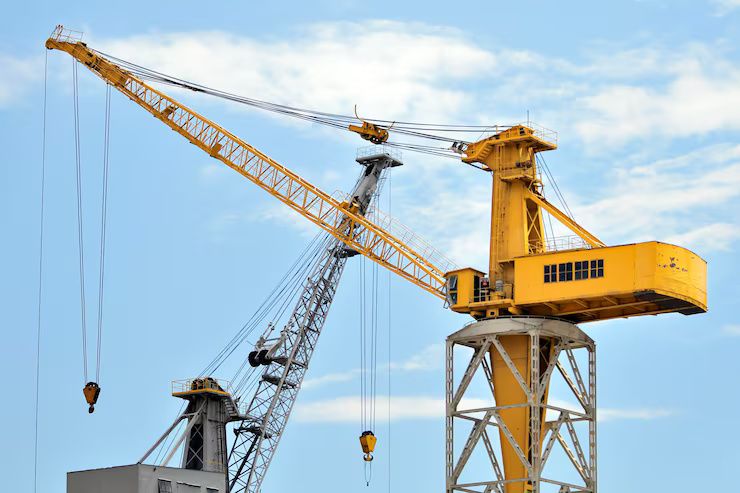
Crane and hoist safety refers to the practices, guidelines, and controls used to reduce risks during lifting operations. Cranes and hoists are mechanical systems designed to lift, lower, and move heavy loads that cannot be handled manually. They are widely used in construction, manufacturing, shipping, warehousing, and energy industries.
Lifting operations involve significant forces, suspended loads, and complex coordination between equipment and people. Without proper safety measures, these operations can result in dropped loads, equipment failure, or serious injury. Crane and hoist safety exists to manage these risks in a structured and predictable way.
Risk management in lifting focuses on identifying hazards before a lift begins, applying controls during operation, and reviewing conditions after work is completed. This approach helps ensure that lifting tasks are carried out in a controlled environment, even when conditions change.
Importance: Why Lifting Risk Management Matters Today
Lifting risk management matters because cranes and hoists are used in increasingly complex environments. Urban construction sites, high-capacity industrial plants, and time-sensitive logistics operations all depend on safe lifting practices.
This topic affects:
-
Crane and hoist operators
-
Site supervisors and safety officers
-
Engineers and project planners
-
Workers operating near lifting activities
Key problems that lifting risk management helps address include:
-
Unstable or shifting loads
-
Equipment overloading
-
Poor communication during lifts
-
Environmental factors such as wind or uneven ground
Modern projects often involve multiple lifting operations happening simultaneously. Effective risk management helps coordinate these activities and reduce the likelihood of unexpected interactions. It also supports consistency, ensuring that safety does not depend solely on individual experience.
Recent Updates: Safety and Industry Developments in the Past Year
Over the past year, crane and hoist safety practices have continued to evolve, influenced by technology, regulatory focus, and industry learning.
Key developments since 2024 include:
-
Digital lift planning tools: In 2024, more organizations adopted software-based lift planning to assess load paths and capacity limits.
-
Enhanced operator assistance systems: Late 2024 saw wider use of load monitoring and anti-collision systems on cranes.
-
Updated safety guidance: In early 2025, industry bodies released clarifications on risk assessment and supervision for complex lifts.
-
Increased training emphasis: Throughout 2024 and 2025, safety programs placed greater focus on competency-based assessment.
-
Incident data analysis: Recent reports in 2025 highlighted improved use of incident data to refine lifting procedures.
These updates reflect a broader trend toward proactive risk identification rather than reactive incident response.
Laws and Policies: Regulations Governing Crane and Hoist Safety
Crane and hoist operations are regulated to protect workers and the public from lifting-related hazards. Regulations vary by country but generally follow common safety principles.
In the United States, crane and hoist safety requirements are guided by the Occupational Safety and Health Administration. OSHA regulations define operator qualification, equipment inspection, and safe operating practices.
Internationally, standards published by the International Organization for Standardization influence crane design, testing, and load rating systems. These standards help create consistency across manufacturers and operators.
Common regulatory focus areas include:
-
Operator training and competency
-
Routine inspection and maintenance
-
Load rating and capacity limits
-
Worksite hazard control
Regulations are designed to ensure that lifting activities are planned, supervised, and executed within defined safety boundaries.
Tools and Resources: Supporting Safe Lifting Operations
A variety of tools and resources support crane and hoist safety by helping teams plan, monitor, and review lifting activities.
Useful resource categories include:
-
Lift planning documents outlining load details and movement paths
-
Risk assessment checklists for site-specific hazards
-
Load calculation references for weight and center-of-gravity estimation
-
Inspection logs for cranes, hoists, and lifting accessories
The table below summarizes common risk management elements:
| Risk Area | Purpose in Lifting Safety |
|---|---|
| Load assessment | Confirms weight and stability |
| Equipment inspection | Detects wear or mechanical faults |
| Communication planning | Coordinates operators and ground crews |
| Environmental checks | Accounts for wind, visibility, terrain |
| Exclusion zones | Keeps personnel clear of suspended loads |
These tools help standardize safety practices across different sites and teams.
Identifying Hazards: The First Step in Risk Management
Hazard identification is the foundation of lifting safety. Before a lift begins, teams assess the load, equipment, and surroundings to identify potential risks.
Common hazards include:
-
Loads with unknown weight or balance
-
Inadequate ground support for cranes
-
Overhead obstructions or nearby structures
-
Limited visibility or restricted movement
By identifying hazards early, controls can be put in place to reduce or eliminate risk. This may involve changing lift methods, adjusting equipment selection, or modifying the work area.
Controlling Risks: Applying Practical Safety Measures
Once hazards are identified, risk controls are applied to manage them effectively. These controls are often layered, combining engineering, administrative, and procedural measures.
Typical control measures include:
-
Selecting cranes or hoists with appropriate capacity
-
Using rated lifting accessories and attachments
-
Establishing clear hand signals or radio communication
-
Assigning supervision for complex or critical lifts
Risk control is not a one-time action. Conditions such as weather or site access can change, requiring continuous monitoring throughout the lifting operation.
Monitoring and Review: Maintaining Safe Lifting Conditions
Monitoring ensures that safety controls remain effective during the lift. Operators and supervisors observe equipment behavior, load stability, and worker positioning.
After lifting activities are completed, reviews may be conducted to identify lessons learned. These reviews help improve future lifting plans and reinforce safe practices.
FAQs: Common Questions About Crane and Hoist Safety
What is lifting risk management?
It is the process of identifying, assessing, and controlling hazards associated with lifting operations.
Why are exclusion zones important during lifts?
They prevent people from entering areas where falling or swinging loads could cause injury.
Do all lifts require formal planning?
Simple lifts may use basic checks, while complex or heavy lifts usually require detailed plans.
How often should cranes and hoists be inspected?
Inspections are performed regularly, with frequency depending on usage and regulatory requirements.
Does technology replace operator judgment?
No. Technology supports decision-making, but trained operators and supervisors remain essential.
Conclusion
Crane and hoist safety is built on structured lifting risk management. By identifying hazards, applying controls, and monitoring conditions, lifting operations can be carried out with greater predictability and reduced risk.
Recent developments show increased use of digital planning tools, monitoring systems, and data-driven safety improvements. At the same time, laws and standards continue to define minimum requirements for safe operation.
Understanding crane and hoist safety principles helps clarify how heavy lifting is managed responsibly across construction and industrial environments, protecting both workers and surrounding communities.