Crankshaft Grinding Machines Details: Speed Control and Feed Mechanisms
Crankshaft grinding machines are specialized industrial machines used to finish and restore crankshafts to precise dimensional and surface requirements. Crankshafts are critical components in engines, converting linear piston motion into rotational movement. Because of this role, their geometry and surface quality must meet strict tolerances.
Crankshafts experience wear, deformation, and surface damage during operation, requiring precise restoration or finishing. Crankshaft grinding machines are designed to correct these issues by ensuring proper roundness, alignment, and smooth bearing surfaces.
Unlike manual machining, these machines operate with high precision, often within micron-level tolerances. Speed control and feed mechanisms are essential components that enable accurate and consistent grinding performance.
Understanding these systems helps explain how modern engines maintain reliability and efficiency.
Importance of Speed Control and Feed Mechanisms
Speed control and feed mechanisms are critical because they directly affect machining accuracy and surface quality. As engine designs become more advanced, precision requirements continue to increase.
Key Reasons This Topic Matters
- Ensures uniform material removal
- Maintains surface integrity and finish quality
- Reduces vibration and operational instability
- Extends grinding tool life
These factors are essential in high-precision manufacturing.
Problems These Systems Help Address
- Surface burns caused by excessive heat
- Uneven grinding and dimensional errors
- Vibration and chatter during operation
- Reduced component lifespan
Proper control improves both performance and reliability.
Recent Updates in Grinding Technology
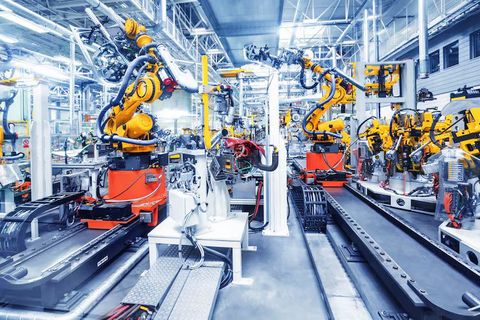
Recent developments focus on automation, monitoring, and efficiency. In 2024, more machines adopted advanced CNC systems for precise control of speed and feed parameters.
Key Updates (2024–2025)
- Enhanced CNC integration for synchronized control
- Adaptive systems adjusting feed rates based on load
- Improved sensor monitoring for vibration and wear
- Energy-efficient spindle speed optimization
- Digital diagnostics for predictive maintenance
These updates reflect a shift toward smarter and more automated machining systems.
Laws and Policies Affecting Machine Operation
Crankshaft grinding machines operate under industrial safety and quality standards. These regulations ensure safe operation and consistent output.
Key Regulatory Areas
- Machine guarding and operator safety
- Electrical and control system standards
- Noise and vibration exposure limits
- Maintenance and documentation requirements
These policies support safe and reliable machine usage.
Tools and Resources for Machine Operation
Various tools help operators manage speed and feed systems effectively. These resources support precision and process control.
Helpful Resources
- Machine operation manuals
- CNC programming guides
- Measurement and inspection tools
- Process monitoring software
These tools help maintain consistent machining quality.
Key Speed and Feed Parameters
Speed and feed parameters define how grinding operations are controlled.
| Parameter Type | Typical Purpose |
|---|---|
| Wheel Speed | Controls cutting action and heat |
| Workpiece Speed | Ensures uniform surface finish |
| Infeed Rate | Regulates material removal per pass |
| Traverse Feed | Controls movement along crankshaft |
| Spark-Out Duration | Improves final surface accuracy |
These parameters must be carefully coordinated for optimal results.
Speed Control in Grinding Machines
Speed control manages the rotational motion of both the grinding wheel and the crankshaft. Proper coordination between these speeds ensures stable cutting conditions.
Key Functions of Speed Control
- Maintains cutting efficiency
- Controls heat generation
- Ensures smooth surface finish
Modern machines use CNC systems or variable frequency drives to adjust speeds precisely.
Feed Mechanisms in Grinding Operations
Feed mechanisms determine how the grinding wheel advances toward and across the crankshaft surface. They play a major role in accuracy and consistency.
Common Feed Types
- Radial feed for diameter adjustment
- Axial feed for covering journal length
- Incremental infeed for controlled grinding passes
Advanced systems use automated controls to improve precision and reduce operator dependency.
FAQs: Common Questions About Crankshaft Grinding
What is the role of speed control?
It ensures stable grinding conditions and prevents surface damage.
Why are feed mechanisms important?
They control material removal and ensure dimensional accuracy.
Are modern machines automated?
Many use CNC systems, but operator oversight is still required.
How do sensors improve performance?
They provide real-time data for adjusting speed and feed parameters.
Do settings vary by material?
Yes. Different materials require different speed and feed combinations.
Conclusion
Crankshaft grinding machines are essential for maintaining precision in engine components. Speed control and feed mechanisms play a central role in ensuring accurate and consistent machining.
Recent advancements highlight automation, adaptive control, and improved monitoring systems. At the same time, safety and quality standards continue to guide machine operation.
Understanding these systems provides insight into the technical precision required in modern engine manufacturing and maintenance.