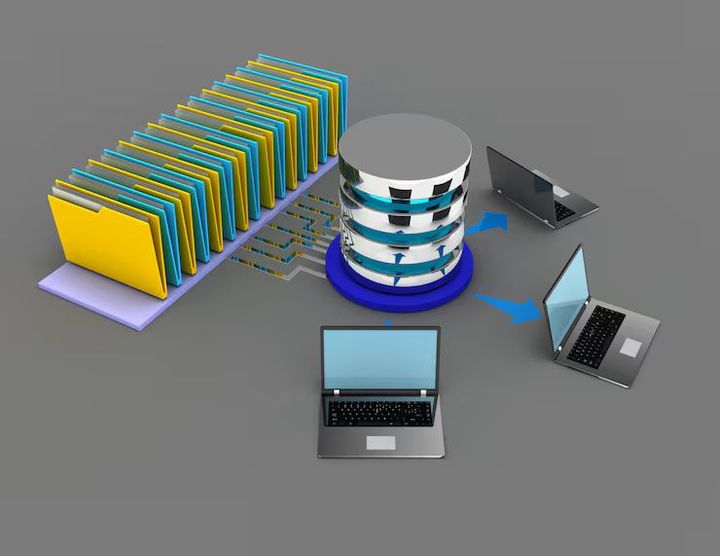
As businesses and organizations generate increasing volumes of structured and unstructured data, traditional monolithic database systems often struggle with speed, latency, and availability. Sharding helps distribute data across multiple servers, improving response times and system resilience.
In modern cloud computing environments, database sharding is a core strategy for building scalable data architecture. It is widely used across industries that require high performance and continuous uptime.
Common Use Cases
Database sharding is commonly implemented in:
-
High-traffic web applications
-
Financial technology platforms
-
E-commerce systems
-
Social media networks
-
SaaS platforms
-
Big data analytics environments
Sharding vs Replication
Sharding differs significantly from replication. Replication copies identical data across servers, while sharding distributes different portions of data across multiple nodes.
| Feature | Replication | Sharding |
|---|
| Data Structure | Full copy on each node | Split across nodes |
| Scalability Type | Read scalability | Read and write scalability |
| Storage Distribution | Same data everywhere | Different data per shard |
| Complexity Level | Moderate | Higher |
Why Database Sharding Matters Today
Database sharding plays a critical role in modern data infrastructure. Organizations handling millions of transactions per second need systems that maintain high performance without downtime.
Key Drivers of Adoption
Several factors are driving the need for sharding:
-
Rapid data growth from IoT and AI systems
-
Increasing demand for low-latency applications
-
Expansion of cloud-based infrastructure
-
Need for high availability and fault tolerance
-
Rising cybersecurity and governance requirements
Industries Benefiting from Sharding
Many sectors rely on sharded databases for scalability:
-
Banking and financial services
-
Healthcare data systems
-
Telecommunications networks
-
Online education platforms
-
Digital advertising technology
Challenges Without Sharding
Without sharding, large-scale systems often face:
-
Database bottlenecks
-
Slow query execution
-
Resource overload
-
Downtime during peak traffic
Sharding distributes workloads efficiently. For example, global platforms often shard data by geographic region to reduce latency and improve user experience.
Recent Trends and Updates in 2025
Database sharding has evolved significantly in 2025 due to advancements in cloud computing and automation. Major cloud providers have enhanced distributed database capabilities with intelligent data management features.
Key Developments
Recent innovations include:
-
Serverless database architecture adoption
-
AI-driven workload optimization
-
Multi-region deployment support
-
Enhanced encryption across shards
-
Kubernetes integration for scalability
Hybrid Sharding Models
Organizations are increasingly adopting hybrid approaches that combine multiple techniques:
-
Range-based sharding
-
Hash-based sharding
-
Directory-based sharding
These hybrid strategies provide flexibility for complex enterprise systems.
Observability and Compliance Trends
Modern monitoring tools now offer real-time insights into shard performance, latency, and data distribution. Additionally, data sovereignty requirements are influencing geographically distributed shard designs.
Laws and Policies Affecting Database Sharding
Database sharding must comply with global data protection and cybersecurity regulations. These laws influence how data is stored, processed, and distributed across regions.
Key Regulatory Frameworks
-
Healthcare regulations such as HIPAA in the United States
-
GDPR in the European Union
-
National data protection laws in countries like India and Brazil
Compliance Considerations
Organizations must address several regulatory requirements:
-
Data localization rules
-
Encryption standards
-
Data retention policies
-
Access control systems
-
Audit and logging compliance
Geographically aware sharding architectures are often used to meet these legal requirements while maintaining system performance.
Common Database Sharding Techniques
Different sharding techniques are used based on system architecture and workload patterns. Each method offers unique advantages depending on the use case.
Range-Based Sharding
Data is divided based on a value range, such as user IDs.
-
Shard A: IDs 1–1,000,000
-
Shard B: IDs 1,000,001–2,000,000
Hash-Based Sharding
A hash function determines where data is stored. This ensures more even distribution across shards.
Geographic Sharding
Data is split based on location, helping reduce latency and support compliance requirements.
Directory-Based Sharding
A lookup table is used to track where each piece of data resides, allowing flexible data management.
Sharding Techniques Comparison
| Sharding Type | Best For | Key Advantage |
|---|
| Range-Based | Predictable datasets | Simple logic |
| Hash-Based | High traffic systems | Balanced distribution |
| Geographic | Global applications | Reduced latency |
| Directory-Based | Complex enterprise systems | Flexible control |
Tools and Resources for Database Sharding
Modern technologies and platforms provide strong support for implementing sharded database systems. These tools help manage scalability, performance, and monitoring.
Popular Database Systems
-
MySQL with manual partitioning
-
PostgreSQL with extensions
-
MongoDB with built-in sharding
-
Apache Cassandra distributed architecture
-
Amazon Aurora
-
Google Cloud Spanner
-
Azure Cosmos DB
Monitoring and DevOps Tools
-
Kubernetes for orchestration
-
Prometheus for metrics tracking
-
Grafana for visualization
-
Elastic Stack for logging and analytics
Developer Resources
-
Performance benchmarking tools
-
Query optimization analyzers
-
Schema design templates
-
Capacity planning calculators
Frequently Asked Questions
What is the primary goal of database sharding?
The main goal is to improve scalability and performance by distributing data across multiple servers instead of relying on a single database system.
Is sharding suitable for small applications?
Small applications may not need sharding initially. It is typically implemented when data volume and traffic grow beyond the limits of vertical scaling.
How does sharding improve performance?
Sharding enables parallel processing of read and write operations, reducing bottlenecks and improving response times.
What are the risks of database sharding?
Key challenges include increased complexity, difficulty in cross-shard queries, and maintaining data consistency.
Can sharding work with cloud databases?
Yes, many modern cloud platforms include built-in sharding or distributed storage solutions designed for scalability.
Conclusion
Database sharding is a foundational technique for building scalable and high-performance data systems. It helps address challenges related to growth, availability, and system efficiency in modern digital environments.
Recent developments highlight a shift toward AI-driven optimization, multi-region deployment, and compliance-focused architecture. These trends continue to shape how organizations design distributed databases.
By understanding sharding techniques, legal considerations, and available tools, businesses can build resilient data architectures that support long-term digital transformation.