Deep learning is a subfield of artificial intelligence that focuses on training computer systems to recognize patterns and make decisions using layered computational models called neural networks. These models are inspired by the way the human brain processes information through interconnected neurons, though they are mathematical and computational in nature rather than biological.
Deep learning exists because traditional rule-based programming struggles with complex, unstructured data such as images, speech, video, and natural language. Earlier AI approaches required humans to define explicit rules. As data volumes grew and problems became more complex, this approach became inefficient. Deep learning emerged to allow systems to learn representations directly from large datasets.
At its core, deep learning uses multiple layers of computation to transform raw data into increasingly abstract features. For example, in image analysis, early layers may detect edges, while deeper layers recognize shapes and objects. This layered learning process enables systems to handle tasks that were previously difficult for computers, such as language translation or visual recognition.
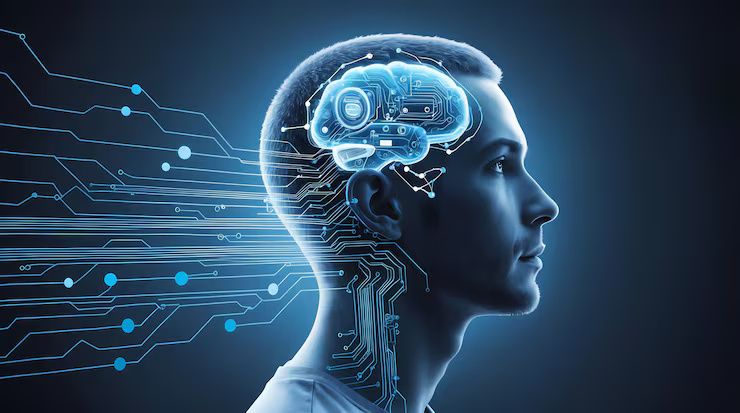
Importance: Why Deep Learning Matters Today
Deep learning matters today because it underpins many of the most significant advances in artificial intelligence. Its ability to process large datasets and identify subtle patterns has expanded what automated systems can achieve across many fields.
Deep learning is important because it:
-
Improves accuracy in pattern recognition tasks
-
Enables automation of complex data analysis
-
Supports scalable learning from large datasets
-
Adapts to new information without explicit reprogramming
This topic affects a wide range of stakeholders, including researchers, educators, technology professionals, policymakers, and everyday users of digital tools. Applications powered by deep learning influence communication, healthcare research, transportation systems, and scientific discovery.
By solving problems related to scale, complexity, and variability in data, deep learning helps bridge the gap between raw information and actionable insight. It allows systems to learn from experience in ways that were not feasible with earlier computational methods.
Recent Updates: Developments and Trends from the Past Year
During 2024 and early 2025, deep learning research and application continued to advance rapidly. One major trend in early 2024 was increased focus on efficiency. Researchers explored methods to reduce the computational and energy requirements of deep learning models while maintaining performance. Techniques such as model compression and optimized training pipelines gained attention.
In mid-2024, multimodal deep learning became more prominent. Models designed to process and combine multiple data types, such as text, images, and audio, were discussed widely in academic and technical communities. These approaches aim to create systems with a more holistic understanding of information.
By late 2024 and into 2025, transparency and interpretability received greater emphasis. There was growing discussion around understanding how deep learning models reach decisions, especially in sensitive domains. This trend reflects broader concerns about trust, accountability, and responsible use of artificial intelligence.
Another recent development involved the expansion of deep learning beyond large research institutions. Improved tools and educational resources made it easier for students and smaller organizations to experiment with neural networks for learning and research purposes.
Laws and Policies: How Regulation Affects Deep Learning
Deep learning is influenced by emerging laws and policies related to artificial intelligence, data protection, and ethical technology use. These frameworks aim to balance innovation with accountability and public trust.
In many regions, data protection regulations shape how datasets used for deep learning can be collected and processed. These laws emphasize user consent, transparency, and responsible handling of personal information.
In the European Union, the introduction of comprehensive artificial intelligence governance, often discussed as the EU Artificial Intelligence Act, has drawn global attention. This framework categorizes AI systems by risk level and establishes requirements for transparency and oversight, which directly affects how deep learning systems are developed and deployed.
International organizations also contribute guidance. For example, the Organisation for Economic Co-operation and Development has published principles for trustworthy artificial intelligence, influencing how deep learning systems are evaluated in policy discussions.
These regulatory developments highlight the importance of aligning deep learning research with societal values, safety considerations, and ethical standards.
Tools and Resources: Learning and Working With Deep Learning
A wide range of educational and technical resources support understanding and experimentation with deep learning. These tools are commonly used in academic, research, and learning environments.
Helpful tools and resources include:
-
Open-source libraries for neural network experimentation
-
Educational courses explaining machine learning fundamentals
-
Visualization tools for understanding neural network behavior
-
Research papers and open datasets for academic study
-
Community forums and documentation for shared learning
The table below outlines common deep learning model types and their general use:
| Model Type | Primary Use Case | Data Type |
|---|---|---|
| Convolutional networks | Image and visual pattern analysis | Images, video |
| Recurrent networks | Sequential data processing | Text, time series |
| Transformer-based models | Context-aware data understanding | Language, multimodal |
| Autoencoders | Feature learning and compression | Structured data |
| Generative models | Data generation and simulation | Mixed formats |
These resources help learners and researchers explore how deep learning systems are built and evaluated.
Frequently Asked Questions About Deep Learning
What is the difference between machine learning and deep learning?
Machine learning is a broad field focused on learning from data, while deep learning is a specific approach that uses multi-layer neural networks.
Does deep learning require large amounts of data?
Deep learning typically performs best with large datasets, though research continues on methods that work with limited data.
Is deep learning the same as artificial intelligence?
No, deep learning is a subset of artificial intelligence, which includes many other techniques and approaches.
Why is deep learning computationally intensive?
Training deep neural networks involves many calculations across multiple layers, which requires significant processing power.
Can deep learning systems explain their decisions?
Interpretability is an active area of research, and while progress is being made, many models remain complex to fully explain.
Conclusion: Understanding Deep Learning in Modern AI
Deep learning represents a major step forward in artificial intelligence by enabling systems to learn complex patterns directly from data. Its layered approach to representation learning has transformed how machines interpret images, language, and other forms of information.
By understanding the context, importance, recent trends, regulatory influences, and available resources related to deep learning, readers can better appreciate its role in modern technology. As research continues and policies evolve, deep learning will remain a central component of artificial intelligence, shaping how data-driven systems interact with the world in responsible and informed ways.