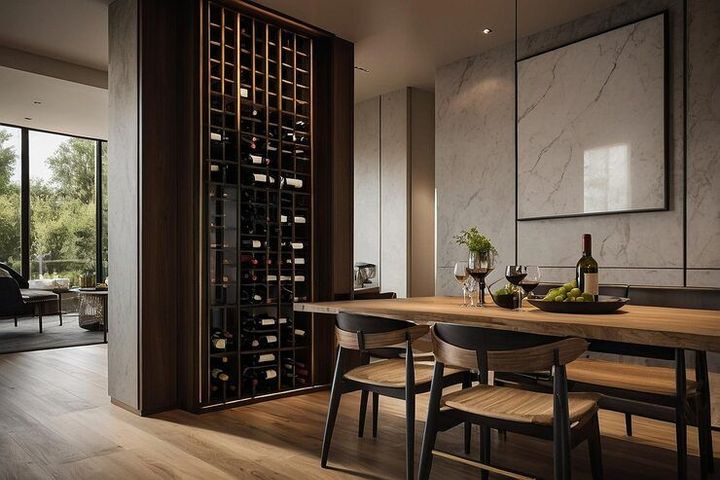
Dining Room Wine Storage Walls Guide: Stylish Ways to Organize and Display Bottles
Dining room wine storage walls are becoming a popular feature in modern home design. These installations combine storage and interior aesthetics by creating a dedicated wall area to organize and display wine bottles. Instead of keeping bottles hidden in cabinets or refrigerators, homeowners can integrate wine storage directly into the dining space.
Wine has long been associated with dining culture and social gatherings. As dining rooms evolved into multi-purpose spaces, the need for convenient and organized wine storage increased. A wine storage wall allows bottles to be stored horizontally using racks, shelves, or specialized compartments for proper preservation.
These storage systems can be built into cabinetry, mounted directly on walls, or integrated into architectural elements like niches or glass panels. Some designs feature minimalist metal racks, while others incorporate wooden shelving or climate-controlled cabinets. In many homes, these walls serve both functional and decorative purposes.
Why Dining Room Wine Storage Walls Matter in Modern Homes
Interior design trends increasingly combine practicality with visual appeal. Wine storage walls meet both needs by organizing bottles efficiently while enhancing the dining room’s overall look.
One key advantage is the efficient use of vertical space. Instead of taking up floor area, wall-mounted systems maximize storage without reducing usable room space. They also support proper horizontal bottle positioning, which helps preserve wine quality.
Key Advantages
- Organized storage within the dining area
- Easy access during meals and gatherings
- Efficient use of vertical wall space
- Enhanced interior design aesthetics
- Structured arrangement for inventory tracking
Who Benefits from Wine Storage Walls
| User Group | Benefit |
|---|---|
| Homeowners | Integrated and organized storage within dining spaces |
| Interior Designers | Functional feature that enhances visual appeal |
| Wine Enthusiasts | Easy access and structured bottle display |
| Renovation Planners | Efficient use of wall space in modern layouts |
Dining room wine storage walls also help solve common issues such as overcrowded cabinets, limited pantry storage, and scattered bottle placement across the home.
Recent Updates and Design Trends (2024–2025)
Wine storage wall designs have evolved rapidly in recent years. New trends focus on flexibility, sustainability, and technology integration.
One major development is the adoption of smart storage systems. Many modern designs now include climate-controlled units that maintain stable temperature and humidity levels.
Emerging Design Trends
- Glass-front storage walls for protected display
- LED accent lighting to highlight bottle arrangements
- Hidden storage panels for seamless wall integration
- Smart temperature monitoring systems
- Modular racks with adjustable configurations
Sustainability has also influenced material selection, with designers increasingly using recycled metals, engineered wood, and eco-friendly finishes.
Popular Design Approaches
| Design Trend | Description |
|---|---|
| Glass Display Walls | Transparent panels showcasing wine collections |
| LED Backlighting | Lighting that adds depth and visual appeal |
| Modular Storage | Expandable and adjustable rack systems |
| Mixed Materials | Combination of wood, metal, and glass elements |
| Built-In Cabinets | Fully integrated wall-mounted storage solutions |
These trends highlight how wine storage walls are becoming an integral part of modern interior design.
Regulations, Safety Guidelines, and Building Considerations
Although primarily a design feature, wine storage walls must follow certain safety and construction guidelines. These are especially important when electrical systems or heavy installations are involved.
Local regulations may apply if the storage wall includes lighting or climate-controlled units. Electrical wiring must comply with residential safety standards to ensure proper installation.
Key Considerations
- Secure mounting to load-bearing walls or reinforced surfaces
- Proper ventilation for temperature-controlled units
- Compliance with electrical safety codes
- Use of fire-resistant or approved materials
- Adherence to local building permits where required
In many regions, energy-efficient systems are encouraged, particularly for appliances such as climate-controlled cabinets.
Tools and Resources for Planning Wine Storage Walls
Planning a wine storage wall requires careful consideration of layout, capacity, and materials. Various digital tools and resources can simplify the process.
Common Planning Tools
- Room layout planners for visual placement
- Wine rack capacity calculators
- Interior design software for 3D visualization
- Material planning templates for dimensions
- Lighting design guides for proper illumination
Useful Digital Resources
| Tool Type | Purpose |
|---|---|
| Interior Design Software | Create 3D layouts and visualize storage walls |
| Wine Cellar Calculators | Estimate bottle capacity and spacing |
| Renovation Planning Apps | Organize project steps and measurements |
| Material Estimation Tools | Track shelving and rack requirements |
| Lighting Design Tools | Plan LED placement and lighting effects |
These tools help ensure the storage wall is both functional and visually aligned with the dining room design.
Example Storage Capacity Layout
Wall size plays a major role in determining how many bottles can be stored. Larger walls allow for more complex and higher-capacity storage systems.
| Wall Width | Rack Type | Estimated Bottle Capacity |
|---|---|---|
| 3 feet | Horizontal metal racks | 24–30 bottles |
| 5 feet | Wooden shelving system | 40–60 bottles |
| 8 feet | Modular rack wall | 80–120 bottles |
| 10 feet | Built-in cabinet system | 120–180 bottles |
This table shows how storage capacity scales with wall size and design choice.
Frequently Asked Questions
What is a dining room wine storage wall?
A dining room wine storage wall is a dedicated wall section designed to store and display wine bottles. It typically includes racks, shelves, or built-in cabinets.
Why are wine bottles stored horizontally?
Horizontal storage keeps the cork moist by maintaining contact with the wine. This prevents the cork from drying out and helps protect the wine from oxidation.
Can wine storage walls be installed in small dining rooms?
Yes, compact designs such as modular racks and vertical storage systems can fit smaller spaces. These solutions maximize storage without requiring large areas.
Do wine storage walls require temperature control?
Not always. Basic systems focus on storage and display, while advanced setups may include temperature control for long-term preservation.
What materials are commonly used?
Common materials include wood, metal, glass, and engineered boards. Many designs combine these materials for durability and visual appeal.
Conclusion
Dining room wine storage walls combine practical storage with modern interior design. They provide organized access to wine while enhancing the visual character of dining spaces.
Recent trends emphasize modular designs, integrated lighting, and sustainable materials. At the same time, safety guidelines and structural considerations remain essential for proper installation.
With the help of planning tools and thoughtful design, wine storage walls can become a long-lasting and functional feature in modern homes.