Discover 3D Printed Furniture: An Introduction to Additive Manufacturing in Furniture Production
3D printed furniture is a growing category of furniture created through additive manufacturing, a process that builds objects layer by layer from digital designs.
Instead of cutting or shaping large pieces of material, specialized printers gradually form chairs, tables, shelves, lighting components, and decorative items using plastics, recycled materials, concrete, metals, or composite materials. This manufacturing approach has attracted attention because it allows complex shapes that are difficult to produce using many traditional methods.
The development of 3D printed furniture reflects broader advances in digital design and manufacturing technologies. Designers, architects, educational institutions, and manufacturers continue exploring how additive manufacturing can support furniture production while reducing unnecessary material waste. Understanding how this process works provides useful insight into one of the emerging areas of modern manufacturing.
Context
What Is 3D Printed Furniture?
3D printed furniture refers to furniture manufactured using additive manufacturing technology. A computer-generated design guides a printer that deposits material in successive layers until the completed object is formed.
The process differs from conventional woodworking or metal fabrication because material is added only where required by the digital model. Depending on the furniture design, some components are printed as a single piece, while larger products may be assembled from several printed sections.
How the Technology Developed
The foundations of additive manufacturing were established for industrial prototyping many years ago. As printer capabilities expanded and materials improved, designers began applying the same technology to larger functional products, including furniture.
Today, improvements in printer size, printing speed, and material selection have made 3D printed furniture suitable for research projects, interior design, public installations, educational activities, and selected commercial manufacturing applications.
Materials Used in 3D Printed Furniture
Different materials are chosen according to the intended use and structural requirements.
Common materials include:
- PLA and PETG polymers
- Recycled plastic materials
- ABS plastic
- Wood-filled composite materials
- Concrete mixtures
- Metal powders used with specialized printing systems
- Bio-based composite materials
Material selection influences strength, appearance, durability, flexibility, and finishing requirements.
Common Furniture Types
Many types of furniture can be produced using additive manufacturing.
| Furniture Type | Typical Material | Common Application |
|---|---|---|
| Chairs | Plastic composites | Residential and public spaces |
| Tables | Polymer or composite | Indoor furniture |
| Shelving | Plastic materials | Storage and display |
| Benches | Concrete or composite | Outdoor environments |
| Decorative furniture | Mixed materials | Interior decoration |
| Lighting structures | Lightweight polymers | Architectural interiors |
Importance
Why 3D Printed Furniture Matters
Furniture manufacturing continues evolving alongside digital technologies. 3D printed furniture demonstrates how digital design and automated production can create products with unique geometries while using material efficiently.
Because objects are produced directly from digital files, manufacturers can develop customized dimensions and complex structural forms without relying on numerous conventional production tools.
Environmental Considerations
Many research projects involving 3D printed furniture focus on efficient material usage and recycled feedstocks. Some manufacturers incorporate recycled plastics into furniture production after processing the material into printable filament or pellets.
Reducing excess material during production has become an important area of study within sustainable manufacturing.
Design Flexibility
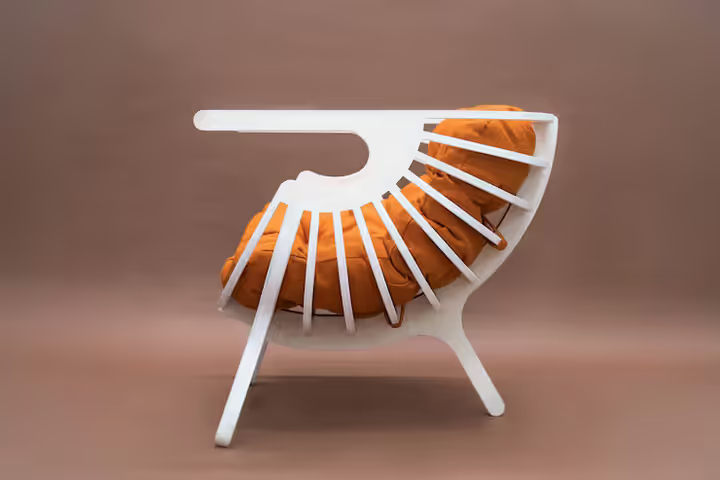
Traditional manufacturing methods sometimes limit highly detailed or organic shapes. Additive manufacturing allows designers to create lattice structures, curved surfaces, and intricate patterns that would otherwise require multiple manufacturing steps.
Digital design software also enables rapid adjustments before production begins.
Industries Connected to 3D Printed Furniture
Several sectors contribute to the continued development of this technology, including:
- Furniture manufacturing
- Interior design
- Architecture
- Industrial design
- Educational institutions
- Construction research
- Materials science
- Product development
Collaboration among these fields supports ongoing improvements in printing techniques and material performance.
Recent Updates
Larger Industrial Printers
Recent developments have introduced larger additive manufacturing systems capable of printing furniture components with fewer separate parts. These machines accommodate larger printing volumes while maintaining dimensional accuracy.
Larger equipment has expanded the range of furniture designs that can be produced through additive manufacturing.
Expanded Material Research
Researchers continue developing printable materials that combine strength, durability, and environmental considerations. Interest has grown in recycled polymers, plant-based materials, reinforced composites, and mineral-filled materials suitable for furniture manufacturing.
Material innovation remains one of the fastest-moving areas within additive manufacturing.
Improved Software Integration
Modern design software increasingly connects directly with manufacturing equipment. Designers can simulate structural performance, evaluate material usage, and prepare production files using integrated digital workflows.
This process reduces design errors before printing begins.
Artificial Intelligence in Design
Artificial intelligence tools are beginning to assist furniture designers by generating alternative design concepts, optimizing internal structures, and evaluating material distribution.
These systems support human creativity rather than replacing the design process.
Circular Manufacturing Approaches
Many organizations are exploring circular manufacturing concepts in which recyclable materials are collected, processed, and reintroduced into new production cycles. Although implementation varies, this approach continues receiving attention within sustainable manufacturing research.
Laws or Policies
Product Safety Standards
Furniture manufactured through additive manufacturing is generally expected to comply with applicable product safety regulations in the country where it is distributed. Requirements vary depending on furniture type, intended use, and materials.
Testing may include evaluations of structural stability, durability, and material performance.
Material Regulations
Some regions regulate the materials used in consumer products to help protect public health and the environment. Manufacturers must consider chemical safety requirements, labeling rules, and material documentation where applicable.
These regulations differ among countries and product categories.
Environmental Policies
Governments increasingly encourage sustainable manufacturing through recycling initiatives, waste reduction strategies, and responsible material management. These policies influence research involving recycled materials used in 3D printed furniture.
Environmental requirements continue evolving alongside manufacturing technologies.
Intellectual Property Considerations
Digital furniture designs may be protected through copyright, design rights, patents, or other intellectual property frameworks. Designers and manufacturers should understand the applicable legal protections within their jurisdictions.
Tools and Resources
Several digital tools support the design and production of 3D printed furniture.
Computer-Aided Design Software
Design software allows users to create three-dimensional furniture models before printing. These programs support measurements, structural adjustments, and visualization from multiple viewing angles.
Slicing Software
Before printing begins, slicing software converts the digital model into machine instructions by dividing the object into printable layers.
These applications allow users to configure printing parameters appropriate for the selected material.
Material Databases
Material databases provide technical information about printable polymers, composites, recycled materials, and concrete mixtures. These references help designers compare material characteristics for different furniture applications.
Educational Resources
Universities, manufacturing institutes, standards organizations, engineering associations, and research publications provide educational materials covering additive manufacturing, digital design, structural analysis, and material science related to 3D printed furniture.
FAQs
What is 3D printed furniture?
3D printed furniture is furniture produced through additive manufacturing, where specialized printers build objects layer by layer using digital designs and printable materials.
Which materials are commonly used for 3D printed furniture?
Common materials include PLA, PETG, ABS, recycled plastics, composite materials, concrete mixtures, and selected metals used with specialized industrial printing equipment.
Is 3D printed furniture durable?
Durability depends on material selection, design, manufacturing quality, and intended use. Different materials provide different levels of strength, flexibility, and environmental resistance.
How is 3D printed furniture different from traditional furniture manufacturing?
Traditional manufacturing often removes material through cutting, shaping, or machining. In contrast, 3D printed furniture is created by adding material layer by layer according to a digital design.
Where is 3D printed furniture commonly used?
3D printed furniture is found in residential interiors, educational environments, architectural projects, exhibitions, public spaces, research laboratories, and selected commercial settings where digital manufacturing techniques are being explored.
Conclusion
3D printed furniture represents an evolving area of additive manufacturing that combines digital design with modern production technologies. Advances in printer capabilities, material research, and software continue expanding the possibilities for furniture manufacturing. As sustainability, digital workflows, and material innovation receive greater attention, additive manufacturing is expected to remain an important area of research and development within the furniture industry. Understanding the technology helps explain how manufacturing methods continue adapting to changing design and production requirements.