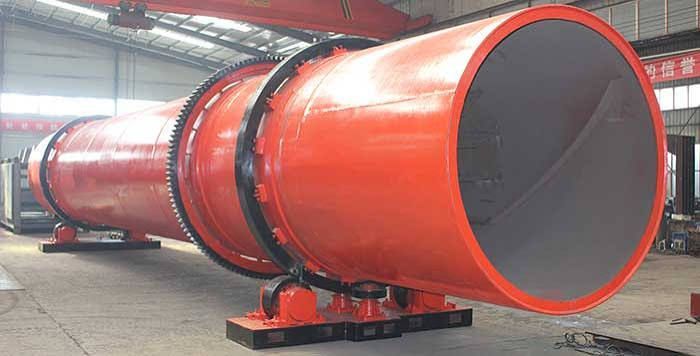
Drying Drums: A Guide to Rotary Drying, Heat Transfer, Drum Design and Moisture Control
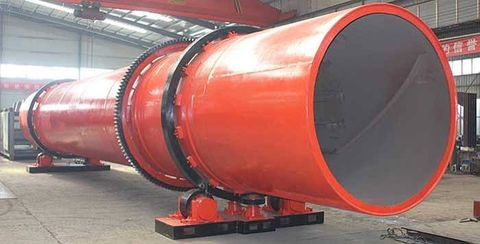
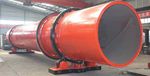
A drying drum is an industrial piece of equipment used to reduce moisture in solid materials by exposing them to controlled heat and moving air. Also known as a rotary dryer in many applications, it consists mainly of a rotating cylindrical chamber through which wet material travels while heated air removes moisture.
Drying drums are used across industries that handle minerals, aggregates, biomass, chemicals, fertilizers, food ingredients, and other bulk materials. Their design allows continuous material movement, making them suitable for processes where large quantities of material need controlled moisture reduction.
The basic principle is straightforward. Wet material enters the rotating drum, internal lifting components raise and release the material as the drum turns, and heated air passes around the material. Moisture changes from liquid water into vapor and leaves with the exhaust gas.
How rotary drying works
Rotary drying combines movement, heat transfer, and airflow. As the drum rotates, flights or lifting vanes pick up material and allow it to fall through the heated gas stream.
This repeated lifting and falling increases contact between the material and the drying air. The actual drying rate depends on factors such as material moisture, particle size, air temperature, airflow, residence time, and the physical characteristics of the material.
The process can generally be divided into several stages:
Wet material enters the drum.
Material is distributed across the rotating chamber.
Flights lift and cascade the material.
Heat transfers from the gas to the material.
Moisture evaporates from the material.
Moist air and fine particles leave through the exhaust system.
Dried material exits at the opposite end.
Direct and indirect drying
Drying drums can use direct or indirect heating arrangements. In direct systems, heated gas comes into contact with the material inside the drum. This arrangement is widely used for materials where direct exposure to the drying gas is acceptable.
Indirect systems transfer heat through a drum wall or another separating surface, keeping the heating gas apart from the material. The choice depends on material characteristics, contamination considerations, temperature requirements, and process design.
| Drying approach | Main heat-transfer method | Typical consideration |
|---|---|---|
| Direct rotary drying | Heated gas contacts material | Suitable where gas contact is acceptable |
| Indirect rotary drying | Heat passes through a separating surface | Useful where direct gas contact is undesirable |
| Counter-current drying | Gas and material move in opposite directions | Can provide strong thermal contact |
| Co-current drying | Gas and material move in the same direction | Useful for temperature-sensitive materials |
Why Drying Drums Matter
Moisture control in industrial processes
Moisture can affect the handling, storage, processing, and physical characteristics of bulk materials. Excess water may cause sticking, clumping, reduced flow, unstable storage conditions, or difficulties in subsequent production stages.
Drying drums provide a controlled way to reduce moisture before material reaches another process. The required moisture level depends on the material and the application rather than on one universal target.
For example, aggregates may need controlled moisture before asphalt production, while biomass may require drying before combustion or further processing. Minerals and chemical materials can also require moisture reduction before storage or additional treatment.
Heat transfer and energy use
Heat transfer is central to rotary drying. Thermal energy moves from the heated gas or drum surface toward the moisture contained within the material.
Several factors influence thermal performance, including:
Gas temperature
Gas velocity
Material temperature
Drum rotation speed
Material residence time
Particle size
Material loading
Initial moisture content
Exhaust conditions
Increasing temperature does not automatically produce a suitable drying process. Excessive heat can damage temperature-sensitive materials, increase energy consumption, or create unwanted changes in material properties.
Drum design and material movement
Drum dimensions, rotation speed, internal flights, slope, and material loading influence how long material remains inside the drying chamber.
Flights are particularly important because they determine how material is lifted and distributed. Their shape, spacing, and arrangement can influence the exposed surface area and the movement pattern inside the drum.
A drum designed for coarse aggregate may therefore differ significantly from one designed for fine powder or biomass. Material density, particle size, abrasiveness, stickiness, and heat sensitivity all influence equipment design.
Recent Developments in Rotary Drying
Greater attention to thermal efficiency
During 2024–2026, industrial drying technology has continued to focus on reducing unnecessary heat losses and improving process control. Manufacturers and plant operators have increasingly examined insulation, airflow management, burner control, heat recovery, and automated monitoring.
Modern systems may use sensors to monitor temperatures at different points in the process. These measurements can help operators identify changes in feed moisture, exhaust conditions, or drying performance.
Automated process monitoring
Digital control systems are increasingly used to monitor drying parameters. Depending on the installation, measurements may include inlet temperature, outlet temperature, drum rotation, material feed rate, exhaust conditions, and moisture-related indicators.
Automation can help maintain more consistent operating conditions, but the quality of the resulting data depends on sensor placement, calibration, maintenance, and the characteristics of the material being processed.
Heat recovery and emissions management
Industrial drying can require substantial thermal energy, so heat recovery has become an important area of process development. Some installations examine whether useful heat from exhaust gases can be redirected into another part of the process.
Dust and combustion emissions are also important considerations. Drying systems may incorporate cyclones, bag filters, scrubbers, or other pollution-control equipment depending on the material, fuel, process configuration, and applicable environmental requirements.
Laws and Policies Affecting Drying Drums
Environmental requirements
Drying drums can produce exhaust gases, dust, and combustion-related emissions, particularly when direct heating is used. Industrial facilities therefore need to follow environmental requirements applicable to their location and process.
In India, industrial air-emission requirements are administered through national and state-level environmental frameworks. The Central Pollution Control Board and State Pollution Control Boards have roles in pollution control, consent procedures, monitoring, and environmental compliance.
Specific requirements can depend on the industry category, fuel, plant capacity, emissions profile, and location. Operators should therefore refer to the requirements applicable to their individual facility rather than assuming that one rule applies to every drying installation.
Workplace and equipment safety
Rotary drying equipment contains moving parts, hot surfaces, heated gases, and, in some applications, combustible dust or gases. Industrial facilities need appropriate safeguards for workers who operate, inspect, or maintain the equipment.
Relevant safety measures can include machine guarding, emergency stopping arrangements, thermal protection, electrical safety, fire precautions, ventilation, and appropriate operating procedures.
Energy and emissions considerations
Environmental regulation increasingly considers industrial emissions and energy use. Depending on the facility, requirements may include emissions monitoring, pollution-control equipment, fuel-management procedures, or documentation of environmental performance.
Regulatory requirements can change as standards and local approvals are updated. Current information should therefore be obtained from the relevant government authority or regulatory body for the specific facility.
Tools and Resources for Drying Drums
Moisture measurement tools
Moisture meters and laboratory moisture-analysis methods can help determine the water content of incoming and outgoing material. The appropriate measurement technique depends on material type, particle size, temperature, and required accuracy.
Comparing moisture readings at different stages can help establish whether a drying process is achieving its intended moisture reduction.
Temperature and airflow instruments
Thermocouples, resistance temperature detectors, pressure gauges, airflow instruments, and industrial sensors can provide information about operating conditions.
Data from these instruments can be recorded through industrial control systems. Trends in inlet and outlet temperatures can help identify changes in process conditions, although temperature alone does not always indicate final material moisture.
Process calculations
Engineers may use calculations involving moisture balance, heat balance, residence time, airflow, and thermal efficiency when evaluating a drying system.
A basic moisture balance considers the amount of water entering with the wet material and the amount leaving with the dried material. More detailed calculations may also account for evaporation, exhaust losses, fuel energy, and heat losses through equipment surfaces.
Maintenance and inspection resources
Routine inspection records can track conditions such as flight wear, drum alignment, bearing temperature, vibration, insulation condition, burner operation, and dust-collection performance.
A structured maintenance record can help identify gradual changes before they affect normal operation. Inspection intervals should reflect the equipment design, operating conditions, material characteristics, and manufacturer documentation.
Frequently Asked Questions
What is a drying drum used for?
A drying drum is used to reduce moisture in bulk solid materials. It uses controlled heat, airflow, and material movement to evaporate water before the material continues to another processing or storage stage.
How does a rotary drying drum work?
A rotary drying drum rotates while wet material moves through its cylindrical chamber. Internal flights lift and release the material, increasing contact with heated air and allowing moisture to evaporate.
What factors affect drying drum performance?
Important factors include initial moisture, required final moisture, material particle size, feed rate, air temperature, airflow, drum rotation, residence time, and the physical characteristics of the material.
What is the difference between direct and indirect drying drums?
Direct drying allows heated gas to contact the material, while indirect drying transfers heat through a separating surface. The appropriate arrangement depends on the material, process requirements, contamination considerations, and temperature sensitivity.
How is moisture measured after rotary drying?
Moisture can be assessed using suitable industrial moisture instruments or laboratory methods. The measurement method should match the material and the required level of accuracy, because different materials can require different testing approaches.
Conclusion
Drying drums use controlled heat, airflow, and rotation to reduce moisture in bulk materials across a range of industrial processes. Drum dimensions, internal flights, material movement, temperature, airflow, and residence time all influence drying behavior. Recent developments have placed greater attention on process monitoring, thermal efficiency, heat recovery, and emissions management. Environmental and workplace requirements also form an important part of operating industrial drying equipment.