Electrical connectors are components used to join electrical circuits, allowing the transfer of power, signals, or data between different parts of a system. They are designed to create reliable electrical contact while also allowing circuits to be assembled, disassembled, inspected, or modified without damaging conductors.
The need for electrical connectors emerged as electrical and electronic systems became more complex. Permanent joints, such as soldered or welded connections, limited flexibility and made maintenance difficult. Connectors were developed to provide secure, repeatable, and standardized interfaces that support modular system design.
Today, electrical connectors are essential in industries ranging from power distribution and industrial automation to transportation, communication systems, consumer electronics, and renewable energy infrastructure.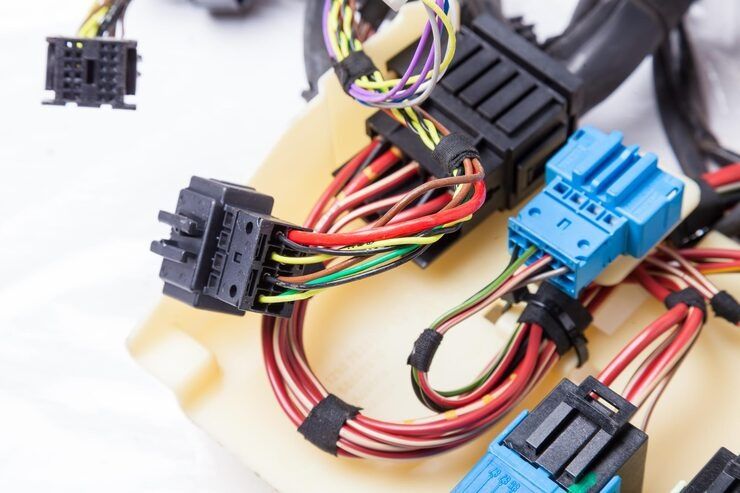
Importance: Why Electrical Connectors Matter Today
Electrical connectors play a critical role in system reliability, safety, and performance. Even a well-designed electrical system can fail if connectors are poorly selected or improperly applied.
Why this topic matters today:
-
System reliability: Stable connections reduce voltage drops and signal loss
-
Safety: Proper connectors prevent overheating, arcing, and short circuits
-
Flexibility: Modular connections simplify assembly and maintenance
-
Performance consistency: High-quality contact ensures predictable electrical behavior
-
Scalability: Standardized connectors support system expansion and upgrades
Electrical connectors affect electrical engineers, technicians, system designers, maintenance teams, and quality inspectors. They help solve problems related to loose connections, corrosion, mechanical stress, and inconsistent electrical performance.
Recent Updates: Industry Trends and Developments (2024–2025)
Over the past year, electrical connector technology has advanced to meet higher power densities, harsher environments, and increasing automation demands.
| Year | Trend or Development | Industry Impact |
|---|---|---|
| 2024 | Higher current-density connector designs | More power transfer in compact systems |
| 2024 | Improved contact materials and coatings | Enhanced durability and lower resistance |
| 2025 | Increased use of sealed connectors | Better protection against dust and moisture |
| 2025 | Connector designs for automated assembly | Improved consistency and reduced handling errors |
There has also been growing focus on connectors that support vibration resistance, thermal stability, and long-term reliability in demanding industrial and transportation environments.
Laws, Standards, and Regulatory Influence
Electrical connectors are governed by international and national standards to ensure safety, compatibility, and performance consistency.
Common standards and regulatory frameworks include:
-
IEC standards: Define electrical ratings, insulation performance, and test methods
-
ISO standards: Address quality management and connector performance validation
-
UL and equivalent safety certifications: Ensure compliance with electrical safety requirements
-
Industry-specific standards: Automotive, aerospace, and industrial sectors apply additional connector specifications
Regulatory compliance ensures connectors perform safely under rated voltage, current, temperature, and environmental conditions.
Types of Electrical Connectors
Electrical connectors are classified based on function, construction, and application.
Common connector types include:
-
Wire-to-wire connectors: Join two or more conductors
-
Wire-to-board connectors: Connect cables to circuit boards
-
Board-to-board connectors: Link printed circuit boards
-
Terminal blocks: Provide secure screw or clamp connections
-
Circular connectors: Used in industrial and outdoor environments
-
Rectangular connectors: Common in control panels and equipment enclosures
| Connector Type | Primary Function | Typical Application |
|---|---|---|
| Terminal block | Secure fixed wiring | Control panels |
| Circular connector | Robust multi-pin connection | Industrial equipment |
| Wire-to-board | Cable to PCB interface | Electronics |
| Board-to-board | PCB interconnection | Modular systems |
| Sealed connector | Environmental protection | Outdoor systems |
Each type is selected based on electrical load, mechanical requirements, and environmental exposure.
Functions: What Electrical Connectors Are Designed to Do
Electrical connectors perform multiple critical functions beyond simply joining conductors.
Key functions include:
-
Electrical conduction: Efficient transfer of current or signals
-
Mechanical retention: Secure holding under vibration or movement
-
Insulation: Prevention of unintended contact between conductors
-
Environmental protection: Resistance to dust, moisture, and contaminants
-
Ease of assembly: Support for quick installation and removal
Good connector design balances electrical efficiency with mechanical strength and safety.
Performance Characteristics to Understand
The performance of electrical connectors is defined by several measurable characteristics.
Key performance characteristics include:
-
Current rating: Maximum safe current the connector can carry
-
Voltage rating: Maximum operating voltage without insulation breakdown
-
Contact resistance: Affects heat generation and energy loss
-
Insertion and withdrawal force: Determines ease of use and connection stability
-
Temperature range: Operating limits under heat or cold
-
Durability cycles: Number of mating cycles before performance degradation
| Characteristic | Why It Matters |
|---|---|
| Contact resistance | Affects efficiency and heat |
| Current rating | Prevents overheating |
| Mechanical strength | Ensures connection stability |
| Environmental sealing | Protects against corrosion |
| Cycle life | Supports long-term use |
Understanding these characteristics helps ensure connectors perform reliably throughout their service life.
Tools and Learning Resources
Understanding electrical connectors is supported by technical documentation and educational materials.
Helpful learning resources include:
-
Electrical engineering textbooks
-
Connector manufacturer technical datasheets
-
Industry application notes
-
Standards organization publications
-
Training manuals for electrical installation
Reference tools commonly used:
-
Current and voltage rating tables
-
Contact resistance measurement guides
-
Environmental protection classification charts
-
Connector selection matrices
These resources help engineers and technicians select and apply connectors correctly.
Frequently Asked Questions
Why are electrical connectors preferred over permanent joints?
They allow flexibility, easier maintenance, and system reconfiguration without damaging conductors.
What causes connector failure?
Common causes include corrosion, excessive current, poor contact pressure, and mechanical stress.
How is connector performance verified?
Through electrical testing, mechanical endurance tests, and environmental exposure evaluations.
Are connectors affected by vibration?
Yes. Connector design and locking mechanisms are important in vibration-prone environments.
Do connectors require regular inspection?
Periodic inspection helps detect wear, looseness, or contamination before failure occurs.
Conclusion
Electrical connectors are fundamental building blocks of modern electrical and electronic systems. They enable safe, reliable, and flexible connections across a wide range of applications, from industrial machinery to advanced communication systems.
By understanding connector types, functions, performance characteristics, and standards, engineers and technicians can design systems that operate efficiently and safely over long periods. As electrical systems continue to grow in complexity and power density, electrical connector technology will remain a critical area of innovation and reliability.