Electronic Test Equipment: Complete Overview of Testing Instruments
Electronic Test Equipment plays a vital role in designing, testing, maintaining, and troubleshooting electrical and electronic systems.
From consumer electronics and industrial machinery to telecommunications and research laboratories, these instruments help engineers and technicians measure, analyze, and verify electrical performance with greater accuracy.
As electronic devices become more advanced, reliable testing instruments are essential for identifying faults, monitoring system performance, and ensuring equipment operates as intended. This guide explains what electronic test equipment is, how it works, the main types of testing instruments, their applications, benefits, challenges, and emerging trends.
What Is Electronic Test Equipment?
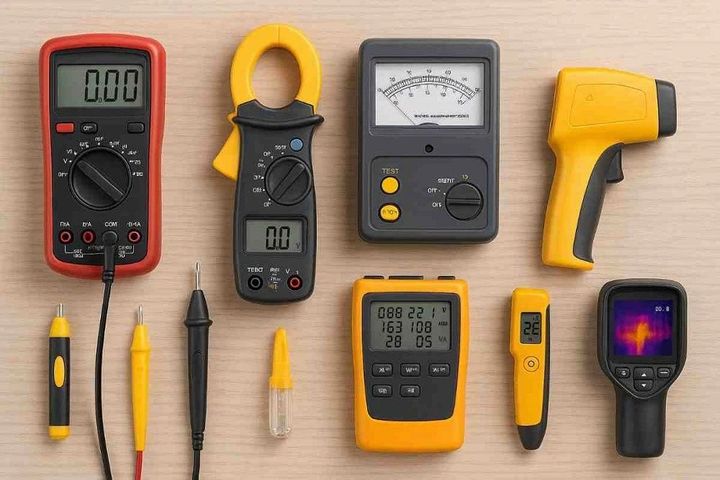
Electronic Test Equipment refers to instruments used to measure electrical signals, analyze circuit behavior, and evaluate the performance of electronic components and systems. These tools help users verify that equipment functions correctly and identify issues during development, production, maintenance, or repair.
Testing instruments can measure properties such as voltage, current, resistance, frequency, signal quality, and waveform characteristics. They are widely used in laboratories, manufacturing facilities, educational institutions, maintenance departments, and research environments.
How Electronic Test Equipment Works
Electronic testing begins by connecting an instrument to the device or circuit being examined. The instrument detects electrical signals and converts them into readable measurements or graphical displays.
Different instruments are designed for different purposes. Some measure basic electrical values, while others analyze complex signals, communication systems, or electronic waveforms. The collected information helps users understand how a circuit is performing and determine whether adjustments or repairs are needed.
Modern instruments often include digital displays, automatic measurement functions, data storage, and computer connectivity, making analysis faster and more convenient.
Common Types of Electronic Test Equipment
Different testing tasks require different instruments, each designed for a specific purpose.
Digital Multimeters
Digital multimeters are among the most commonly used testing instruments. They measure voltage, current, and resistance, making them suitable for routine electrical testing and troubleshooting.
Oscilloscopes
Oscilloscopes display electrical signals as waveforms, allowing users to observe how signals change over time. They are commonly used to analyze circuit behavior and identify irregular signal patterns.
Signal Generators
Signal generators produce electrical signals with different frequencies and waveforms. These signals are used to evaluate how electronic devices respond under controlled conditions.
Spectrum Analyzers
Spectrum analyzers examine signal frequencies and display their distribution across a frequency range. They are widely used in communication systems and radio frequency testing.
Power Supplies
Laboratory power supplies provide stable electrical power during testing and development. Many models allow users to adjust voltage and current according to testing requirements.
Logic Analyzers
Logic analyzers monitor multiple digital signals simultaneously, making them useful for evaluating digital circuits and embedded systems.
Network Analyzers
Network analyzers measure how electronic signals travel through electrical networks, helping evaluate performance in communication and radio frequency applications.
Applications of Electronic Test Equipment
Electronic Test Equipment supports many industries where accurate measurements are essential.
Electronics Manufacturing
Manufacturers use testing instruments throughout production to verify circuit performance, inspect components, and evaluate finished products before distribution.
Research and Development
Engineers use electronic testing equipment while developing new technologies, testing prototypes, and validating design performance.
Telecommunications
Communication networks depend on testing instruments to evaluate signal quality, transmission performance, and network reliability.
Industrial Automation
Factories use electronic test equipment to inspect automation systems, production machinery, sensors, and control equipment.
Education
Educational institutions use testing instruments to help students understand electrical principles, circuit operation, and measurement techniques through practical laboratory activities.
Maintenance and Troubleshooting
Technicians rely on electronic testing equipment to identify faults, diagnose equipment problems, and verify repairs before systems return to operation.
Benefits of Electronic Test Equipment
Accurate testing instruments provide several important advantages.
One major benefit is improved measurement accuracy. Reliable data helps engineers and technicians make informed decisions when evaluating electronic systems.
Testing equipment also improves troubleshooting by allowing faults to be located more efficiently. Instead of replacing multiple components, technicians can identify the source of a problem through systematic testing.
Modern instruments increase productivity through automated measurements, digital displays, and data recording capabilities. Many devices also support computer integration, making it easier to document results and analyze long-term performance.
Another advantage is improved quality control. Manufacturers can verify that electronic products meet design requirements before they reach customers, helping maintain consistent product performance.
Factors to Consider When Selecting Testing Instruments
Choosing suitable electronic test equipment depends on the intended application.
Important considerations include:
- Measurement range
- Accuracy requirements
- Signal type
- Frequency capability
- Display quality
- Data recording features
- Portability
- Interface compatibility
- Calibration requirements
- Ease of operation
Selecting instruments that match the testing environment and technical requirements helps achieve more reliable measurement results.
Challenges in Electronic Testing
Electronic testing continues to evolve alongside increasingly complex electronic systems.
Modern circuits often operate at higher speeds and smaller scales, requiring more advanced testing techniques. Maintaining instrument calibration is also important to ensure consistent measurement accuracy.
Engineers and technicians must understand both the equipment being tested and the testing instruments themselves. Proper training helps reduce measurement errors and improves confidence when interpreting test results.
Environmental conditions such as electrical interference, temperature, and humidity may also influence measurement accuracy in certain situations.
Future Trends in Electronic Test Equipment
Advances in technology continue to improve electronic testing capabilities.
Artificial intelligence is supporting automated fault detection and measurement analysis. Cloud-based data management allows test results to be stored and reviewed across multiple locations.
Portable testing instruments continue becoming more powerful while maintaining compact designs. Wireless connectivity is simplifying data transfer between instruments and computers, improving workflow efficiency.
Automation, remote monitoring, and intelligent diagnostics are also expanding the capabilities of electronic testing, allowing engineers to evaluate increasingly sophisticated electronic systems with greater efficiency.
Conclusion
Electronic Test Equipment is essential for measuring, analyzing, and maintaining today's electronic systems. From simple electrical measurements to advanced signal analysis, these instruments support research, manufacturing, education, telecommunications, and industrial operations.
Understanding the different types of testing instruments, their applications, and the factors involved in selecting them helps engineers, technicians, and students perform accurate measurements with confidence. As electronic technology continues to advance, testing equipment will remain a critical part of ensuring reliability, performance, and innovation across many industries.