Explore Flooring Material Manufacturing and Its Industrial Applications
Flooring material plays an important role in residential, commercial, and industrial environments.
Modern flooring manufacturing combines raw materials, engineering methods, and automated production processes to create flooring materials that meet different performance needs. A flooring manufacturer may produce products for homes, offices, hospitals, factories, warehouses, and specialized facilities where durability, safety, or hygiene is important.
Over time, flooring technology has developed from simple natural materials to advanced flooring systems made with engineered wood, vinyl, polymers, and composite materials. Today, flooring manufacturing includes many product categories such as vinyl flooring, luxury vinyl flooring, SPC flooring, WPC flooring, laminate flooring, hardwood flooring, engineered wood flooring, epoxy flooring, resin flooring, and concrete flooring. These products are designed for different environments depending on moisture exposure, traffic levels, maintenance needs, and structural requirements.
Context
Understanding Flooring Manufacturing
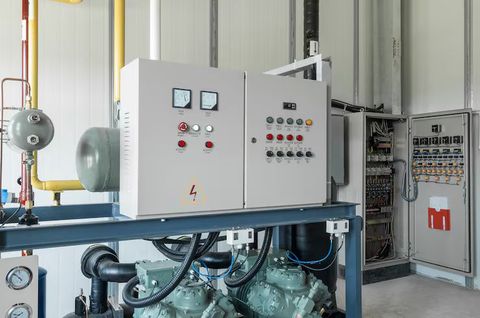
Flooring manufacturing is the industrial process of transforming raw materials into finished flooring products. The process varies depending on the material being produced. A flooring manufacturing plant may include mixing systems, pressing equipment, coating machines, cutting equipment, curing systems, and quality inspection stations.
Modern flooring production line systems rely on flooring machinery and flooring manufacturing equipment that improve consistency and reduce material waste. Many facilities also use automated monitoring systems to maintain production quality.
Common Types of Flooring Materials
Several flooring materials are widely used across different sectors.
- Vinyl flooring is commonly used in residential and commercial buildings because it is moisture resistant.
- Luxury vinyl flooring provides additional design flexibility with realistic wood or stone appearances.
- SPC flooring contains a rigid stone-plastic composite core that improves stability.
- WPC flooring includes a wood-plastic composite core that provides comfort underfoot.
- Laminate flooring uses layered construction with a decorative printed surface.
- Hardwood flooring is manufactured from solid wood.
- Engineered wood flooring combines multiple wood layers for improved dimensional stability.
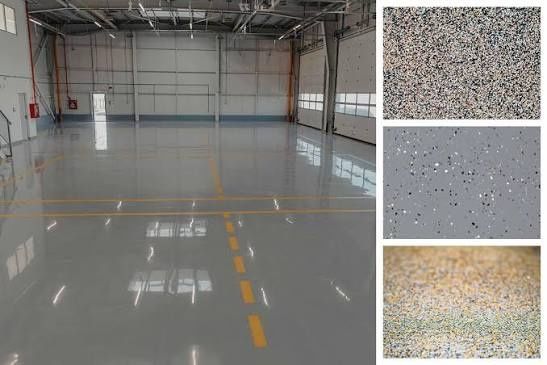
- Epoxy flooring and polyurethane flooring create seamless protective surfaces.
- Resin flooring is widely used where chemical resistance is required.
- Concrete flooring is commonly found in industrial buildings and warehouses.
Importance
Supporting Different Industries
Commercial flooring and industrial flooring are designed for different working environments. Offices, retail buildings, educational facilities, healthcare centers, manufacturing plants, and logistics centers each require flooring systems with specific performance characteristics.
Industrial flooring systems often focus on strength, impact resistance, and long-term durability. Factory flooring and warehouse flooring must withstand heavy equipment, continuous movement, and frequent cleaning.
Meeting Specialized Facility Requirements
Certain industries require flooring with additional properties.
| Facility Type | Common Flooring Solution | Primary Purpose |
|---|---|---|
| Warehouse | Heavy duty flooring | Equipment movement |
| Factory | Industrial floor coating | Surface protection |
| Hospital | Hospital flooring | Hygiene and easy cleaning |
| Pharmaceutical Facility | Pharmaceutical flooring | Clean environment support |
| Electronics Plant | Anti static flooring | Static electricity control |
| Cleanroom | Cleanroom flooring | Dust and contamination management |
Commercial floor coating and warehouse floor coating are commonly applied to improve durability while reducing surface wear over time.
Manufacturing Equipment and Engineering
Flooring engineering continues to improve production efficiency. Flooring equipment now includes automated mixing systems, digital cutting machines, curing ovens, precision coating systems, and robotic packaging equipment.
A modern flooring plant equipment setup may also include environmental monitoring systems that help maintain production consistency throughout the manufacturing process.
Recent Updates
Advances in Flooring Technology
Current trends in flooring technology focus on manufacturing efficiency, product durability, and environmental considerations. Many flooring manufacturers continue improving production methods that reduce raw material waste and increase manufacturing precision.
PVC flooring manufacturer facilities have expanded automated quality inspection systems that identify surface defects during production instead of after completion.
Growth of Composite Flooring
SPC flooring and WPC flooring continue gaining attention because of their dimensional stability and moisture resistance. Improvements in manufacturing techniques have resulted in stronger locking systems and more realistic surface textures.
Luxury vinyl flooring has also evolved with improved wear layers and enhanced printing technology that closely resembles natural materials.
Automation in Production
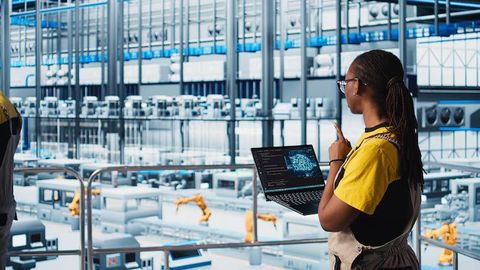
Modern flooring manufacturing equipment increasingly incorporates digital controls, robotic material handling, automated packaging, and machine monitoring systems.
These developments help improve production consistency across large flooring manufacturing plant operations while reducing manual handling during production.
Laws or Policies
Building Standards
Flooring materials used in construction generally need to comply with national building regulations and applicable safety standards. Requirements vary between countries depending on building codes and intended building use.
Commercial flooring installed in public buildings may need to satisfy regulations covering:
- Slip resistance
- Fire performance
- Indoor air quality
- Accessibility requirements
- Structural performance
Environmental Regulations
Flooring manufacturing facilities are also influenced by environmental regulations related to:
- Industrial emissions
- Waste management
- Water usage
- Chemical handling
- Manufacturing safety
Flooring chemicals, flooring adhesive, and coating materials are commonly regulated to help reduce environmental impact and improve workplace safety.
Occupational Safety
Industrial flooring contractor activities and flooring installation projects typically follow workplace safety regulations covering equipment operation, protective clothing, ventilation, and handling of flooring chemicals during application.
Tools and Resources
Manufacturing Tools
Flooring production depends on specialized equipment throughout the manufacturing process.
Common examples include:
- Flooring machinery for pressing and forming
- Automated cutting equipment
- Surface coating machines
- Digital quality inspection systems
- Material mixing equipment
- Curing ovens
- Packaging systems
Planning and Design Resources
Architects, engineers, and project planners often use digital resources when selecting flooring solutions.
Useful resources include:
- Computer-aided design (CAD) software
- Building Information Modeling (BIM) platforms
- Material specification databases
- Manufacturer technical documentation
- Building code reference websites
- Floor layout planning software
Installation Resources
Flooring contractor teams frequently reference installation manuals, moisture testing guides, adhesive compatibility charts, and maintenance documentation before beginning flooring installation projects.
These resources help ensure flooring systems are installed according to technical specifications.
FAQs
What is flooring manufacturing?
Flooring manufacturing is the industrial process of producing flooring materials from raw materials using specialized flooring machinery, production lines, and quality control systems. Different manufacturing methods are used for vinyl flooring, laminate flooring, engineered wood flooring, resin flooring, and other flooring products.
What is the difference between SPC flooring and WPC flooring?
SPC flooring uses a rigid stone-plastic composite core, while WPC flooring uses a wood-plastic composite core. Both are multilayer flooring materials, but they differ in composition, flexibility, and structural characteristics.
Where is industrial flooring commonly used?
Industrial flooring is commonly installed in warehouses, factories, manufacturing facilities, logistics centers, pharmaceutical buildings, food processing facilities, and production plants where surfaces experience continuous equipment movement and heavy use.
What equipment is used in a flooring manufacturing plant?
A flooring manufacturing plant may include flooring manufacturing equipment such as mixers, presses, coating machines, cutting systems, curing equipment, quality inspection systems, conveyors, and automated packaging machinery.
What are flooring systems used for?
Flooring systems combine flooring materials, surface coatings, adhesives, and protective layers to create finished floor structures suited for commercial flooring, factory flooring, hospital flooring, warehouse flooring, and cleanroom flooring applications.
Conclusion
Flooring manufacturing combines material science, engineering, and automated production to create flooring products for many different environments. Modern flooring systems include wood, vinyl, composite, resin, and concrete solutions designed for specific performance requirements. Advances in flooring technology continue improving manufacturing efficiency, product consistency, and production quality. Regulations, specialized equipment, and technical standards remain important factors throughout flooring manufacturing and installation.