Bearing production equipment refers to the specialized machinery used to manufacture bearings—mechanical components that reduce friction and support rotational or linear movement. These machines handle processes such as forming, machining, heat treatment, grinding, assembly, and inspection. Bearings are critical elements in motors, vehicles, industrial machinery, turbines, and precision instruments.
The need for dedicated bearing production equipment arose as industrial systems became faster, heavier, and more precise. Early bearings were made using basic machining tools, but growing demands for consistency, durability, and high-speed operation required controlled and repeatable manufacturing methods. Modern bearing equipment exists to deliver uniform quality, tight tolerances, and high-volume output while minimizing defects.
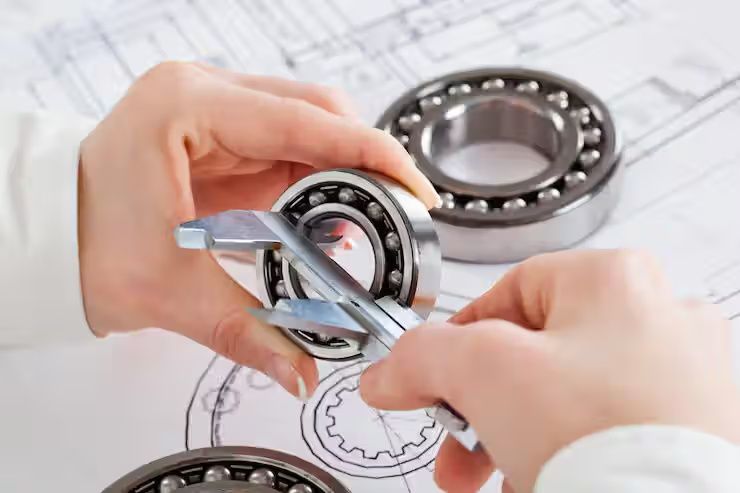
Importance: Why Bearing Production Equipment Matters Today
Bearing production equipment plays a central role in modern manufacturing because bearings directly influence efficiency, noise levels, energy use, and equipment lifespan.
Why this topic matters today:
-
Precision requirements: Even minor dimensional errors can cause vibration, heat buildup, or early failure
-
Automation demand: High-volume industries rely on consistent, repeatable processes
-
Energy efficiency: Well-made bearings reduce friction and power loss
-
Equipment reliability: Accurate production improves load handling and service life
-
Global manufacturing standards: Uniform quality is essential for cross-border industrial supply chains
This topic affects bearing manufacturers, mechanical engineers, quality inspectors, maintenance planners, and students of industrial engineering. Bearing production equipment helps solve challenges related to inconsistency, manual error, surface imperfections, and unpredictable performance.
Recent Updates: Industry Trends and Developments (2024–2025)
Over the past year, bearing manufacturing technology has advanced with a strong focus on automation, inspection accuracy, and process integration.
| Year | Update or Trend | Industrial Impact |
|---|---|---|
| 2024 | Wider adoption of automated grinding systems | Improved surface finish and dimensional consistency |
| 2024 | Inline inspection integration | Faster defect detection during production |
| 2025 | Robotics in bearing assembly | Reduced manual handling and alignment errors |
| 2025 | Data-driven process monitoring | Better control of variation and scrap reduction |
Recent developments also include improved heat-treatment control for raceways, advanced superfinishing machines for smoother rolling surfaces, and compact modular production lines suitable for flexible manufacturing environments.
Laws, Standards, and Regulatory Influence
Bearing production equipment is governed by industrial quality, safety, and measurement standards that ensure reliable performance across applications.
Common regulatory and standard frameworks include:
-
ISO bearing standards: Define dimensional accuracy, load ratings, and tolerance classes
-
ISO 9001 quality management systems: Require traceable and documented manufacturing processes
-
Workplace machinery safety regulations: Address guarding, emergency stops, and operator protection
-
Environmental compliance rules: Control emissions, coolant handling, and waste management
Many industries—such as automotive, aerospace, and power generation—require bearings produced under certified processes, making compliance with these standards essential for manufacturers.
Key Stages in Bearing Production
Bearing production equipment is organized around several critical stages, each requiring specialized machines.
Typical production stages include:
-
Ring forming and turning: Shapes inner and outer rings to near-final dimensions
-
Heat treatment: Improves hardness and fatigue resistance
-
Grinding and superfinishing: Achieves precise dimensions and smooth surfaces
-
Rolling element production: Forms balls or rollers with extreme roundness
-
Assembly: Combines rings, rolling elements, and cages
-
Inspection and testing: Verifies dimensions, noise, vibration, and load performance
Each stage contributes to the bearing’s final accuracy and operational reliability.
Automation and Accuracy in Bearing Manufacturing
Automation is a defining feature of modern bearing production equipment. Automated systems reduce variability and support continuous operation.
How automation improves production:
-
Consistent cycle times and repeatability
-
Reduced dependence on manual adjustment
-
Inline measurement and correction
-
Lower risk of contamination or handling damage
Accuracy factors commonly controlled:
-
Dimensional tolerances
-
Surface roughness
-
Roundness and concentricity
-
Raceway geometry
Precision measurement systems such as laser gauges, vision systems, and vibration analyzers are often integrated directly into production lines to maintain strict quality control.
Tools and Learning Resources for Industrial Understanding
Understanding bearing production equipment is supported by technical documentation and educational resources.
Helpful learning resources include:
-
Mechanical engineering textbooks on tribology and machine design
-
Industrial manufacturing journals
-
Bearing technology handbooks
-
Metrology and measurement guides
-
Technical training manuals for production machinery
Reference tools often used in practice:
-
Tolerance and fit charts
-
Surface roughness comparison tables
-
Heat-treatment process diagrams
-
Quality inspection checklists
These tools help learners and professionals understand how design intent translates into physical performance.
Frequently Asked Questions
What is the main purpose of bearing production equipment?
Its purpose is to manufacture bearings with precise dimensions, smooth surfaces, and consistent quality for reliable mechanical performance.
Why is accuracy so important in bearing manufacturing?
Small deviations can increase friction, noise, and wear, reducing efficiency and service life.
Which industries depend heavily on bearing production equipment?
Automotive, industrial machinery, power generation, railways, aerospace, and renewable energy sectors.
How does automation affect bearing quality?
Automation improves repeatability, reduces human error, and supports continuous quality monitoring.
Are bearings tested after production?
Yes. Bearings typically undergo dimensional checks, vibration analysis, and load testing before approval.
Conclusion
Bearing production equipment is a cornerstone of modern industrial manufacturing. By combining advanced automation with precise machining and inspection, these systems enable the consistent production of components that support motion across countless applications.
As industrial demands continue to grow for efficiency, reliability, and accuracy, bearing production equipment will keep evolving through smarter automation, better measurement integration, and improved process control. Understanding how these machines work provides valuable insight into the hidden systems that keep modern industry moving smoothly.