Gear manufacturing refers to the industrial process of designing, forming, finishing, and inspecting gears used to transmit motion and power between mechanical components. Gears exist because many machines require controlled speed, torque, and direction changes that cannot be achieved through direct motion alone.
Historically, gears were crafted manually from wood or metal and used in simple mechanisms such as clocks and mills. With industrialization, gear manufacturing evolved into a precise engineering process designed to meet strict performance and durability standards.
Today, gear manufacturing supports industries such as automotive systems, industrial machinery, energy equipment, and robotics. The production workflow ensures gears meet exact specifications for efficiency, load capacity, and long operational life.
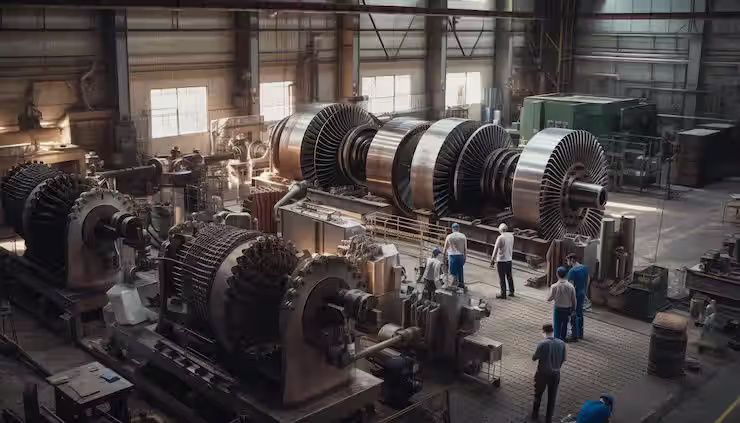
Why Gear Manufacturing Matters Today
Gear manufacturing is essential because gears are fundamental components in mechanical systems. Even small inaccuracies can impact performance, efficiency, and reliability.
Key Reasons This Topic Matters
- Power transmission: Enables efficient transfer of mechanical energy
- Precision performance: Supports automation and advanced machinery
- Energy efficiency: Reduces losses in mechanical systems
- Reliability and safety: Ensures stable and long-lasting operation
This topic affects engineers, manufacturers, and maintenance teams working across multiple industries.
Gear Manufacturing Production Workflow
The gear manufacturing process follows a structured sequence to transform raw materials into finished components. Each stage ensures accuracy and durability.
Key Workflow Stages
- Material selection and preparation
- Gear blank creation
- Tooth cutting or forming
- Heat treatment
- Finishing operations
- Inspection and quality control
Workflow Stages and Purpose
| Workflow Stage | Purpose |
|---|---|
| Material preparation | Ensures strength and machinability |
| Gear blank forming | Creates the base shape |
| Tooth cutting | Defines gear geometry |
| Heat treatment | Improves hardness and durability |
| Finishing | Enhances accuracy and surface quality |
| Inspection | Confirms dimensional compliance |
These stages work together to produce reliable and high-performance gears.
Importance of Material Selection
Material selection is a critical step in gear manufacturing. Common materials include carbon steel, alloy steel, and specialized metals designed for strength and wear resistance.
Key Factors Influenced by Material Choice
- Load-bearing capacity
- Resistance to fatigue
- Heat treatment response
- Noise and vibration behavior
Choosing the right material ensures gears function effectively under operational conditions.
Recent Trends in Gear Manufacturing (2024–2025)
Recent developments highlight increased precision, automation, and digital integration in gear production.
Key Trends Overview
| Trend | Description | Impact |
|---|---|---|
| Advanced machining | Improved cutting and finishing techniques | Enhances precision and consistency |
| Computer-controlled processes | CNC-based gear production | Improves repeatability |
| Simulation tools | Predict gear behavior before manufacturing | Reduces design errors |
| Automated inspection | Real-time measurement systems | Increases quality assurance |
These trends reflect the growing importance of accuracy and efficiency in modern manufacturing.
Laws and Policies Affecting Gear Manufacturing
Gear manufacturing is guided by industrial standards and safety regulations that ensure quality and workplace safety.
Key Regulatory Areas
- Industrial safety standards for machinery operation
- Quality management system requirements
- Environmental guidelines for manufacturing processes
- Material traceability and documentation rules
These frameworks help maintain consistency and safe production practices.
Tools and Resources in Gear Manufacturing
Various tools and systems support each stage of gear production, ensuring precision and consistency.
Common Tools and Their Functions
| Tool Category | Function |
|---|---|
| Design software | Defines gear geometry |
| Cutting equipment | Forms gear teeth |
| Heat treatment systems | Enhances durability |
| Measuring instruments | Verifies accuracy |
| Process documentation | Ensures workflow consistency |
Inspection Parameters
| Inspection Aspect | Focus Area |
|---|---|
| Tooth profile | Shape accuracy |
| Pitch spacing | Uniform motion |
| Surface finish | Noise and wear control |
| Dimensional tolerance | Assembly compatibility |
These tools ensure gears meet strict engineering standards.
Quality Control in Gear Manufacturing
Quality control is integrated throughout the production workflow. Inspections are conducted at multiple stages to detect and correct deviations early.
Key Quality Practices
- Dimensional checks after tooth cutting
- Hardness testing after heat treatment
- Surface inspection during finishing
- Final verification before delivery
These practices help maintain consistency and reduce defects.
Frequently Asked Questions
What Is the Purpose of Gear Manufacturing Workflow?
It ensures gears are produced accurately and consistently for reliable mechanical performance.
Why Is Finishing Important?
Finishing improves surface quality, precision, and operational smoothness.
How Does Heat Treatment Help?
It increases strength, wear resistance, and durability of gears.
Are All Gears Manufactured the Same Way?
The general workflow is similar, but specific processes vary depending on gear type and application.
Why Is Inspection Done Multiple Times?
Multiple inspections help detect issues early and maintain high accuracy.
Conclusion
Gear manufacturing is a structured and precise process that ensures the production of reliable mechanical components. Each stage, from material selection to final inspection, contributes to performance and durability.
As technology advances, gear manufacturing continues to integrate automation and digital tools, improving efficiency and quality. Understanding this workflow highlights the importance of precision in modern engineering and industrial systems.