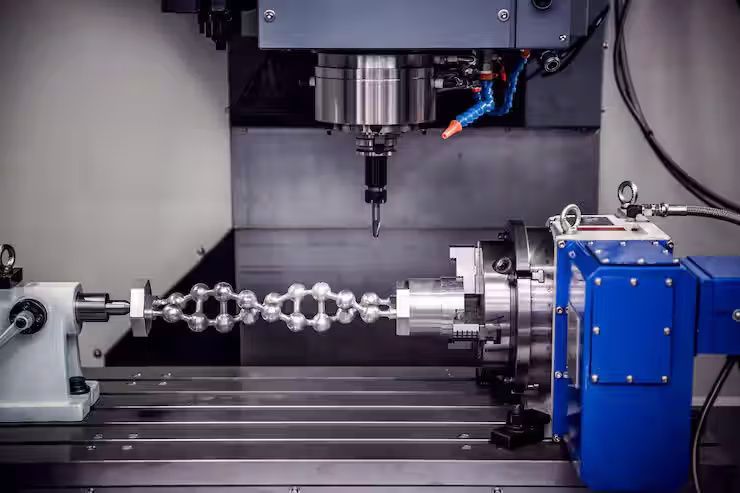
A CNC machine, or Computer Numerical Control machine, is a manufacturing system that uses computer-based instructions to control tools and machinery. CNC technology exists to improve accuracy, repeatability, and efficiency in machining processes that were once performed manually. By converting digital designs into precise movements, CNC machines enable consistent production of complex parts across a wide range of industries.
The concept of CNC machining developed to overcome the limitations of manual machining, such as human error and inconsistent dimensions. CNC machines allow manufacturers to produce parts with high precision and repeatability. They connect digital design directly to physical production.
Today, CNC machines are widely used to shape metals, plastics, wood, and composites. Their ability to maintain tight tolerances makes them essential in modern manufacturing environments.
Importance: Why CNC Machine Knowledge Matters Today
CNC machines are crucial in industrial and manufacturing sectors because they support precision engineering and scalable production. They are widely used by engineers, designers, students, and quality professionals.
Key Reasons CNC Machine Knowledge Is Important
- Demand for high-precision components
- Growth of automation and smart manufacturing
- Need for consistent quality in mass production
- Integration of digital design with physical output
CNC machines address challenges such as dimensional accuracy and production consistency. They also reduce manual errors and material waste.
CNC Machine Workflow: From Design to Output
CNC machining follows a structured workflow that transforms digital designs into finished parts. This process ensures consistency and repeatability in production.
Typical CNC Workflow Steps
- CAD design for creating digital models
- CAM programming for toolpath generation
- Machine setup and tool alignment
- Automated machining execution
- Inspection and validation of output
CNC Workflow Table
| Stage | Description | Outcome |
|---|---|---|
| CAD Design | Digital part modeling | Accurate geometry |
| CAM Programming | Toolpath creation | Machining instructions |
| Setup | Machine preparation | Stable operation |
| Machining | Automated material removal | Finished component |
| Inspection | Measurement and validation | Quality confirmation |
This workflow helps ensure predictable and accurate machining results.
Types of CNC Machines and Their Uses
CNC machines come in different types, each designed for specific applications. Selection depends on material type, geometry, and production needs.
Common CNC Machine Types
- CNC milling machines for cutting and shaping
- CNC lathes for cylindrical and rotational parts
- CNC routers for wood and lightweight materials
- CNC plasma and laser systems for sheet cutting
- Multi-axis CNC machines for complex geometries
These machines provide flexibility and efficiency across various manufacturing industries.
Recent Updates: CNC Machine Trends
Recent developments in 2024 and early 2025 show continued growth in automation and digital manufacturing. These updates enhance precision and operational efficiency.
Notable Trends
- Increased use of multi-axis CNC systems
- Integration of AI-based monitoring tools
- Improved CNC control software and simulation
- Enhanced predictive maintenance capabilities
These advancements reduce setup time, improve accuracy, and increase machine uptime.
Laws and Policies Affecting CNC Machine Use
CNC machines are regulated by safety and manufacturing standards to ensure safe operation and consistent output. These regulations protect operators and maintain production quality.
Key Regulatory Considerations
- Safety standards for automated machinery
- Electrical and control system compliance
- Environmental and energy efficiency guidelines
Government programs also promote CNC adoption and skill development. These initiatives support industrial growth and standardized practices.
Tools and Resources Supporting CNC Machining
Various tools and resources help users operate CNC machines effectively. These tools support accuracy, planning, and quality control.
Common Tools and Resources
- CAD software for design modeling
- CAM software for toolpath simulation
- CNC calculators for machining parameters
- Machine manuals and documentation
- Inspection templates for quality checks
CNC Parameters Table
| Parameter | Purpose | Effect on Output |
|---|---|---|
| Spindle Speed | Controls tool rotation | Surface finish |
| Feed Rate | Regulates tool movement | Cutting stability |
| Depth of Cut | Defines material removal | Tool load |
| Tool Path | Guides tool motion | Accuracy |
Using these tools improves machining consistency and reduces errors.
CNC Output Quality and Inspection Practices
Quality control ensures that CNC-machined components meet required specifications. Inspection is a critical step in the manufacturing process.
Common Inspection Methods
- Calipers and micrometers for dimensional checks
- Coordinate measuring systems for precision inspection
- Visual inspection for surface evaluation
Inspection Methods Table
| Method | Purpose | Typical Use |
|---|---|---|
| Calipers and Micrometers | Dimensional checks | General measurement |
| Coordinate Measuring Systems | High-precision inspection | Complex components |
| Visual Inspection | Surface evaluation | Finish assessment |
These practices help ensure that final products meet design and quality requirements.
FAQs: Common Questions About CNC Machines
What does CNC stand for?
CNC stands for Computer Numerical Control, meaning machines are operated using programmed instructions.
How is CNC different from manual machining?
CNC machining is automated and controlled by software, while manual machining relies on human operation.
What materials can CNC machines process?
They can process metals, plastics, wood, composites, and some ceramics depending on tooling and machine type.
Why is CAM software important?
CAM software converts design data into precise machining instructions, ensuring accuracy and efficiency.
How is accuracy maintained in CNC systems?
Accuracy is maintained through precise programming, calibration, stable machine setup, and inspection.
Conclusion
CNC machines are essential in modern manufacturing because they link digital design with physical production. They provide high accuracy, repeatability, and efficiency across industries.
Understanding CNC workflows, tools, and regulations helps improve production quality and reliability. As technology advances, CNC machining continues to play a key role in industrial development.