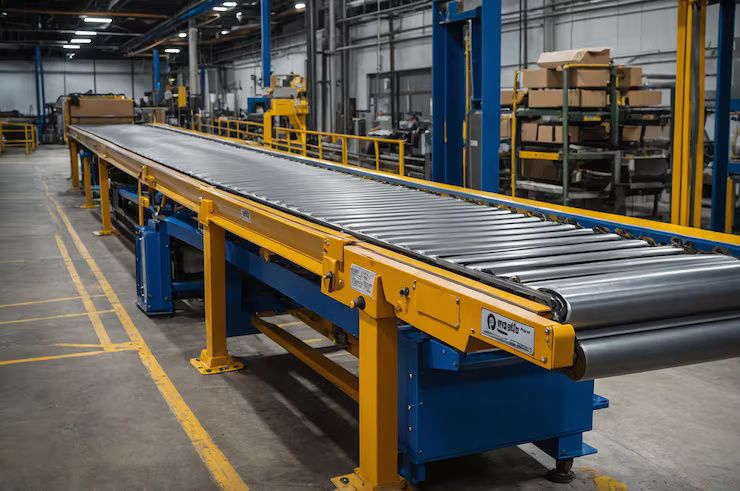
Belt conveyor systems are mechanical handling solutions used to transport materials efficiently across short or long distances. They consist of a continuous belt driven by pulleys, allowing items to move smoothly through manufacturing lines, warehouses, mining operations, and various industrial environments. These systems exist because many industries require consistent, controlled movement of goods, raw materials, or bulk items without depending solely on manual labor or slow transport methods.
Conveyors have been used for decades, evolving from simple wooden structures to advanced systems integrating synthetic belts, automated controls, and specialized materials. The purpose of these systems is to ensure steady material flow, reduce manual handling risks, and support large-scale production.
Today, belt conveyors are essential components in sectors such as logistics, agriculture, food processing, mining, and packaging. Their ability to handle a variety of materials—including granular products, packaged items, and heavy components—makes them one of the most widely used industrial technologies.
Importance
Belt conveyor systems matter today because industries increasingly rely on efficient material movement to achieve productivity goals and maintain workflow consistency.
They affect multiple stakeholders:
-
Manufacturing operators managing production lines
-
Logistics and warehouse managers organizing material flow
-
Mining and construction teams handling bulk materials
-
Safety officers overseeing workplace handling practices
-
Engineers designing industrial layout plans
These systems solve several practical and operational challenges:
-
They reduce the physical strain associated with manual lifting and carrying.
-
They help maintain continuous material flow in facilities that rely on synchronized processes.
-
They support high-volume operations by transporting large quantities at steady speeds.
-
They assist in reducing workplace incidents through controlled movement.
-
They enable facilities to expand vertically and horizontally by integrating overhead or multi-level conveyor routes.
In environments where speed, accuracy, and safety are essential, belt conveyors offer a reliable method for material movement while improving overall operation efficiency.
Recent Updates
Over the past year, several developments have shaped belt conveyor technology, reflecting shifts toward sustainability, automation, and smarter industrial systems.
Integration of sensor-based monitoring (2024–2025).
More conveyor systems now include sensors that track belt alignment, temperature, vibration levels, and load distribution. These sensors help predict maintenance requirements and reduce unplanned downtime.
Growth of energy-efficient conveyor motors (2024).
Manufacturers adopted high-efficiency electric motors and variable-speed drives to reduce energy consumption. These updates support global sustainability goals across industrial facilities.
Development of eco-friendly belt materials (2023–2024).
Research during this period led to the introduction of belts made from recycled polymers and low-impact materials, especially in sectors prioritizing environmental responsibility.
Advancements in automation and robotics integration (2024–2025).
Conveyors increasingly connect with robotic arms, automated sorting systems, and digital tracking tools to improve accuracy in logistics and packaging lines.
Expanded use of modular conveyor designs (2024).
Modular belts and frame structures gained popularity due to easier maintenance and flexible configuration options for growing facilities.
Below is a simplified table showing the rise of key technological focus areas in belt conveyor development:
| Year | Automation Growth | Energy Efficiency | Sensor Integration | Material Innovation |
|---|---|---|---|---|
| 2022 | Moderate | High | Low | Moderate |
| 2023 | High | High | Moderate | High |
| 2024 | Very High | Very High | High | Very High |
| 2025 | Very High | Very High | Very High | High |
Laws or Policies
Belt conveyor systems operate under various regulations that focus on safety, environmental impact, and mechanical compliance. These policies ensure that conveyor systems function reliably and do not pose unnecessary risks to workers.
Key regulatory areas include:
Workplace safety standards.
Organizations such as OSHA in the United States and similar agencies worldwide mandate safety rules for conveyor operation. These include guidelines for guarding moving parts, installing emergency stops, and maintaining proper walkway clearance.
Mechanical engineering standards.
Regulations define acceptable load limits, belt speed thresholds, and structural integrity requirements. Standards such as ISO 5048 specify calculation methods for conveyor power requirements.
Electrical and automation compliance.
Conveyor systems must follow national electrical codes, particularly when integrated with automated controls or high-efficiency motors.
Environmental regulations.
Some regions encourage the use of environmentally safe materials and promote energy-efficient machinery. Facilities may also be required to minimize noise pollution from operating conveyors.
Inspection requirements.
Periodic inspection rules help ensure that belts, pulleys, support frames, and safety components remain in good working condition.
Compliance with these policies reduces risks and supports long-term reliability in industrial environments.
Tools and Resources
Several tools and digital platforms support users, facility planners, engineers, and safety officers working with belt conveyor systems.
Conveyor power calculators
-
Tools estimating belt tension, power requirements, and operational load
-
Useful for system design or performance evaluation
Material flow analysis software
-
Programs that simulate how materials move through a conveyor-supported production line
-
Helps identify bottlenecks and optimize layout
Safety inspection checklists
-
Templates covering emergency stops, guarding, belt condition, and pulley alignment
-
Used during routine facility audits
Belt selection guides
-
Resources summarizing belt materials, thickness options, and application suitability
-
Helpful for matching belt type with environmental conditions such as moisture, temperature, or abrasion
Training modules for conveyor operation
-
Digital tutorials explaining conveyor components, safety practices, and troubleshooting
-
Visual diagrams showing belt paths, drive configurations, and tensioning systems
Below is a basic reference table comparing common belt conveyor types:
| Conveyor Type | Typical Use | Belt Material | Key Feature |
|---|---|---|---|
| Flat Belt Conveyor | Packaging and assembly lines | Rubber or synthetic | Smooth transport for general items |
| Cleated Belt Conveyor | Inclined transport | Rubber with cleats | Prevents sliding on slopes |
| Modular Plastic Conveyor | Food processing | Plastic segments | Easy cleaning and modular structure |
| Troughed Belt Conveyor | Bulk materials | Rubber | Deep shape supports loose materials |
FAQs
What materials can belt conveyor systems handle?
They can transport a wide range of materials, including packaged goods, grains, minerals, electronic components, bulk powders, and fragile items. The specific belt material determines suitability for different applications.
How do belt conveyor systems work?
A motor drives a pulley system that moves the belt, allowing materials placed on top to travel along the conveyor path. Support rollers maintain belt shape and stability during operation.
Are all conveyor belts made of rubber?
No. While rubber is common, many belts are made of synthetic polymers, steel-reinforced materials, or modular plastic sections, depending on environment, load requirements, and hygiene needs.
How long do conveyor belts typically last?
Lifespan varies based on material type, load, speed, and maintenance practices. Some belts last months under heavy industrial use, while others can last several years in lighter environments.
Can conveyor systems be used in outdoor environments?
Yes, many conveyor systems are designed for outdoor use, especially in mining or agricultural settings. These systems often use weather-resistant materials and require additional maintenance.
Conclusion
Belt conveyor systems remain a central component in modern industrial operations, offering efficient, steady, and controlled material movement. They support industries that depend on continuous workflows and help reduce physical strain in labor-intensive environments.
Recent advancements highlight significant progress in automation, energy efficiency, and material innovation. As industries adopt smarter technology, conveyor systems are becoming more reliable and adaptable. Regulatory frameworks further enhance safety and ensure consistent performance across different applications.
With the support of digital tools, simulation software, and technical resources, organizations can better understand system design, maintenance requirements, and operational planning. Belt conveyor systems continue to play a vital role in improving productivity and promoting safer industrial practices across diverse sectors.