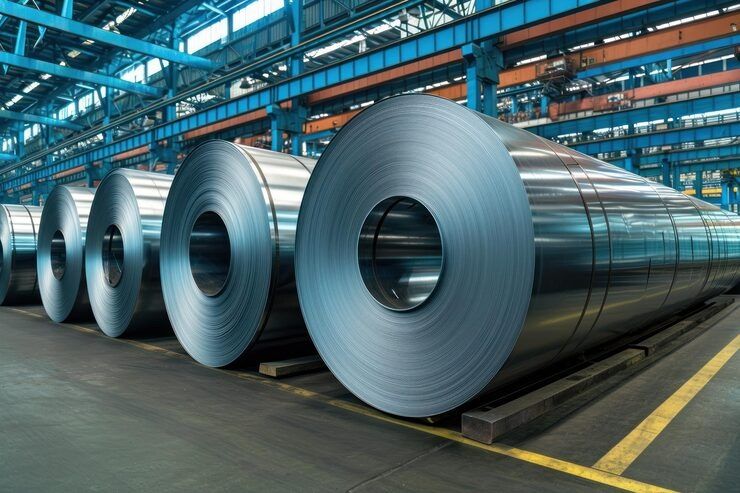
Steel is one of the most widely used materials in industries around the world. Among its many forms, cold rolled steel stands out for its strength, smooth surface finish, and versatility. Unlike hot rolled steel, which is processed at high temperatures, cold rolled steel undergoes additional rolling at room temperature. This gives it improved surface quality and tighter dimensional tolerances, making it ideal for applications that require precision and aesthetics.
The technique of cold rolling has been in use for decades, evolving alongside industrial needs. From automotive parts to household appliances, cold rolled steel has become a backbone of modern manufacturing.
Importance
Cold rolled steel matters today for several reasons:
-
Strength and durability – It provides better mechanical properties compared to hot rolled steel.
-
Surface quality – The smooth finish makes it suitable for painting, coating, and decorative use.
-
Dimensional accuracy – Ideal for applications that require precise measurements.
-
Versatility – Widely used across industries including automotive, construction, furniture, and electronics.
-
Energy efficiency – In many cases, its use reduces material wastage and improves performance.
For industries that prioritize performance, efficiency, and aesthetics, cold rolled steel is a material of choice.
Properties of cold rolled steel
-
Higher tensile strength compared to hot rolled steel
-
Smooth, refined surface finish
-
Tighter tolerances and uniform thickness
-
Ability to be bent, stamped, or shaped without losing strength
-
Enhanced machinability and weldability
Recent updates and trends (2024–2025)
The cold rolled steel market has been influenced by several developments:
-
Sustainability initiatives – Increasing adoption of recycled steel in cold rolling to lower environmental impact.
-
Automotive demand – Growing use of lightweight cold rolled steel in electric vehicle manufacturing (2024 onwards).
-
Smart factories – Integration of AI and automation in steel rolling mills to improve precision and efficiency.
-
Global demand shifts – In 2025, Asia-Pacific remains the leading region for cold rolled steel production due to infrastructure growth.
-
Advanced coatings – Rising interest in corrosion-resistant coatings applied to cold rolled steel for construction and consumer products.
Regulations and standards
Cold rolled steel production and usage are guided by strict regulations to ensure quality and safety:
-
ASTM International standards – Cover dimensions, strength, and quality for global applications.
-
ISO certifications – Ensure consistent production and environmental management in steel plants.
-
EU regulations – Focus on sustainability, recyclability, and emission reduction in steel industries.
-
National standards (e.g., BIS in India, JIS in Japan) – Provide region-specific specifications for cold rolled steel grades.
These standards guarantee uniformity and trust in the material across industries.
Helpful resources for learning more
-
Metallurgy textbooks – Detailed explanations of steel processing and material science.
-
Engineering handbooks – Provide specifications, grades, and applications of cold rolled steel.
-
Industry reports – Offer insights on global production trends and demand forecasts.
-
Material testing kits – Useful for industries to verify steel properties.
-
Educational platforms – Courses on material engineering and steel technology.
Frequently asked questions
What is the difference between cold rolled and hot rolled steel?
Cold rolled steel has a smoother finish, tighter tolerances, and higher strength, while hot rolled steel is less precise but more cost-efficient for structural use.
Is cold rolled steel stronger?
Yes, the process of cold rolling increases tensile strength and hardness compared to hot rolled steel.
Where is cold rolled steel commonly used?
It is widely used in automotive parts, appliances, construction materials, and precision components.
Does cold rolled steel rust?
Like most steel, it can rust if not protected. Coatings, galvanization, or painting are common solutions.
Can cold rolled steel be welded?
Yes, it has good weldability, making it versatile for manufacturing and fabrication.
Conclusion
Cold rolled steel represents a vital material in modern industries due to its strength, precision, and surface quality. From cars and electronics to construction and household products, its applications are vast and continuously growing. With ongoing advances in sustainability, smart manufacturing, and coatings, cold rolled steel will remain central to global industrial development. By understanding its properties, trends, and standards, individuals and businesses can better appreciate the importance of this versatile material.