Modern agritech refers to the integration of digital tools, biotechnology, smart irrigation, precision agriculture, robotics, automation, and satellite monitoring into farming and food production systems. Agritech exists because global agriculture faces multiple challenges, including climate change, soil degradation, unpredictable weather, inefficient water usage, and increasing population pressure. Traditional farming has relied heavily on human observation and seasonal experience, which is often insufficient to manage today’s complex environmental and production needs.
Agritech transforms agriculture into a systematic, data-driven, and predictable activity. Instead of working solely on manual knowledge, modern agritech uses digital systems like sensors, drones, weather stations, yield analytics, fertigation models, and soil management dashboards. Farmers use tools to analyze soil quality, estimate rainfall, monitor pest patterns, and detect nutrient gaps remotely.
Food production is becoming more technical due to demands from urbanization, resource scarcity, and sustainability expectations. Agritech combines precision farming, smart irrigation, controlled environment agriculture, and digital crop analytics to make agriculture more resilient, efficient, and environmentally responsible.
In the early 2000s, agriculture technology was limited to mechanization, fertilizers, and seed development. Today, agritech includes advanced vertical farming, AI-driven soil mapping, carbon-conscious regenerative agriculture, seed genomics, agri-robotics, and water-efficient solutions. These advancements reflect a major transformation in how global agriculture is planned, monitored, and managed.
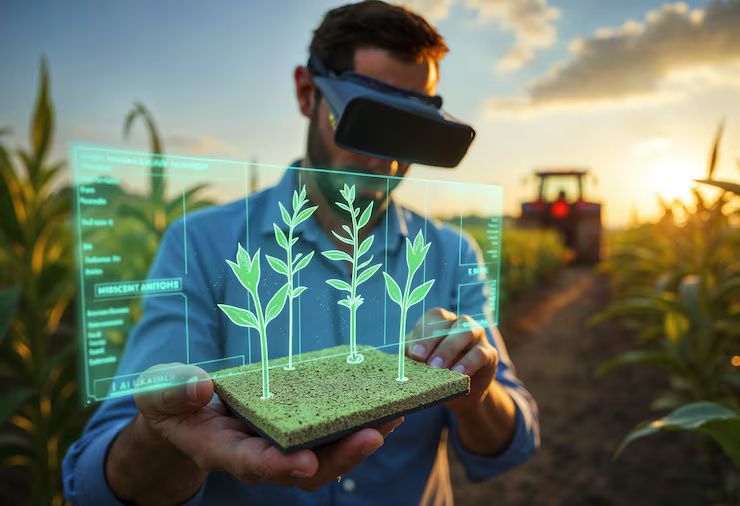
Importance: Why Modern Agritech Matters Today
Agritech affects farmers, agriculture researchers, universities, policymakers, rural communities, food supply systems, and global consumers. It increases productivity while reducing uncertainty and dependency on climate-driven risks.
Who agritech impacts
-
Small and medium farmers managing diverse land and crops
-
Climate researchers working on predictive weather analytics
-
Agriculture institutions studying soil health and irrigation models
-
Governments designing food security and sustainability programs
-
Educational and agronomy centers teaching agricultural technology
-
Consumers relying on safe, traceable food supply chains
Why agritech matters
-
Improves food security as global population increases
-
Conserves groundwater and reduces water wastage through smart irrigation
-
Enhances soil health and crop quality while reducing chemical exposure
-
Supports predictive farming decisions using AI, sensors, and satellite imagery
-
Reduces waste in seed usage, fertilizer planning, and pesticide inputs
-
Encourages environmentally responsible farming and regenerative practices
Agritech strengthens economic stability for agricultural regions and reduces risks caused by droughts, pests, and extreme weather. Artificial intelligence and remote sensing help identify field stress before visible crop damage appears, protecting yields and reducing losses.
Problems modern agritech solves
-
Limited access to real-time soil or weather information
-
High crop losses due to unpredictable climate conditions
-
Overuse of chemical fertilizers and inefficient irrigation
-
Difficulty tracking crop data, disease patterns, and soil degradation
-
Food distribution gaps due to documentation or storage inefficiencies
-
Limited visibility for supply-chain traceability and crop health records
A simple comparison highlights how agritech supports sustainable agriculture:
| Traditional Farming | Modern Agritech |
|---|---|
| Relies on manual observation | Relies on sensors, analytics, and AI |
| Uncertain weather forecasting | Real-time climate prediction models |
| Inefficient water spraying | Smart and automated irrigation |
| Uniform chemical use | Targeted nutrient application |
| Limited yield prediction | Satellite-based forecasting |
Modern agritech enhances cultural farming knowledge with digital accuracy, making agriculture more adaptive and sustainable.
Recent Updates, Trends, and Industry Developments in Agritech (2024–2025)
Digital analytics and precision agriculture
Farmers increasingly apply precision farming, edge analytics, and geospatial monitoring to detect water requirements, nutrient variation, pest incidents, and yield zones. This improves accuracy and reduces unnecessary field inputs.
Smart irrigation and water forecasting
India, Africa, and drought-sensitive regions saw increased adoption of smart irrigation techniques in 2024–2025. Automated systems schedule irrigation based on moisture data rather than fixed routines. Water-saving strategies now form a core part of sustainable farming.
Vertical farming and controlled environments
Indoor vertical agriculture continues to expand due to reduced land availability and urban consumption needs. Controlled environment agriculture uses LED systems, hydroponic racks, and climate chambers to grow leafy vegetables, herbs, microgreens, and seedlings with minimal pesticides.
AI-driven agronomy
Artificial intelligence supports real-time pest diagnostics, farm camera alerts, soil nutrition suggestions, crop profitability analytics, and fertilizer scheduling. These systems assist farmers in making accurate seasonal decisions.
Drones and satellite imagery
Drone usage expanded for mapping remote areas, monitoring foliage density, detecting irrigation leakage, and forecasting output. Satellite data helps identify large agricultural stress zones before major crop loss occurs.
Carbon-positive regenerative agriculture
2024–2025 saw increased attention to regenerative farming, including composting, crop rotation, reduced tillage, and biomass methods. Regenerative agriculture builds soil carbon, supports biodiversity, and improves long-term soil fertility.
Agritech startups and institutional programs
Global universities and rural academies launched new agritech research labs, farmer learning modules, automation prototypes, and digital soil libraries. Academic-industrial partnership programs encouraged smart irrigation pilots and soil health mapping.
Agritech continues shifting toward automation, AI-assisted decision tools, regenerative agriculture, water analytics, smart irrigation, and sustainable productivity models.
Laws and Policies Affecting Agritech in India
India’s agricultural ecosystem operates under national food, irrigation, technology deployment, and digital resource policies.
Digital agriculture initiatives
Government programs promote the use of soil cards, rainfall monitoring dashboards, nutrient calculators, and digital farm documentation. These systems ensure standardized data for agricultural planning.
Soil health and nutrient regulation
Soil health cards and nutrient standards encourage responsible fertilizer usage, long-term land management, and regenerative soil practices.
Irrigation management and water governance
India’s policies encourage micro-irrigation, drip irrigation, ground-water conservation, and efficient water resource planning. Smart irrigation systems align with national sustainability goals.
Agricultural data and traceability
Crop documentation and supply-chain transparency help ensure food traceability, safety, and quality control. Policies encourage record-based agriculture and secure digital information flow.
Research and biotechnology advancement
Public institutions and agricultural universities support seed genetics, smart farming labs, biofertilizers, and responsible biotechnology adoption to improve resilience and yield.
Government support helps farmers learn agritech tools, adopt sustainable farming practices, protect soil systems, and prepare for climate uncertainty.
Tools and Resources for Agritech Learning and Development
Agritech uses a wide ecosystem of data tools, biosystems, monitoring platforms, controlled environments, and online learning portals.
Smart agriculture tools
-
Soil moisture sensors
-
Nutrient diagnostic devices
-
AI-driven crop health platforms
-
Field mapping dashboards
-
Weather forecasting monitors
-
Drone-based field imaging
-
Automated irrigation controls
Controlled environment resources
-
Hydroponic racks for nutrient-efficient indoor farming
-
Vertical farming chambers with LED lighting
-
Greenhouse automation and humidity modules
-
Climate-controlled seedling nurseries
Data and analytics tools
-
Crop yield forecasting software
-
Fertilization calculators
-
Soil health mapping models
-
Water-usage prediction systems
-
Satellite-based vegetation monitoring tools
Educational and institutional resources
-
Online agriculture learning portals
-
Weather and soil advisory platforms
-
Rural extension learning modules
-
Smart irrigation research papers
-
University-based agritech documentation
These tools assist with sustainable farming, accurate field planning, analytical monitoring, continuous soil improvement, and water conservation.
FAQs
What is modern agritech?
Modern agritech integrates digital instruments, smart irrigation, drones, soil analytics, and biotechnology into agriculture to improve food production and environmental sustainability.
How does agritech support farmers?
Agritech helps farmers access weather forecasting, nutrient tracking, pest alerts, irrigation scheduling, and soil diagnostics, reducing uncertainty and protecting yields.
What is precision agriculture?
Precision agriculture uses satellites, sensors, and analytics to apply only the required quantity of nutrients and water to specific zones, improving efficiency and reducing wastage.
What is the role of controlled environment agriculture?
Controlled environments such as hydroponics and vertical farms grow crops with minimal pesticide usage, making indoor agriculture efficient and land-independent.
How does agritech improve sustainability?
Agritech reduces chemical exposure, conserves water, improves soil fertility, enhances biodiversity, and enables regenerative agriculture systems that protect long-term productivity.
Conclusion
Modern agritech represents a major transformation in global agriculture by combining climate analytics, regenerative soil science, smart irrigation, data monitoring, and controlled environments. It improves agricultural resilience, reduces environmental impact, enhances food productivity, and supports farmers with data-driven planning.
Government policies, academic institutions, and technological innovations continue advancing agritech-based learning, research, and soil restoration efforts. As climate pressure increases and water scarcity expands, modern agritech will remain essential to ensuring sustainable, efficient, and transparent food systems for future generations.