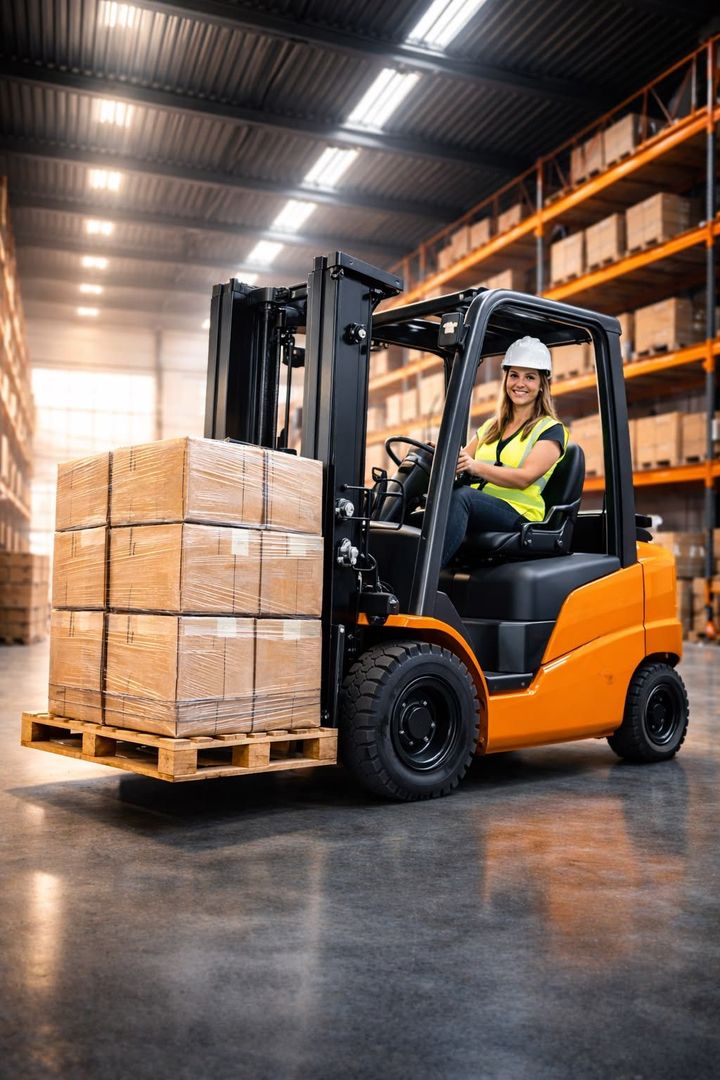
Forklift Prices in 2026: New vs Used, Electric vs Diesel — Full Cost Breakdown
Buying a forklift is a significant decision for any business that handles materials. Whether you run a growing warehouse, a busy construction site, or a distribution center, the right lift truck keeps operations moving smoothly. But the purchasing landscape in 2026 looks different from even a few years ago. Supply chains have shifted, battery technology has advanced, and businesses are thinking harder about long-term costs. This guide walks you through what to expect when researching forklift prices this year, without the hype or sales pressure. You will gain a clear understanding of the cost differences between new and used machines, electric and diesel models, and what truly affects value over time
Why Understanding Total Forklift Cost Matters
Many first-time buyers compare only the purchase price. While this seems logical, it rarely reflects the true investment.
A lower-priced forklift may require frequent repairs or consume more fuel. On the other hand, a higher-quality machine with lower operating costs may save thousands over several years.
Looking at the complete ownership cost helps businesses:
- Plan budgets more accurately
- Reduce unexpected repair expenses
- Improve equipment uptime
- Select equipment suited to actual workloads
- Increase long-term return on investment
The right forklift is the one that matches your operation—not necessarily the cheapest or most expensive model.
New vs Used Forklifts
Both new and used forklifts have advantages depending on business goals, budget, and workload.
| Feature | New Forklift | Used Forklift |
|---|---|---|
| Initial investment | Higher | Lower |
| Warranty | Usually included | Limited or unavailable |
| Maintenance | Lower during early years | May increase over time |
| Latest technology | Yes | Depends on age |
| Financing availability | Often easier | May vary |
| Expected lifespan | Longer | Depends on previous usage |
| Downtime risk | Lower | Can be higher |
Benefits of Buying a New Forklift
New forklifts typically offer:
- Manufacturer warranty
- Latest safety technologies
- Improved fuel efficiency
- Better operator comfort
- Lower repair frequency
- Higher productivity
- Longer service life
Businesses operating multiple shifts or relying heavily on forklifts often prefer new equipment because downtime can become more expensive than the purchase price difference.
Possible Limitations
- Higher upfront investment
- Depreciation during early ownership
- Longer delivery times for customized models
Benefits of Buying a Used Forklift
Used forklifts remain popular among small businesses and companies with limited operating hours.
Advantages include:
- Lower purchase cost
- Faster availability
- Lower depreciation
- Good value for occasional use
- Suitable for seasonal operations
Possible Limitations
Older forklifts may require:
- More frequent servicing
- Replacement parts
- Higher maintenance costs
- Shorter remaining lifespan
- Careful inspection before purchase
Checking maintenance records, operating hours, service history, and overall condition is essential before purchasing used equipment.
Electric vs Diesel Forklifts
Power source plays one of the biggest roles in determining long-term ownership costs.
Electric Forklifts
Electric forklifts continue to gain popularity across warehouses and indoor operations.
Advantages
- Lower operating costs
- Quiet operation
- Zero tailpipe emissions
- Less routine maintenance
- Smooth acceleration
- Better indoor air quality
- Lower vibration
Limitations
- Charging time required
- Battery replacement after several years
- Charging infrastructure needed
- Less suitable for certain heavy outdoor environments
Electric forklifts work especially well in:
- Warehouses
- Retail distribution centers
- Food facilities
- Pharmaceutical storage
- Indoor logistics
Diesel Forklifts
Diesel forklifts remain a preferred option for demanding outdoor work.
Advantages
- Strong lifting capability
- Long operating hours
- Fast refueling
- Reliable in rough environments
- Excellent for heavy loads
Limitations
- Higher fuel costs
- More engine maintenance
- Noise during operation
- Exhaust emissions
- Not suitable for many indoor environments
Diesel forklifts are commonly used in:
- Construction
- Lumber yards
- Shipping ports
- Mining operations
- Heavy manufacturing
- Steel industries
Electric vs Diesel Comparison
| Feature | Electric | Diesel |
| Indoor use | Excellent | Limited |
| Outdoor use | Moderate | Excellent |
| Operating cost | Lower | Higher |
| Fuel or energy | Electricity | Diesel fuel |
| Maintenance | Lower | Higher |
| Noise level | Low | Higher |
| Emissions | None during operation | Produces exhaust |
| Heavy lifting | Good | Excellent |
| Refueling time | Charging required | Fast |
Factors That Affect Forklift Ownership Cost
Several factors influence total ownership costs.
Capacity
Higher lifting capacities generally require:
- Larger engines or motors
- Stronger frames
- Larger tires
- More durable hydraulic systems
These factors increase both purchase and maintenance costs.
Lift Height
Higher lifting requirements may require:
- Extended masts
- Additional stabilization systems
- More hydraulic components
This increases equipment complexity.
Operating Hours
Businesses using forklifts continuously will spend more on:
- Tires
- Batteries
- Fuel
- Hydraulic servicing
- Wear components
Machines operating one shift per day usually experience lower annual maintenance costs than those running around the clock.
Working Environment
Operating conditions greatly affect maintenance.
Indoor environments generally produce:
- Less wear
- Cleaner components
- Longer tire life
Outdoor environments expose forklifts to:
- Dust
- Mud
- Rain
- Uneven surfaces
- Temperature extremes
These conditions often increase maintenance requirements.
Attachments
Additional attachments can improve productivity but may increase purchase and maintenance costs.
Common attachments include:
- Side shifters
- Fork positioners
- Paper roll clamps
- Drum handlers
- Bale clamps
- Rotators
Choose only attachments that support actual operational needs.
Types of Forklifts
Different industries require different forklift designs.
Counterbalance Forklifts
The most common type.
Suitable for:
- Warehouses
- Manufacturing
- Shipping
- General logistics
Reach Trucks
Designed for:
- High warehouse shelving
- Narrow aisles
- Indoor storage
Ideal where maximizing storage space is important.
Pallet Stackers
Best for:
- Light warehouse work
- Retail stockrooms
- Distribution centers
They are generally easier to operate and occupy less space.
Rough Terrain Forklifts
Built for:
- Construction sites
- Agriculture
- Outdoor material handling
They feature larger tires and improved ground clearance.
Order Pickers
Used for:
- E-commerce fulfillment
- Retail warehouses
- High-level inventory picking
These improve efficiency in order fulfillment operations.
Latest Forklift Trends in 2026
The forklift industry continues to evolve through technology and sustainability.
Some major developments include:
Growth of Lithium-Ion Batteries
Many businesses are replacing traditional lead-acid batteries with lithium-ion systems because they offer:
- Faster charging
- Longer battery life
- Reduced maintenance
- Opportunity charging during work breaks
Smart Fleet Management
Modern forklifts increasingly include:
- GPS tracking
- Fleet utilization reports
- Maintenance scheduling
- Driver performance monitoring
- Remote diagnostics
These features help reduce downtime and improve equipment management.
Improved Safety Systems
Many newer forklifts now include:
- Automatic speed control
- Obstacle detection
- Stability assistance
- Operator access control
- Camera systems
- Pedestrian warning alerts
Safety technologies help reduce workplace accidents.
Connected Maintenance
Predictive maintenance systems can identify problems before major failures occur.
Benefits include:
- Reduced downtime
- Lower repair costs
- Better equipment availability
- Longer machine lifespan
Key Features to Consider Before Buying
Before selecting a forklift, evaluate these important features.
Lifting Capacity
Choose equipment capable of handling your heaviest routine loads without unnecessary overcapacity.
Lift Height
Ensure the mast can safely reach your highest storage locations.
Turning Radius
Compact forklifts are better suited for narrow warehouse aisles.
Energy Efficiency
Lower energy consumption reduces long-term operating expenses.
Operator Comfort
Look for features such as:
- Adjustable seating
- Easy controls
- Good visibility
- Reduced vibration
- Comfortable steering
Comfort often improves productivity during long shifts.
Service Availability
Reliable maintenance support and spare parts availability help reduce downtime throughout ownership.
Major Forklift Manufacturers
Several global manufacturers are known for producing reliable material handling equipment.
| Manufacturer | Known For |
| Toyota | Reliability and warehouse equipment |
| Hyster | Heavy-duty industrial forklifts |
| Yale | Material handling solutions |
| Mitsubishi Forklift Trucks | Balanced performance |
| Komatsu | Construction and industrial equipment |
| Doosan | Outdoor and industrial applications |
| Jungheinrich | Electric warehouse equipment |
| Crown | Warehouse productivity solutions |
| Clark | Long-standing forklift manufacturing |
| Linde Material Handling | Premium electric forklifts |
Each manufacturer offers different strengths depending on warehouse operations, heavy industry, logistics, or outdoor work.
How to Choose the Right Forklift
Use the following checklist before making a decision.
Buyer Checklist
Determine:
- Primary operating environment
- Indoor or outdoor use
- Required lifting capacity
- Maximum lift height
- Daily operating hours
- Fuel or electric preference
- Available charging or fueling facilities
- Warehouse aisle width
- Floor condition
- Maintenance support availability
- Future business growth
- Expected equipment lifespan
Choosing based on operational requirements rather than purchase price alone often leads to better long-term value.
Tips for Reducing Long-Term Ownership Costs
Proper operation and maintenance significantly affect forklift lifespan.
Helpful practices include:
- Perform daily inspections before operation.
- Follow manufacturer maintenance schedules.
- Train operators thoroughly.
- Avoid exceeding load limits.
- Keep tires properly maintained.
- Charge batteries correctly.
- Store forklifts in suitable conditions.
- Replace worn components early.
- Keep hydraulic systems clean.
- Maintain accurate service records.
Preventive maintenance generally costs less than major repairs caused by neglect.
Frequently Asked Questions
Is buying a used forklift always cheaper?
The initial purchase is usually lower, but long-term maintenance and repair expenses may be higher depending on the equipment's condition and previous usage.
Which is better for warehouses: electric or diesel?
Electric forklifts are generally preferred for indoor warehouses because they operate quietly, require less routine maintenance, and produce no tailpipe emissions.
How long can a forklift last?
Service life depends on operating hours, maintenance quality, workload, and working conditions. Well-maintained forklifts can remain productive for many years.
What ongoing costs should buyers expect?
Ownership costs may include maintenance, energy or fuel, tires, batteries, hydraulic servicing, operator training, insurance, inspections, and replacement parts.
Should small businesses buy new or used forklifts?
Businesses with lighter workloads may find used forklifts suitable if they have been properly maintained and thoroughly inspected. Operations with continuous daily use may benefit from investing in new equipment for greater reliability.
Are electric forklifts becoming more common?
Yes. Many businesses are adopting electric forklifts as battery technology improves and organizations focus on reducing operating costs and workplace emissions.
Conclusion
Choosing a forklift in 2026 involves much more than comparing purchase prices. Buyers should evaluate the complete ownership experience, including operating costs, maintenance, energy consumption, productivity, expected lifespan, and future business needs.
New forklifts offer the advantages of modern technology, warranties, and lower early maintenance, while used models can provide practical value for businesses with lighter workloads or tighter budgets. Likewise, electric forklifts continue to gain popularity for indoor operations due to lower operating costs and simplified maintenance, whereas diesel forklifts remain well suited for demanding outdoor environments and heavy-duty applications.