Orbital Space Manufacturing Machines Guide: Technology, Applications & Future Trends
Orbital space manufacturing machines are specialized systems designed to manufacture materials, components, and products while operating in Earth's orbit or other space environments. Unlike traditional industrial equipment that works under Earth's gravity, these machines take advantage of microgravity conditions to create products that may be difficult or impossible to manufacture on the ground.
The idea of manufacturing in space has existed for decades, but recent advances in robotics, automation, reusable launch technology, artificial intelligence, and satellite engineering have accelerated progress. Today, governments, research organizations, and private aerospace companies are exploring orbital manufacturing for advanced materials, semiconductor research, medical products, optical components, and next-generation satellite structures.
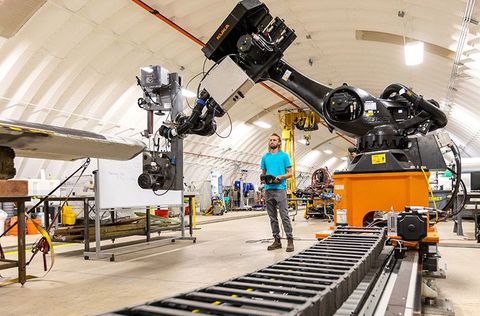
Modern orbital manufacturing machines combine robotic arms, automated production systems, precision sensors, additive manufacturing technologies, and remote monitoring software. Many systems are designed to operate with minimal human intervention, making automation a key part of future space production.
As space missions become longer and more ambitious, orbital manufacturing is expected to support future lunar bases, deep-space exploration, and commercial space stations.
Importance
Orbital space manufacturing has become increasingly important because it opens new possibilities for industries that require extremely high precision or unique material properties.
Benefits of Orbital Manufacturing
- Enables production in a microgravity environment.
- Reduces material distortion caused by gravity.
- Supports advanced scientific research.
- Improves manufacturing precision for selected products.
- Helps future long-duration space missions become more self-sufficient.
Industries That May Benefit
| Industry | Potential Applications |
|---|---|
| Aerospace | Satellite structures, lightweight components |
| Healthcare | Medical research and specialized biological materials |
| Electronics | Advanced semiconductor development |
| Telecommunications | High-performance optical equipment |
| Materials Science | New alloys, crystals, and composite materials |
| Robotics | Automated orbital assembly systems |
Problems It Helps Address
Orbital manufacturing helps researchers explore solutions for challenges that are difficult to overcome on Earth, including:
- Producing highly uniform crystals.
- Manufacturing lightweight aerospace materials.
- Developing advanced fiber optics.
- Improving experimental pharmaceutical research.
- Supporting future space infrastructure.
The technology also contributes to long-term sustainability in space exploration by reducing the need to launch every finished component from Earth.
Recent Updates
The past year has seen continued progress in orbital manufacturing technology.
Growth in Commercial Space Stations
During 2025–2026, several commercial space station programs continued planning and testing manufacturing platforms that could support research and automated production in low Earth orbit.
Expansion of Robotic Manufacturing
Space agencies and private organizations have increased investments in robotic assembly systems capable of constructing large structures directly in orbit rather than launching fully assembled equipment.
AI Integration
Artificial intelligence is becoming more important in orbital manufacturing. AI systems can:
- Monitor machine performance.
- Detect equipment anomalies.
- Improve production efficiency.
- Reduce communication delays.
- Assist autonomous decision-making.
Advanced 3D Printing
Large-format additive manufacturing continues to evolve for producing:
- Structural components
- Satellite parts
- Space station modules
- Scientific equipment
- Replacement components
Researchers continue evaluating new materials suitable for manufacturing in space.
Increased International Collaboration
Several countries have expanded cooperation on space research, orbital technology demonstrations, and manufacturing experiments aimed at supporting future exploration missions.
These developments indicate that orbital manufacturing is moving steadily from experimental research toward practical industrial applications.
Laws or Policies
Space manufacturing operates under international agreements as well as national space regulations.
International Frameworks
Orbital manufacturing activities generally follow international space principles that promote:
- Peaceful use of outer space.
- International cooperation.
- Responsible space activities.
- Protection of the space environment.
- Safe operation of spacecraft.
National Space Regulations
Countries with active space programs typically establish regulations covering:
- Space mission authorization.
- Satellite operations.
- Launch approvals.
- Space object registration.
- Safety requirements.
Space Debris Management
Many governments encourage practices that reduce orbital debris, including:
- Responsible satellite disposal.
- Collision avoidance planning.
- End-of-mission procedures.
- Sustainable spacecraft design.
Export and Technology Controls
Advanced aerospace technologies may also be subject to national export regulations to protect sensitive technologies while supporting international cooperation where appropriate.
As orbital manufacturing expands, policymakers continue discussing updated frameworks for commercial manufacturing, intellectual property, and long-term space sustainability.
Tools and Resources
Various categories of tools support orbital manufacturing research, planning, and development.
Design and Engineering Software
Common engineering software can assist with:
- Computer-aided design (CAD)
- Mechanical simulations
- Structural analysis
- Thermal modeling
- Digital prototypes
Manufacturing Simulation Platforms
Simulation tools help engineers evaluate:
- Production workflows
- Machine performance
- Material behavior
- Robotic movements
- Microgravity manufacturing processes
Data Analysis Platforms
Data processing resources help monitor:
- Manufacturing quality
- Sensor performance
- Equipment health
- Production efficiency
Educational Resources
Students and researchers can explore:
- Online engineering courses
- Space science learning materials
- Robotics education platforms
- Aerospace research publications
- Technical documentation
Planning Templates
Useful planning resources include:
- Manufacturing workflow templates
- Risk assessment checklists
- Project planning documents
- Quality assurance frameworks
- Mission planning guides
These resources support learning, research, and technology development while encouraging consistent engineering practices.
Future Trends
Orbital manufacturing continues to evolve rapidly, with several trends expected to shape the coming years.
| Trend | Expected Impact |
|---|---|
| AI-driven automation | Smarter manufacturing operations |
| Robotic assembly | Construction of larger space structures |
| Advanced additive manufacturing | Expanded production capabilities |
| Digital twins | Better machine monitoring |
| Sustainable space operations | Reduced orbital debris |
| Modular manufacturing | Flexible production systems |
| Autonomous maintenance | Improved operational reliability |
Future missions may increasingly rely on orbital manufacturing rather than transporting every component from Earth.
Frequently Asked Questions
What are orbital space manufacturing machines?
Orbital space manufacturing machines are automated systems designed to manufacture, assemble, process, or test products while operating in Earth's orbit under microgravity conditions.
Why is manufacturing in space different from manufacturing on Earth?
Microgravity changes how liquids, metals, crystals, and other materials behave. This can create manufacturing opportunities that are difficult to achieve under Earth's gravity.
What products could be manufactured in orbit?
Potential products include advanced materials, optical fibers, semiconductor components, aerospace structures, scientific equipment, and specialized research materials.
How does automation support orbital manufacturing?
Automation allows machines to perform manufacturing tasks with limited human involvement. Robotics, sensors, and artificial intelligence help maintain precision and improve operational efficiency.
What is the future of orbital manufacturing?
Experts expect continued growth in robotic production, autonomous manufacturing systems, commercial space stations, AI integration, and large-scale in-space construction supporting future exploration missions.
Conclusion
Orbital space manufacturing machines represent an exciting advancement in aerospace engineering and industrial technology. By taking advantage of microgravity, these systems enable researchers and engineers to explore manufacturing methods that are difficult to achieve on Earth.