Robotic Palletizing Machines: Advanced Automation and System Integration
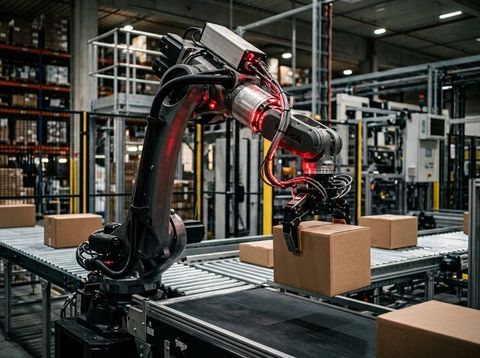
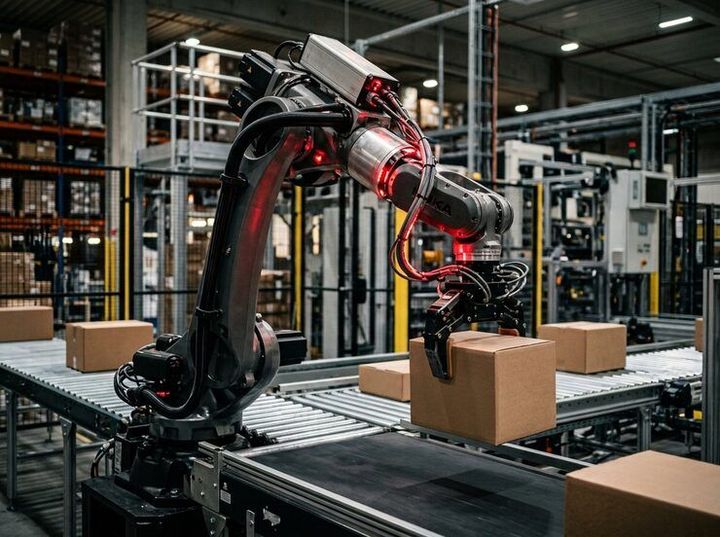
Robotic palletizing machines are automated industrial systems that arrange products, packages, cartons, bags, containers, or other materials onto pallets for storage and transportation. They use robotic arms, gripping tools, sensors, and control software to move items into planned positions.
Palletizing is an important part of manufacturing, packaging, warehousing, and distribution. Traditionally, workers have arranged products on pallets manually. As production volumes and handling requirements increase, many facilities use automated palletizing equipment to maintain consistent workflows.
A robotic palletizing system usually includes several connected components:
Industrial robot: Moves products between designated positions.
End-of-arm tooling: Uses grippers, suction devices, clamps, or other attachments to handle different products.
Conveyor system: Transfers packages to the robot's working area.
Sensors and vision systems: Detect product positions, dimensions, orientation, or other relevant information.
Control system: Coordinates the robot, conveyors, safety equipment, and production signals.
Pallet handling equipment: Positions empty pallets and moves completed loads to the next stage.
The equipment can be programmed for different stacking patterns, product dimensions, and pallet configurations. The exact capabilities depend on the robot, tooling, software, and materials being handled.
How Robotic Palletizing Works
A typical automated palletizing process follows a sequence of coordinated steps.
Products arrive at the palletizing station through a conveyor.
Sensors identify the product's position and confirm that it is ready for handling.
The robot picks up the item using its designated gripping tool.
The control system directs the robot to the correct stacking position.
The robot places the item according to the programmed pallet pattern.
The process continues until the pallet reaches its planned configuration.
The completed pallet moves to wrapping, inspection, storage, or dispatch.
System integration connects these steps with the wider production environment. This allows palletizing equipment to exchange information with packaging lines, warehouse management systems, and material handling equipment.
Importance of Robotic Palletizing in Modern Industry
Why Industrial Palletizing Automation Matters
Manufacturers and warehouse operators manage growing product variety, changing packaging formats, and demanding production schedules. Robotic palletizing helps coordinate the movement of finished goods between packaging, storage, and transportation.
Its importance extends beyond simply stacking products. A properly integrated system can support material flow, improve handling consistency, and provide production data for operational planning.
Key advantages include:
Consistent stacking: Programmable patterns help maintain repeatable pallet arrangements.
Reduced repetitive handling: Robots can perform frequent lifting and placement tasks.
Production coordination: Integrated controls help synchronize palletizing with upstream packaging equipment.
Flexible operations: Suitable robots can be reprogrammed for different products and pallet layouts.
Operational visibility: Sensors and control software can record cycle counts, alarms, and equipment status.
Workplace safety: Properly designed automation can reduce exposure to repetitive lifting and certain material-handling hazards.
These benefits depend on appropriate equipment selection, installation, maintenance, and process design. Automation does not eliminate every operational risk or guarantee higher productivity in every facility.
Industries That Use Robotic Palletizing Systems
Robotic palletizing machines are used across industries that handle packaged products or materials in organized loads.
Industry | Typical applications |
|---|---|
Food and beverage | Cartons, bottles, cans, and packaged food |
Pharmaceuticals | Sealed cartons and secondary packaging |
Chemicals | Bags, drums, pails, and containers |
Consumer goods | Household products and personal care cartons |
Building materials | Cement bags, tiles, and packaged components |
Agriculture | Seed bags, feed sacks, and packaged produce |
E-commerce and logistics | Shipping cartons and distribution packages |
Automotive manufacturing | Boxes containing components and spare parts |
Each industry has different handling requirements. Food production may require attention to hygiene and packaging integrity, while chemical facilities may need specialized equipment based on material hazards. Pharmaceutical operations may also require traceability and controlled handling procedures.
Main Types of Robotic Palletizing Equipment
Articulated robotic palletizers use multi-jointed arms to reach different positions around a pallet. They are suitable for applications that require varied movements and flexible stacking patterns.
Collaborative robotic palletizers are designed with features that can support certain forms of human-robot collaboration. However, collaborative design does not automatically make every application safe for unrestricted shared-space operation. A risk assessment is still necessary.
Gantry palletizing systems move along overhead or frame-mounted axes. They can suit installations requiring coverage across a defined work area.
Conventional automated palletizers use mechanical arrangements to stack products in predetermined patterns. Although not always robotic-arm systems, they may be integrated into the same automated production line.
Selecting an appropriate type requires evaluating product weight, dimensions, required throughput, available floor space, pallet sizes, and the need for future product changes.
Recent Updates and Emerging Trends in Palletizing Automation
Artificial Intelligence and Machine Vision
During 2025 and into 2026, industrial automation continued to develop around machine vision, data analysis, and more adaptable control systems. These technologies are increasingly relevant to robotic palletizing applications, although availability varies by equipment and installation.
Machine vision can help a system identify package orientation, detect irregular positioning, and locate objects presented at varying positions. AI-based software may assist with recognizing unfamiliar product arrangements or identifying patterns in operational data.
For example, a vision-enabled palletizing cell can use camera information to determine where a carton is located before the robot picks it up. This can be particularly useful when products do not arrive in perfectly consistent positions.
However, vision systems require suitable lighting, camera placement, calibration, and software configuration. Reflective surfaces, transparent packaging, and damaged cartons can affect detection accuracy.
Digital Monitoring and Predictive Maintenance
Connected industrial equipment can collect operating data, including cycle counts, motor temperatures, alarms, and equipment utilization. Maintenance teams can use these records to identify recurring problems and plan inspections.
Predictive maintenance approaches use data trends to estimate when certain components may require attention. Their accuracy depends on sensor quality, historical data, equipment condition, and the analytical methods used.
A practical monitoring program may include:
Robot fault and alarm histories.
Gripper performance and vacuum monitoring.
Conveyor motor and drive status.
Maintenance schedules and inspection records.
Production interruptions and recovery times.
These records help teams investigate problems instead of relying only on visual checks or operator observations.
Flexible Production and Modular Automation
Manufacturers increasingly need to handle multiple product sizes, package designs, and pallet patterns within the same facility. Modular palletizing cells can make it easier to adjust equipment arrangements as production needs change.
Quick-change gripping tools, configurable software recipes, and adaptable conveyor layouts can support product variation. Nevertheless, a new product may require physical adjustments, updated robot programming, validation, and safety checks before production begins.
Energy Efficiency and System Connectivity
Modern automation projects also consider electricity use, compressed-air demand, equipment standby modes, and overall production flow. Efficient robot movements and appropriately sized components can help reduce unnecessary energy consumption.
Industrial communication networks allow palletizing machines to exchange information with programmable logic controllers, manufacturing execution systems, and warehouse management platforms. These connections help coordinate production and logistics, but they must be designed with reliability and cybersecurity in mind.
These trends describe developing capabilities rather than guaranteed features of every robotic palletizing machine. Facility operators should verify the capabilities of the specific system they intend to deploy.
Laws, Policies, and Industrial Safety Requirements
Workplace Safety and Risk Assessment
Robotic palletizing equipment introduces mechanical movement, crushing hazards, pinch points, and risks associated with dropped loads. Applicable safety requirements depend on the country, industry, installation, and type of machinery.
In India, the Occupational Safety, Health and Working Conditions Code, 2020, forms part of the country's labour-law framework. Its practical application depends on commencement notifications, applicable rules, and relevant state requirements. Facilities should confirm the current legal position before determining their compliance obligations.
Manufacturers and operators should assess hazards associated with:
Robot movement and reach.
Conveyor transfer points.
Pallet loading and unloading.
Unexpected startup or restart.
Maintenance and fault recovery.
Access to hazardous areas.
Handling heavy, unstable, or damaged loads.
Physical guards, interlocked access doors, safety-rated sensors, emergency stops, and documented isolation procedures may be appropriate depending on the risk assessment.
International Machinery and Robot Standards
Several international standards provide guidance for industrial robot safety and automated machinery integration.
ISO 10218 series: Addresses safety requirements for industrial robots and robot applications.
ISO 12100: Provides principles for machinery risk assessment and risk reduction.
ISO 13849-1: Covers the design of safety-related parts of control systems.
IEC 60204-1: Addresses electrical equipment of machines.
The applicable edition and legal status of each standard should be verified for the installation location. A standard is not automatically a legal requirement in every country, although it may be referenced by legislation, contracts, or conformity procedures.
Cybersecurity and Data Protection
Connected palletizing equipment can exchange production information with factory networks and enterprise systems. This creates a need for controlled access, secure remote connections, software updates, and network monitoring.
Facilities should consider separating operational technology from general business networks where appropriate, restricting user permissions, maintaining backups, and documenting recovery procedures.
Compliance requirements vary by jurisdiction and industry. Safety, electrical, environmental, and cybersecurity obligations should be reviewed together during system planning.
Tools and Resources for Robotic Palletizing Systems
Robot Simulation and Layout Planning
Simulation software helps engineers evaluate robot reach, movement paths, cycle times, and potential collisions before installing equipment. Three-dimensional layout tools can also help determine conveyor positions, pallet locations, and access routes.
Useful planning resources include:
Robot reach and payload calculators.
Pallet pattern design tools.
Conveyor layout planning templates.
Production cycle-time worksheets.
Equipment risk assessment checklists.
Maintenance and inspection logs.
System Integration and Performance Monitoring
Programmable logic controllers coordinate equipment signals, while human-machine interfaces allow operators to monitor machine status and adjust authorized settings. Manufacturing execution systems can connect production information with wider factory operations.
A basic performance dashboard may track the following indicators:
Performance indicator | What it measures |
|---|---|
Cycle time | Time required to complete a defined operation |
Throughput | Number of products or pallets processed in a period |
Downtime | Time when equipment cannot perform its intended task |
Fault frequency | How often operational faults occur |
Energy consumption | Electricity or other energy used during operation |
These measurements help identify bottlenecks and support informed maintenance decisions.
Frequently Asked Questions
What is the main purpose of a robotic palletizing machine?
Its main purpose is to arrange products onto pallets automatically. The system uses robotic movement, gripping equipment, and programmed stacking patterns to prepare products for storage or transportation.
How does robotic palletizing improve warehouse efficiency?
It can support consistent stacking, reduce repetitive manual handling, and coordinate product movement with conveyors and warehouse systems. Actual improvements depend on production volume, equipment configuration, and workflow design.
Can one robotic palletizer handle different products?
Yes, some systems can handle multiple product types by using different gripping tools, robot programs, and pallet patterns. The supported range depends on payload, package dimensions, tooling compatibility, and the time required for changeovers.
What safety measures are needed for robotic palletizing?
Safety measures may include protective guarding, interlocked access points, emergency stops, risk assessments, safe maintenance procedures, and appropriate operator training. The final design must address the hazards of the complete installation.
How does system integration affect robotic palletizing?
System integration connects the robot with conveyors, sensors, packaging equipment, pallet handling units, and factory software. Effective integration helps coordinate production and makes operational information easier to monitor.
Conclusion
Robotic palletizing machines are an important part of modern industrial automation. They help organize packaged products, support repeatable material handling, and connect production lines with warehouse operations. Developments in machine vision, connected monitoring, flexible robot programming, and digital planning are expanding the ways these systems can be used.