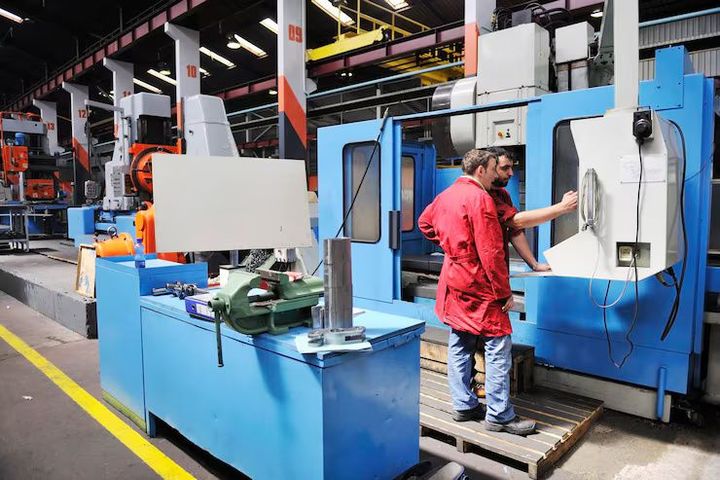
Explore Stamping Metal Machine: Types, Uses and Working Process
Metal stamping is an important manufacturing process used to transform flat metal sheets or strips into useful components. A stamping metal machine applies controlled force through a die and tooling system to shape, cut, bend, or form metal.
The technology is widely associated with automotive components, electrical equipment, appliances, construction hardware, industrial machinery, and many other manufactured products. Modern systems can combine mechanical or hydraulic power with sensors, programmable controls, automated material handling, and inspection technologies.
Understanding the metal stamping process, machine types, tooling, production methods, and safety requirements can help students, engineers, manufacturers, and general readers understand how precision metal components are produced.
What Is a Stamping Metal Machine?
A stamping metal machine is industrial equipment designed to process sheet metal or metal strip through a controlled pressing action. The machine normally works together with a die, punch, worktable, drive mechanism, and control system.
Depending on the required result, stamping can perform operations such as:
- Cutting metal into specific shapes
- Bending sheets to a required angle
- Forming three-dimensional shapes
- Creating holes and openings
- Drawing deep or shallow components
- Embossing patterns or features
- Producing repeated components with consistent dimensions
The basic concept is straightforward: metal is positioned between tooling components, and controlled force changes its shape or separates a section from the sheet.
How the Metal Stamping Process Works
The working process begins with selecting a suitable metal sheet or coil. Material thickness, strength, ductility, and surface characteristics influence the tooling and machine settings.
A typical stamping cycle includes:
- Material preparation: Sheet or coil material is prepared according to the required dimensions.
- Material positioning: The sheet is placed or automatically fed into the stamping area.
- Tool alignment: The punch and die are positioned correctly.
- Press movement: The machine applies force through the punch.
- Metal deformation: The material is cut, bent, drawn, or formed.
- Press return: The tooling returns to its starting position.
- Part removal: The completed component is removed manually or through an automated system.
- Inspection: Dimensions and surface condition are checked against production requirements.
For high-volume production, several operations can be combined into progressive or transfer tooling. This can reduce manual handling and create a more continuous production sequence.
Types of Stamping Metal Machines
Different machine designs are selected according to material, component geometry, production volume, and required forming force.
| Machine Type | Main Characteristic | Common Applications |
|---|---|---|
| Mechanical Press | Uses mechanical drive and flywheel systems | High-speed stamping |
| Hydraulic Press | Uses hydraulic pressure for controlled force | Deep forming and heavy components |
| Servo Press | Provides programmable motion control | Precision and flexible forming |
| Progressive Press | Uses multiple die stations | Repeated complex components |
| Transfer Press | Moves parts between tooling stages | Larger multi-stage components |
| Four-Column Press | Uses multiple guide columns | Forming and compression operations |
Mechanical Stamping Machines
Mechanical presses are commonly associated with high-speed production. A motor drives a flywheel and mechanical transmission system that moves the ram.
They can be suitable for operations such as blanking, punching, bending, and forming where repeatable press movement is important.
Hydraulic Stamping Machines
Hydraulic presses generate force through hydraulic systems. Their operating characteristics can make them useful for deeper forming and applications where controlled pressure and stroke movement are important.
Hydraulic systems can provide greater flexibility in controlling forming operations compared with some conventional mechanical designs.
Servo Stamping Machines
Servo presses use electronically controlled motors to manage ram movement. The motion profile can be adjusted for different production requirements.
This technology is increasingly relevant to manufacturers seeking greater process control, energy management, and integration with automated production systems.
Major Applications of Metal Stamping
Metal stamping is used across many industrial sectors because the process can produce repeatable components from sheet and strip materials.
Important applications include:
- Automotive body and structural components
- Electrical panels and enclosures
- Electronic equipment parts
- Appliance components
- Industrial machine brackets
- Construction hardware
- Lighting components
- Aerospace-related precision components
- Battery and energy equipment components
- General sheet-metal assemblies
The choice of material can include steel, stainless steel, aluminum, copper, brass, and other suitable alloys. Material selection depends on strength, formability, conductivity, corrosion resistance, and the intended application.
Why Metal Stamping Matters Today
Modern manufacturing increasingly depends on accurate, repeatable, and efficient production processes. Metal stamping addresses this need by allowing many similar components to be produced using specialized tooling.
The technology is particularly important where dimensional consistency is required across large production batches.
It can also support:
- Consistent component geometry
- Repeatable production cycles
- Automated material movement
- Integration with quality inspection
- Reduced manual handling
- Flexible production through programmable controls
- Improved monitoring of machine performance
For engineers and production planners, understanding stamping also helps with decisions involving tooling design, material selection, machine capacity, production speed, and quality control.
Recent Trends in Metal Stamping
Metal stamping technology has continued moving toward automation, digital monitoring, and more flexible production.
During 2025 and into 2026, industrial machinery discussions increasingly emphasized machine safety, digital controls, automation, condition monitoring, and integration with modern manufacturing systems.
One important development in India has been the continued implementation and refinement of machinery safety requirements under the Bureau of Indian Standards framework. BIS published machine-category guidelines during 2025 for machinery covered by its applicable safety regulations, alongside updates to conformity-assessment materials.
Another significant development has been the progression of India's occupational safety framework. The Ministry of Labour and Employment has published the Occupational Safety, Health and Working Conditions Central Rules, 2026, together with related FAQs and implementation material. These developments are relevant to industrial workplaces where stamping equipment is operated.
Current technology trends include:
- Servo-controlled press movement
- Automated coil feeding
- Robotic component handling
- Machine condition monitoring
- Digital production records
- Automated dimensional inspection
- Safety sensors and interlocking systems
- Data-based process optimization
These developments do not eliminate the need for trained operators and appropriate risk assessment. Instead, they change how people interact with industrial equipment.
Laws, Policies, and Safety Considerations in India
Metal stamping machines operate within a wider framework of workplace safety, machinery standards, electrical requirements, and industrial regulations.
India's Occupational Safety, Health and Working Conditions Code, 2020 provides an important legislative framework for occupational safety and working conditions. Central rules and related implementation material have been developed and updated, including materials published during 2025 and 2026.
The Bureau of Indian Standards also maintains machinery safety standards and conformity-assessment frameworks. BIS explains that compulsory certification applies to products specifically brought under government notification, so the applicable requirement depends on the exact machine category and current notification.
For industrial stamping equipment, important safety practices generally include:
- Guarding moving machine parts
- Emergency stopping arrangements
- Appropriate electrical protection
- Safe die installation procedures
- Preventing unintended machine activation
- Regular inspection of tooling
- Operator training
- Lockout and isolation procedures during maintenance
- Suitable personal protective equipment
- Clear operating instructions
Specific compliance requirements can vary according to machine type, workplace conditions, state rules, and applicable standards. Organizations should therefore verify the current requirements for their particular equipment and location.
Tools and Resources for Learning About Metal Stamping
Several general-purpose resources can help readers understand stamping technology and production planning.
Useful categories include:
- Engineering calculators: For basic force, pressure, area, and material calculations.
- CAD software: For studying part geometry and die concepts.
- Simulation tools: For examining forming behavior and potential deformation.
- Maintenance checklists: For organizing inspections of presses, tooling, and safety equipment.
- Machine manuals: For understanding operating procedures and equipment specifications.
- Standards databases: For locating applicable national and international standards.
- Training materials: For learning machine operation, tooling principles, and workplace safety.
- Quality templates: For recording dimensions, inspection results, and process observations.
A useful learning approach is to start with stamping fundamentals before studying advanced subjects such as progressive dies, finite-element forming analysis, servo press programming, and automated inspection.
Key Factors When Studying a Stamping Machine
Several technical factors influence stamping performance.
Material: Different metals respond differently to forming forces. Thickness and mechanical properties are particularly important.
Press capacity: The machine needs sufficient forming capability for the selected operation and material.
Die design: Tool geometry directly affects component shape, accuracy, material flow, and production consistency.
Stroke and speed: Press movement must match the forming operation and tooling requirements.
Feeding system: Automated feeding can improve consistency in continuous production.
Quality inspection: Dimensional measurement and visual inspection help identify problems such as deformation, cracks, burrs, or incorrect geometry.
Safety: Machine guarding, controls, training, and risk assessment are essential parts of responsible operation.
Frequently Asked Questions
What is a stamping metal machine?
A stamping metal machine is industrial equipment that uses controlled pressing force and tooling to cut, bend, draw, or form sheet metal and metal strip into specific shapes.
What metals can be used in metal stamping?
Common materials include steel, stainless steel, aluminum, copper, and brass. The appropriate material depends on the required strength, formability, conductivity, corrosion resistance, and component design.
What is the difference between mechanical and hydraulic presses?
Mechanical presses use a mechanical drive system to move the ram, while hydraulic presses generate forming force through hydraulic pressure. Their motion characteristics and suitable applications can differ.
Why is die design important?
The die determines how the metal is positioned, cut, bent, or formed. Proper die design helps achieve the required geometry, dimensional consistency, and material flow.
Is metal stamping suitable for automated production?
Yes. Stamping operations can be integrated with coil feeders, transfer systems, robotics, sensors, and automated inspection. The appropriate level of automation depends on the component and production requirements.
Conclusion
Stamping metal machines are fundamental pieces of industrial manufacturing equipment. By combining controlled force with specialized tooling, they can transform sheet metal and strip into components used in automotive, electrical, appliance, construction, energy, and engineering applications.