Titanium Alloy Sheet Manufacturing: Processes, Materials, and Technology
Titanium alloy sheet manufacturing is an important part of modern metal production. It involves transforming titanium and selected alloying elements into thin, strong, and durable metal sheets. These sheets are used in industries where lightweight construction, mechanical strength, and resistance to corrosion are important.
Titanium is known for its excellent strength-to-weight ratio. It is lighter than many traditional engineering metals while providing strong mechanical performance. It also performs well in environments where moisture, chemicals, and high temperatures can affect other materials.
Manufacturers produce titanium alloy sheets through several carefully controlled stages. These include raw material preparation, melting, casting, hot rolling, cold rolling, heat treatment, and surface finishing. Each stage influences the final thickness, strength, flexibility, and surface quality.
Titanium alloy sheet manufacturing has become particularly important in aerospace, automotive engineering, medical equipment, marine technology, and chemical processing. As industrial requirements become more demanding, manufacturers continue to improve production methods and material quality.
Understanding Titanium Alloy Materials
Titanium alloys are metallic materials created by combining titanium with other elements to improve specific properties. The selected composition depends on the intended application and required mechanical performance.
Common alloying elements include:
Aluminum: Helps improve strength and reduce material density.
Vanadium: Supports strength and structural stability.
Molybdenum: Improves hardenability and high-temperature performance in selected alloys.
Tin: Helps improve certain mechanical properties.
Iron: Can influence strength and phase transformation.
Different titanium grades have different characteristics. Selecting the appropriate grade is important because not every alloy is suitable for every industrial environment.
Common Titanium Grades
| Titanium Grade | Main Characteristics | Typical Applications |
|---|---|---|
| Grade 1 | High ductility and corrosion resistance | Chemical equipment |
| Grade 2 | Balanced strength and corrosion resistance | Industrial equipment |
| Grade 3 | Higher strength than Grade 2 | Engineering structures |
| Grade 4 | High strength among commercially pure grades | Industrial components |
| Grade 5 (Ti-6Al-4V) | High strength-to-weight ratio | Aerospace and engineering |
| Grade 23 (Ti-6Al-4V ELI) | Improved fracture toughness and controlled interstitial content | Medical applications |
The final material selection depends on mechanical requirements, operating temperature, corrosion exposure, and applicable industry standards.
Importance of Titanium Alloy Sheet Manufacturing
Titanium alloy sheets play an important role in industries that require reliable and lightweight materials. Their combination of strength, durability, and corrosion resistance makes them suitable for many demanding applications.
Lightweight Industrial Structures
Titanium alloys help reduce the weight of structural components without sacrificing important mechanical properties. This is particularly useful in aircraft structures, transportation equipment, and advanced engineering systems.
Reducing structural weight can improve overall energy efficiency and support better equipment performance.
Corrosion Resistance
Titanium naturally develops a protective oxide layer when exposed to oxygen. This layer helps protect the material against many corrosive environments.
As a result, titanium sheets are widely considered for chemical processing equipment, marine structures, heat exchangers, and industrial environments involving moisture.
High-Performance Engineering
Some titanium alloys maintain useful mechanical properties under demanding temperature and pressure conditions. This makes them valuable for aerospace structures, turbine-related components, and specialized industrial equipment.
Medical and Healthcare Applications
Selected titanium alloys are used in medical equipment and implant-related applications because of their biocompatibility and mechanical characteristics.
Material purity, chemical composition, surface condition, and applicable medical standards are especially important in these applications.
Industries That Use Titanium Alloy Sheets
Aerospace and aircraft manufacturing
Automotive and transportation engineering
Chemical processing plants
Marine and offshore engineering
Medical equipment manufacturing
Power generation systems
Industrial heat exchangers
Titanium Alloy Sheet Manufacturing Processes
Producing titanium alloy sheets requires controlled temperatures, suitable equipment, and careful material inspection. The manufacturing process usually includes several connected stages.
Raw Material Preparation
The process begins with titanium sponge, recycled titanium material, and selected alloying elements.
Manufacturers examine the raw materials to confirm their chemical composition and suitability for the intended alloy grade.
Important preparation activities include:
Checking raw material purity.
Measuring alloying element quantities.
Removing unwanted contamination.
Preparing materials for melting.
Maintaining accurate batch records.
Titanium reacts readily with oxygen, nitrogen, and hydrogen at elevated temperatures. Therefore, contamination control is an essential part of production.
Melting and Alloy Formation
Prepared materials are melted to create a uniform titanium alloy. Vacuum arc remelting and other controlled melting methods are used to improve chemical consistency and reduce unwanted contamination.
The molten metal is then formed into an ingot or another suitable intermediate shape.
Multiple melting stages may be required for applications with demanding material-quality requirements.
Ingot Preparation and Heating
After solidification, the ingot undergoes surface preparation and inspection. Defective surface areas may be removed before further processing.
The material is heated within a controlled temperature range to prepare it for hot working.
Heating conditions influence metal flow, grain structure, and the quality of subsequent rolling operations.
Hot Rolling
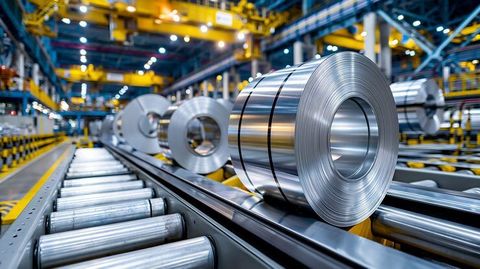
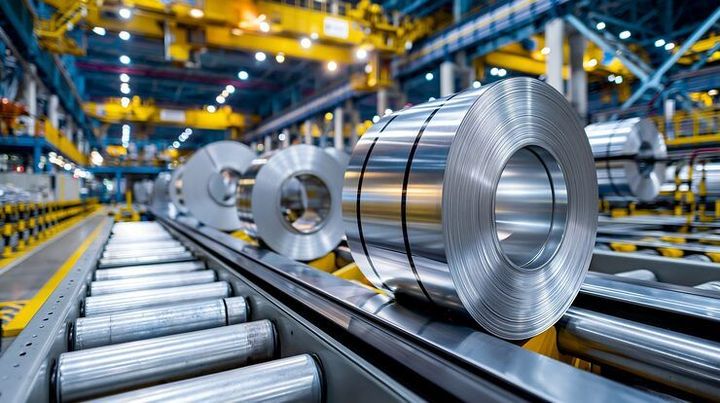
Hot rolling is one of the main processes used to transform titanium alloy ingots into thinner intermediate products.
During this process, heated titanium is passed through rotating rollers. The rollers gradually reduce its thickness while increasing its length.
Important hot rolling factors include:
Rolling temperature.
Roller pressure.
Reduction per rolling pass.
Material deformation.
Cooling conditions.
Proper temperature control helps reduce processing defects and supports a more uniform internal structure.
Cold Rolling
Cold rolling is generally performed after hot rolling and suitable intermediate treatments.
The titanium sheet passes through rollers at or near room temperature. This process reduces thickness and improves dimensional accuracy and surface quality.
Cold rolling can also increase material strength through work hardening. However, it may reduce ductility, so additional heat treatment may be necessary.
Annealing and Heat Treatment
Annealing involves heating titanium alloy sheets under controlled conditions and then cooling them according to the required material specification.
This process can help:
Reduce internal stresses.
Improve ductility.
Adjust mechanical properties.
Support a more uniform microstructure.
Prepare sheets for additional forming operations.
The exact heat treatment depends on the alloy composition, thickness, and intended application.
Surface Finishing
Surface finishing improves the appearance and condition of titanium sheets. It can also prepare the material for further manufacturing operations.
Common finishing methods include:
Mechanical polishing.
Grinding.
Chemical cleaning.
Pickling and descaling.
Controlled surface treatment.
The appropriate finishing method depends on the required surface condition and the final industrial application.
Cutting and Final Inspection
The finished sheets are cut into specified dimensions using suitable industrial cutting equipment.
Manufacturers then inspect thickness, width, length, surface condition, and mechanical properties.
Inspection records help confirm whether the material meets the required technical specifications.
Quality Control and Testing Technologies
Quality control is essential because even small variations in titanium sheet composition or processing conditions can influence final performance.
Manufacturers use several inspection methods to identify defects and confirm material characteristics.
| Testing Method | Main Purpose |
|---|---|
| Chemical analysis | Checks alloy composition |
| Tensile testing | Measures strength and elongation |
| Bend testing | Evaluates bending performance |
| Ultrasonic testing | Detects internal discontinuities |
| Thickness measurement | Confirms dimensional accuracy |
| Surface inspection | Identifies visible imperfections |
| Microstructure analysis | Examines grain structure |
Advanced inspection systems can also use digital measurement tools, automated data collection, and statistical process monitoring.
These methods help manufacturers maintain consistent production quality.
Recent Updates and Manufacturing Technology Trends
Titanium alloy manufacturing continues to develop through improvements in material research, automation, recycling, and advanced processing technologies.
Development of Advanced Titanium Alloys
Research published in April 2026 has examined lower-cost titanium alloy development, including alternative alloying strategies and improved manufacturing routes.
These developments aim to maintain useful mechanical properties while making titanium materials more practical for wider industrial applications.
Improved Titanium Sheet Production
In June 2025, an industrial titanium producer announced that a new facility in South Carolina had entered production for aerospace titanium alloy sheet.
This development highlights the continuing importance of specialized rolling capabilities and controlled production processes for aircraft structures.
Titanium Scrap Recycling
Research published in September 2025 examined solid-state recycling techniques for titanium machining waste.
These methods investigate how titanium chips and other manufacturing residues can be processed into useful engineering materials while maintaining suitable mechanical properties.
Digital Manufacturing and Process Monitoring
Modern production facilities increasingly use automated temperature monitoring, digital inspection, process data collection, and computer-controlled rolling equipment.
These technologies help operators monitor production conditions and identify variations earlier.
Laws, Regulations, and Industry Standards
Titanium alloy sheet manufacturing is influenced by material specifications, workplace safety requirements, environmental regulations, and industry-specific quality systems.
Requirements differ between countries and applications.
ASTM Material Standards
ASTM B265 is an important specification covering titanium and titanium alloy strip, sheet, and plate.
It addresses material grades, chemical composition, and relevant mechanical requirements. Manufacturers and material users should check the applicable edition and product requirements before confirming compliance.
Aerospace Quality Requirements
Aerospace manufacturers generally follow strict material qualification, traceability, inspection, and quality-management requirements.
Relevant frameworks may include AS9100 quality management and applicable aerospace material specifications.
Medical Material Requirements
Titanium materials intended for medical applications must meet the relevant biocompatibility, chemical composition, and product-specific requirements.
Medical implant materials may be governed by specialized ASTM and ISO standards.
Environmental and Workplace Regulations
Manufacturing facilities must also consider:
Industrial air-emission requirements.
Wastewater treatment regulations.
Chemical handling and storage rules.
Occupational health and safety requirements.
Industrial waste management regulations.
In India, applicable environmental requirements may involve the Central Pollution Control Board, State Pollution Control Boards, and relevant factory safety legislation.
Compliance depends on the facility, manufacturing activity, and location.
Tools and Resources for Titanium Sheet Manufacturing
Several general tools and technical resources support titanium alloy manufacturing, material selection, and production planning.
Engineering Design Software
Computer-aided design tools help engineers develop component models, define sheet dimensions, and examine manufacturing requirements.
Simulation and Analysis Tools
Finite element analysis software can help evaluate material deformation, stress distribution, and forming behaviour.
Metallurgical Testing Equipment
Laboratories use chemical analysis instruments, tensile testing machines, hardness testers, and microscopes to examine titanium materials.
Industrial Process Monitoring
Digital monitoring platforms can track rolling temperature, production speed, dimensional measurements, and equipment performance.
Material Selection Resources
Material specification databases, engineering handbooks, and technical reference documents help engineers compare titanium grades and identify appropriate standards.
Production Documentation
Useful manufacturing records include:
Material test certificates.
Chemical composition reports.
Heat treatment records.
Rolling process records.
Dimensional inspection reports.
Quality management documentation.
These resources support traceability and consistent production practices.
Frequently Asked Questions
1. What Is Titanium Alloy Sheet Manufacturing?
Titanium alloy sheet manufacturing is the process of converting titanium-based materials into thin metal sheets through melting, rolling, heat treatment, surface finishing, and inspection.
2. Which Titanium Alloy Is Commonly Used for Industrial Sheets?
Grade 5 titanium, also known as Ti-6Al-4V, is widely used in high-strength engineering applications. Commercially pure Grades 1 and 2 are also common where corrosion resistance and formability are important.
3. What Is the Difference Between Hot Rolling and Cold Rolling?
Hot rolling reduces titanium thickness at elevated temperatures and is commonly used for initial material shaping. Cold rolling takes place at lower temperatures and helps achieve improved dimensional accuracy and surface quality.
4. Why Is Heat Treatment Important in Titanium Sheet Production?
Heat treatment helps control internal stresses, ductility, microstructure, and mechanical properties. The required treatment depends on the selected alloy and final application.
5. Can Titanium Alloy Manufacturing Materials Be Recycled?
Yes. Titanium manufacturing scrap, including suitable machining waste, can be recovered and processed through controlled recycling methods. Chemical composition and contamination must be carefully evaluated before reuse.
Conclusion
Titanium alloy sheet manufacturing combines advanced material science with carefully controlled industrial processes. From raw material preparation and alloy formation to hot rolling, cold rolling, heat treatment, and final inspection, every stage contributes to the finished sheet's performance.