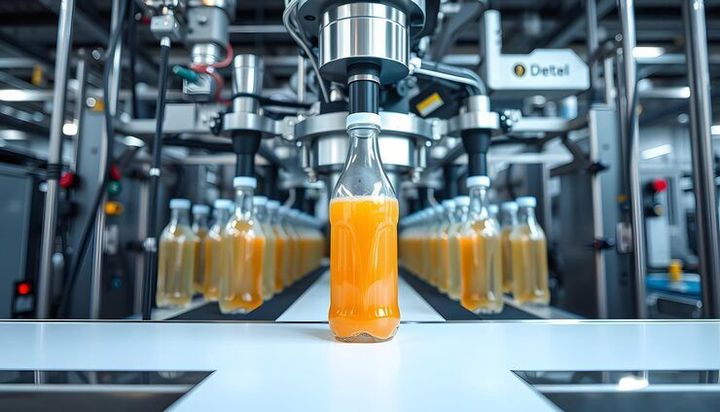
Automated Filling Machines: A Complete Guide to Types, Technology, and Applications
Automated filling machines are industrial systems designed to place a measured quantity of material into containers with limited manual involvement. They are widely used in food processing, pharmaceuticals, cosmetics, chemicals, beverages, and household product manufacturing.
These machines can fill bottles, jars, cans, pouches, drums, bags, and other packaging formats. Depending on the application, they handle materials such as water, oils, creams, powders, cleaning liquids, and dry granules.
Traditional manual filling depends heavily on human effort. It can be suitable for small production activities, but maintaining consistent quantities becomes more difficult as production volumes increase. Automated filling equipment addresses this challenge through mechanical controls, sensors, pumps, valves, weighing systems, and programmable electronic components.
Modern filling systems can operate as standalone units or as part of a larger packaging line. They may work alongside container feeders, capping equipment, labeling machines, inspection systems, and conveyor belts.
The main purpose is to improve filling consistency, support production planning, reduce avoidable material loss, and create a more controlled packaging process.
How Automated Filling Machines Work
Although machine designs vary, most automated filling systems follow a similar sequence:
Container positioning: Empty containers move into the filling area through a conveyor or feeding mechanism.
Detection: Sensors identify container presence and help prevent filling when a container is missing or incorrectly positioned.
Measurement: A pump, flow meter, weighing mechanism, or volumetric system determines the intended quantity.
Filling: Nozzles, valves, augers, or other mechanisms transfer material into the container.
Drip control: Specialized nozzles and shutoff mechanisms help reduce leakage and dripping.
Inspection: Sensors or weighing equipment may check fill levels or identify inconsistent containers.
Discharge: Filled containers move to the next packaging stage.
Some machines complete these steps continuously, while others fill containers in batches. The appropriate arrangement depends on material characteristics, container design, hygiene requirements, and production volume.
Importance of Automated Filling Machines in Modern Industry
Consistency and Production Control
Accurate filling is important because the quantity inside a container affects product quality, packaging compliance, inventory planning, and customer expectations.
Automated equipment helps manufacturers establish repeatable filling parameters. When properly calibrated and maintained, it can reduce variation between containers.
However, automation does not guarantee perfect accuracy. Material temperature, viscosity, foam, air bubbles, equipment wear, and incorrect settings can influence results. Regular verification remains necessary.
Reduced Material Waste
Spillage, overfilling, underfilling, and dripping can create avoidable waste. Automated filling systems can help limit these problems through controlled dispensing and monitoring.
For example, a manufacturer handling a high-viscosity liquid may use a positive-displacement pump to achieve more predictable transfer. A powder processor may use an auger-based system to control how much material enters each container.
The results depend on the equipment, operating conditions, and quality-control procedures.
Improved Workplace Safety
Filling operations sometimes involve hot liquids, corrosive chemicals, fine powders, or substances that require careful handling. Automated systems can reduce direct contact between workers and these materials.
Enclosed filling areas, suitable ventilation, protective equipment, emergency stops, and interlocked guards can further support workplace safety.
Automation must still be designed around the hazards associated with each material. It does not remove the need for trained operators and safe operating procedures.
Industries That Use Filling Technology
| Industry | Common materials | Typical containers |
|---|---|---|
| Food and beverages | Water, sauces, oils, juices | Bottles, jars, cans |
| Pharmaceuticals | Liquid medicines, powders | Vials, bottles, containers |
| Cosmetics | Creams, lotions, shampoos | Tubes, jars, bottles |
| Chemicals | Detergents, solvents, industrial liquids | Bottles, drums, cans |
| Agriculture | Fertilizer granules, liquid formulations | Bags, bottles, containers |
| Household products | Cleaning liquids, gels | Bottles, refill packs |
Each industry has different requirements for cleanliness, material compatibility, fill accuracy, traceability, and packaging integrity.
Types of Automated Filling Machines
Liquid Filling Machines
Liquid filling machines are designed for materials that flow, including water, beverages, oils, and cleaning formulations.
Common technologies include:
Gravity filling: Uses gravity to transfer suitable liquids into containers.
Piston filling: Uses a piston and cylinder to dispense a measured volume.
Pump filling: Uses a pump to move liquid through a controlled delivery system.
Flow-meter filling: Measures liquid movement electronically during dispensing.
Overflow filling: Fills containers to a consistent visible level, depending on the system design.
The best method depends on viscosity, foaming behavior, required accuracy, and container shape.
Powder Filling Machines
Powder filling machines handle dry materials such as flour, spices, powdered ingredients, and selected pharmaceutical formulations.
Auger fillers use a rotating screw to move a controlled quantity of powder into a container. Other systems rely on weighing mechanisms to measure the target mass.
Powder density, particle size, moisture, and flow behavior can affect performance. Dust extraction and suitable containment may be necessary for materials that create airborne particles.
Granule Filling Machines
Granule filling equipment is used for materials such as seeds, grains, pellets, and dry food ingredients.
Depending on the product, the machine may use volumetric cups, vibrating feeders, or multihead weighing systems. Weighing-based designs are useful when the target quantity is specified by mass rather than volume.
Viscous Product Filling Machines
Thick materials, including creams, pastes, gels, and some sauces, may require piston fillers or specialized pumping systems.
These machines must handle the product without causing excessive dripping, unwanted air pockets, or inconsistent dispensing. Contact surfaces should also be compatible with the material and the required cleaning procedure.
Net-Weight Filling Machines
Net-weight filling systems measure the actual mass delivered into a container. They commonly use load cells or integrated weighing equipment.
These systems are useful when mass-based accuracy is important, particularly for bulk liquids, powders, chemicals, and industrial materials.
A suitable weighing system needs proper calibration, stable installation, and protection from vibration or other environmental influences.
Filling Machine Technology and Automation Features
Sensors and Programmable Controls
Sensors and programmable logic controllers (PLCs) help coordinate filling operations. They can manage container detection, pump activation, valve timing, conveyor movement, and fault notifications.
A human-machine interface (HMI) allows operators to view operating conditions and adjust approved settings. Depending on the system, it may display production counts, alarms, filling parameters, and maintenance information.
These controls improve process visibility, but their effectiveness depends on correct programming, operator training, and routine testing.
Robotic Integration and Smart Monitoring
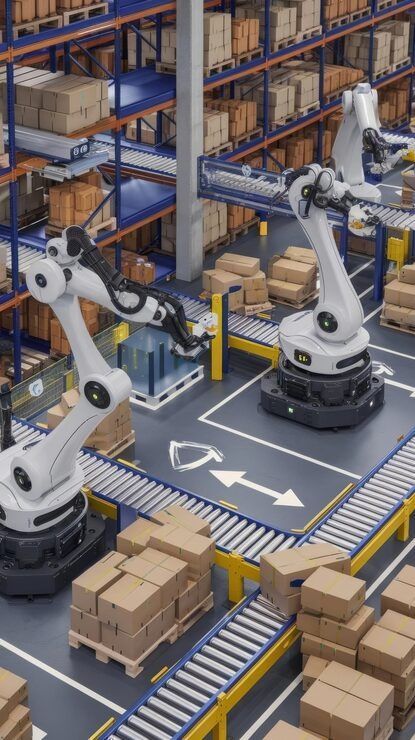
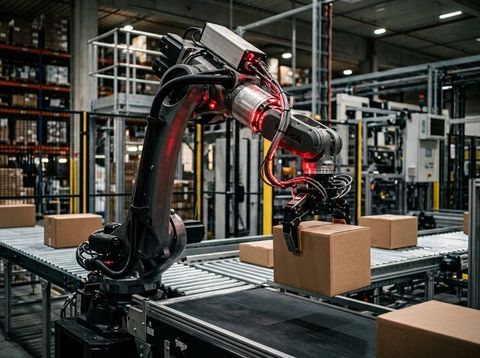
Robotic equipment can position containers, handle packaging formats, or transfer products between production stages. When integrated with filling equipment, robotics can support flexible packaging operations.
Industrial monitoring systems can also record production data and identify recurring interruptions. Some advanced platforms use data analysis to detect unusual operating patterns that may indicate equipment wear or process variation.
Predictive maintenance can help maintenance teams investigate potential problems before a major interruption occurs. Its accuracy depends on the quality of collected data and the reliability of the monitoring method.
Comparing Filling Technologies
| Technology | Main advantage | Important consideration |
|---|---|---|
| Gravity filling | Simple transfer for suitable liquids | Depends on liquid properties and system design |
| Piston filling | Controlled dispensing of many thick products | Requires appropriate cleaning and maintenance |
| Flow-meter filling | Electronic measurement of liquid flow | Meter selection depends on material properties |
| Auger filling | Controlled powder dispensing | Powder consistency affects results |
| Weighing-based filling | Direct measurement of mass | Requires calibration and stable conditions |
| Robotic integration | Flexible handling and coordinated operations | Requires suitable programming and safety controls |
Recent Developments in Automated Filling Machines
Digital Monitoring and Data Collection
During 2025 and 2026, industrial automation continued to emphasize connected equipment, production data, and improved process visibility. Filling systems can use digital interfaces to record operating conditions, identify faults, and support quality investigations.
These capabilities are particularly relevant to facilities that need traceable production records or want to understand recurring downtime.
The availability of these features varies by machine. A connected interface alone does not establish that a system meets every quality or cybersecurity requirement.
Greater Attention to Hygiene and Product Changeovers
Manufacturers handling food, beverages, cosmetics, and pharmaceuticals increasingly need filling equipment that supports controlled cleaning and product changeovers.
Design considerations include smooth product-contact surfaces, accessible components, suitable seals, and cleaning procedures validated for the application.
Some systems use clean-in-place (CIP) arrangements to clean designated internal surfaces without complete disassembly. CIP suitability depends on the equipment design, the material being processed, and the applicable hygiene requirements.
Flexible Packaging and Production Lines
Changing container sizes and packaging formats has encouraged interest in adjustable filling systems. Features such as programmable recipes, replaceable format parts, and adjustable filling heads can help accommodate different production requirements.
However, a change in container dimensions or material properties may require fresh testing and setup. Flexible equipment still needs suitable process validation.
These developments are ongoing industry trends rather than evidence that every manufacturer has adopted the same technology.
Laws, Regulations, and Safety Policies
Product Quantity and Measurement Requirements
Filling operations may be subject to legal metrology rules governing declared quantities, measuring instruments, and packaged commodities.
In India, the Legal Metrology Act, 2009, and the Legal Metrology (Packaged Commodities) Rules, 2011, are relevant to many packaged products. Applicable requirements depend on the product category, packaging arrangement, and current amendments.
Manufacturers should verify declared quantities, applicable labeling details, and measurement procedures with the appropriate regulatory authority.
Food and Pharmaceutical Requirements
Food manufacturers in India must consider applicable Food Safety and Standards Authority of India (FSSAI) requirements. These may cover hygiene, manufacturing practices, packaging, and labeling.
Pharmaceutical filling operations must follow the applicable drug regulations and manufacturing requirements. Sterile products can require additional controls for contamination prevention, environmental monitoring, and process validation.
Requirements differ by product type, intended use, and market.
Worker Safety and Environmental Controls
Filling equipment should be assessed for mechanical, electrical, chemical, and operational hazards. Depending on the workplace, relevant requirements may address machine guarding, emergency stops, ventilation, electrical safety, and hazardous-material handling.
Manufacturers operating internationally may also need to consider machinery safety rules and conformity requirements in their destination markets.
Before introducing equipment, businesses should review current legislation, applicable standards, and the instructions supplied by the equipment manufacturer. Regulatory compliance cannot be assumed solely because a machine is automated.
Tools and Resources for Selecting and Maintaining Filling Equipment
Selecting a suitable filling system involves more than comparing production speed. The machine must match the product, container, hygiene requirements, and intended operating conditions.
Practical Assessment Tools
Useful resources include:
Production capacity calculator: Estimates required output using containers per minute, operating hours, and expected downtime.
Fill accuracy worksheet: Records target quantities, measured results, tolerances, and calibration checks.
Material compatibility checklist: Helps assess contact materials, seals, corrosion risks, and cleaning chemicals.
Preventive maintenance schedule: Tracks inspections, lubrication, replacement intervals, and recurring faults.
Quality-control log: Records batch details, fill measurements, rejected containers, and corrective actions.
Risk assessment template: Documents hazards, protective measures, operator responsibilities, and emergency procedures.
Questions to Ask Before Choosing a Machine
Review these factors before finalizing a machine specification:
What material will the machine handle?
Is the required measurement based on volume, mass, or fill level?
What container shapes and sizes must it accommodate?
What production rate is required under normal operating conditions?
Which cleaning and contamination-control procedures apply?
Are product-contact materials compatible with the formulation?
Can the machine connect to existing conveyors and packaging equipment?
What training, calibration, spare parts, and maintenance procedures are needed?
A documented assessment makes it easier to compare technical requirements and identify potential operating limitations before installation.
Frequently Asked Questions
What are automated filling machines used for?
Automated filling machines place measured quantities of liquids, powders, granules, creams, and other materials into containers. They are commonly used in food processing, pharmaceuticals, cosmetics, chemicals, and industrial manufacturing.
How do manufacturers choose the right filling machine?
Selection depends on material properties, container dimensions, required accuracy, production volume, cleaning procedures, and regulatory requirements. Testing the actual product under realistic operating conditions helps confirm suitability.
Are automated filling machines suitable for small production facilities?
Yes. Compact and semi-automatic systems can suit smaller operations, while larger facilities may require integrated production lines. The appropriate arrangement depends on output requirements, available space, operator skills, and process complexity.
How can filling accuracy be maintained?
Accuracy can be supported through regular calibration, routine fill checks, correct machine settings, preventive maintenance, and consistent material handling. Environmental conditions and product characteristics should also be monitored.
What is the difference between volumetric and weight-based filling?
Volumetric filling measures the space occupied by a product, while weight-based filling measures its mass. Volumetric methods can be suitable for many liquids and powders, whereas weight-based systems are useful when a specified mass is essential.
Conclusion
Automated filling machines play an important role in modern manufacturing by helping control quantities, improve process consistency, and coordinate packaging operations. Different technologies serve different materials, from free-flowing liquids to thick pastes and dry powders.