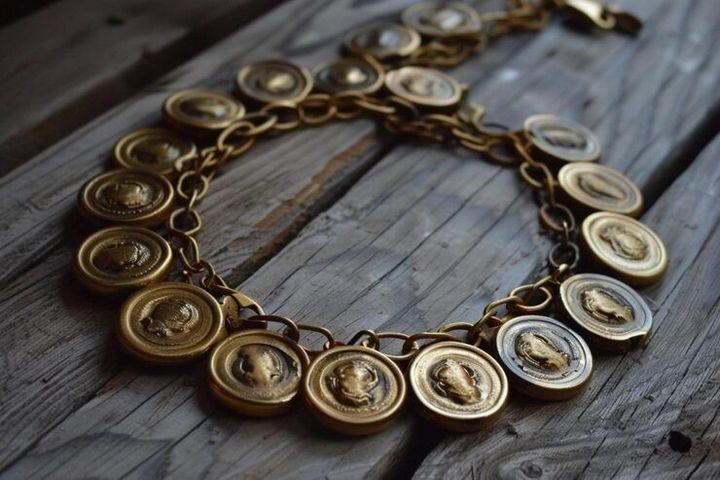
The concept of Greek coin necklaces dates back to ancient Greece, where coins were more than currency. They reflected political power, mythology, and city identity through engraved imagery. Over time, these coins became cultural artifacts and were later adapted into jewelry as pendants.
Today, Greek coin necklaces feature designs inspired by figures like Athena, Alexander the Great, and symbolic animals. These may include replicas, authentic coins, or modern interpretations created using advanced jewelry techniques.
They represent a connection between art, history, and personal expression, allowing wearers to showcase cultural narratives through jewelry. Modern versions often use materials like gold plating and sterling silver for durability and aesthetic appeal.
Why Greek Coin Necklaces Remain Relevant Today
Greek coin necklaces continue to attract interest due to their symbolism and timeless design. They are not just accessories but representations of ancient stories and traditions.
Who Finds Value in Them
-
History enthusiasts interested in ancient Greek culture
-
Jewelry designers studying classical influences
-
Fashion followers exploring heritage-inspired trends
-
Cultural researchers examining symbolic artifacts
These necklaces help bridge the gap between historical preservation and modern fashion.
Key Reasons for Their Importance
-
Preservation of classical Greek artistic influence
-
Educational insights into ancient coin imagery
-
Connection between historical symbols and modern style
-
Growing demand for heritage jewelry in global markets
Common Symbols and Their Meanings
| Symbol or Figure | Historical Meaning | Modern Interpretation |
|---|
| Athena | Wisdom and strategy | Intelligence and strength |
| Alexander the Great | Leadership and conquest | Power and legacy |
| Owl of Athens | Knowledge and vigilance | Academic symbolism |
| Pegasus | Inspiration and creativity | Artistic expression |
These symbolic meanings make coin necklaces valuable in both fashion and educational discussions.
Recent Developments and Trends in 2024–2025
Interest in heritage-inspired jewelry has increased significantly in recent years. Designers and researchers are exploring historical influences more deeply.
Emerging Trends
-
Use of 3D modeling and CAD software for precise designs
-
Growth of online museum exhibitions on coin history
-
Expansion of digital archives for ancient coin collections
-
Increased popularity of vintage-inspired accessories
Popular Styling Trends in 2025
-
Layered necklaces with multiple coin pendants
-
Mixed metals combining gold and silver tones
-
Minimalist chains with single coin designs
-
Focus on educational storytelling through jewelry
Jewelry Trend Influence Table
| Trend Category | Influence Level |
|---|
| Historical Symbolism | High |
| Minimalist Jewelry | Moderate |
| Vintage Revival | High |
| Digital Design Technology | Growing |
These trends highlight a shift toward storytelling and cultural depth in jewelry design.
Regulations and Cultural Heritage Policies
Jewelry featuring coin imagery may be subject to cultural heritage laws, especially when real historical coins are used. Regulations vary by country and region.
Key Regulatory Considerations
-
Protection laws for archaeological artifacts
-
Export restrictions on ancient coins
-
Documentation requirements for historical objects
Museums and collectors rely on verified documentation to confirm authenticity. Replica-based jewelry, however, follows standard manufacturing regulations.
International standards may also apply to precious metals, including hallmarking requirements for purity verification.
Helpful Tools and Educational Resources
Various tools and platforms help individuals explore Greek coin necklaces from both historical and design perspectives.
Useful Resources
-
Museum digital archives with ancient coin collections
-
Numismatic databases for historical coin research
-
Jewelry CAD software for pendant design
-
Historical timeline platforms on Greek civilization
-
Virtual museum tours of classical artifacts
Resource Comparison Table
| Resource Type | Purpose |
|---|
| Numismatic databases | Study ancient coin designs |
| Museum archives | Access historical artifacts |
| CAD design software | Create jewelry models |
| Research portals | Learn Greek history |
These tools support research, education, and creative design development.
Common Styling Concepts and Cultural Interpretations
Greek coin necklaces are often styled in modern ways while retaining historical significance. The focus is usually on highlighting engraved details.
Popular Styling Approaches
-
Single coin pendant on a minimalist chain
-
Layered necklaces with different coin sizes
-
Pairing with classical symbols like laurel leaves
-
Combining with modern minimalist fashion
This blend of old and new reflects the evolving nature of fashion and cultural expression.
Frequently Asked Questions
What is a Greek coin necklace?
A Greek coin necklace is a jewelry piece featuring a pendant designed to resemble or incorporate ancient Greek coins. These often display mythological figures or symbolic imagery.
Are these necklaces based on real coins?
Some designs use replicas of real coins, while others are modern interpretations inspired by historical designs.
Why are mythological symbols used?
Ancient Greek coins commonly featured gods, heroes, and animals representing cultural beliefs. These symbols continue to inspire modern jewelry.
What materials are used?
Common materials include gold-plated metals, sterling silver, bronze alloys, and other durable jewelry-grade metals.
How are designs recreated today?
Designers use digital modeling tools and precision engraving techniques to replicate ancient coin details accurately.
Cultural and Educational Insights
Greek coin necklaces highlight the influence of historical artifacts on modern industries. They combine elements of archaeology, art history, and fashion design.
What They Help Explain
-
Ancient economic systems
-
Mythological storytelling through visual art
-
Cultural symbolism in currency
-
The link between history and modern design
Timeline of Coin Symbolism Influence
| Period | Influence |
|---|
| Ancient Greece | Coin imagery of gods and city identity |
| Roman Era | Expansion of portrait-based coin designs |
| Renaissance | Revival of classical artistic elements |
| Modern Era | Use of historical symbols in jewelry design |
This long historical journey explains their continued relevance today.
Conclusion
Greek coin necklaces represent a blend of history, art, and contemporary design. Originating from ancient currency, they carry symbolic meanings tied to mythology and leadership.
Their modern relevance is driven by interest in heritage-inspired fashion and storytelling. Advances in digital design and access to historical archives have further strengthened their appeal.
Cultural regulations ensure that authentic artifacts are preserved, while modern interpretations keep the tradition alive. Understanding these necklaces offers insight into how ancient symbols continue to shape modern aesthetics and cultural appreciation.