Aluminum smelting is the industrial process of extracting pure aluminum metal from its primary ore, bauxite. This transformation is done using electrolytic reduction in a method known as the Hall-Héroult process, developed in the late 19th century. Because aluminum does not occur naturally in metallic form, smelting remains the essential step in producing lightweight, durable, and corrosion-resistant aluminum for global industries.
From transportation and packaging to electronics and renewable energy, aluminum smelting plays a central role in the global economy. The process consumes significant energy, making it one of the most energy-intensive industries, yet innovations in technology continue to reduce its environmental footprint.
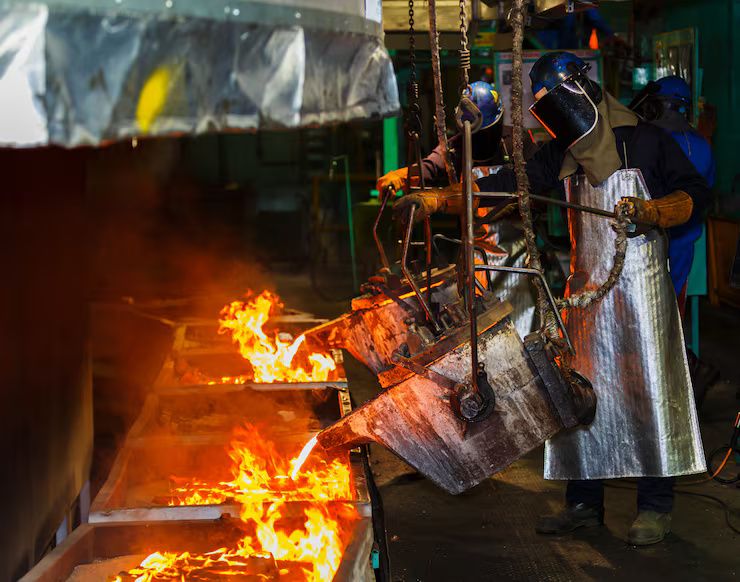
Importance of aluminum smelting today
Aluminum smelting is critical for several reasons:
-
Lightweight metal production – Aluminum’s low density makes it a preferred choice in automobiles, airplanes, and spacecraft.
-
Sustainability – Aluminum is 100% recyclable without losing quality, making smelting and recycling vital for circular economies.
-
Infrastructure and construction – Buildings, bridges, and urban projects rely heavily on aluminum’s strength and resistance.
-
Energy transition – As the world shifts toward renewable energy, aluminum is essential for solar panels, wind turbines, and power grids.
The demand for aluminum continues to rise, especially as industries prioritize efficiency and sustainability.
Recent updates and industry trends
The aluminum sector has seen significant developments in the last year:
-
Carbon reduction efforts (2023–2024): Companies like Rio Tinto and Alcoa are investing in carbon-free smelting technologies, including inert anode processes that could reduce emissions by up to 95%.
-
Energy integration: Nations with abundant hydropower, such as Canada, Iceland, and Norway, continue to attract smelting investments due to cleaner and cheaper electricity sources.
-
Global demand growth: According to 2024 reports, aluminum demand is projected to grow by 3–4% annually, driven by electric vehicles, construction, and renewable energy sectors.
-
AI and automation: Smart manufacturing systems are being adopted to optimize efficiency, reduce energy use, and improve safety in smelting plants.
These changes reflect how the industry is evolving to meet global sustainability goals while satisfying increasing demand.
Laws and policies shaping aluminum smelting
Government regulations and policies strongly influence the aluminum industry due to its high energy consumption and environmental impacts.
-
Environmental regulations: Countries impose strict emission limits on greenhouse gases and fluoride emissions from smelting plants.
-
Carbon pricing: Many regions, including the EU, apply carbon taxes or emission trading systems, affecting smelter competitiveness.
-
Energy policies: Subsidies and electricity pricing policies determine where smelting facilities are economically viable.
-
Mining regulations: Bauxite extraction and transportation must comply with environmental protection standards.
-
Recycling mandates: Several governments promote recycling to reduce reliance on energy-intensive primary smelting.
These laws encourage innovation while balancing economic and environmental concerns.
Tools and resources for learning more
For those interested in aluminum smelting, various resources can provide technical and educational insights:
-
Process simulation software – Tools that model smelting operations and optimize energy efficiency.
-
Energy calculators – Applications to estimate energy needs for smelting and refining processes.
-
Industrial journals – Publications covering research and case studies on smelting technologies.
-
Material databases – Sources of data on aluminum alloys, physical properties, and industrial applications.
-
Educational resources – Engineering textbooks and online learning modules covering metallurgy and electrolysis.
These tools help professionals, researchers, and students gain a deeper understanding of the complexities of smelting.
Frequently asked questions
What is the Hall-Héroult process?
It is the most widely used method for aluminum smelting, where alumina (refined from bauxite) is dissolved in molten cryolite and reduced to pure aluminum through electrolysis.
Why does aluminum smelting require so much electricity?
The electrolytic reduction process needs continuous high electrical currents, making energy a critical cost and sustainability factor.
Which countries are leading in aluminum smelting?
China, India, Russia, Canada, and the United Arab Emirates are among the top producers due to access to energy and raw materials.
Is aluminum smelting harmful to the environment?
Traditional smelting produces greenhouse gases, but modern facilities are adopting renewable energy and advanced technologies to reduce emissions.
What is the role of recycling in aluminum production?
Recycling aluminum requires only about 5% of the energy used in primary smelting, making it a crucial part of sustainable metal production.
Conclusion
Aluminum smelting is one of the most important industrial processes in the modern world. It transforms bauxite into a versatile, lightweight metal that supports industries ranging from transportation and construction to renewable energy and packaging.
While the process remains energy-intensive, ongoing research into carbon-free smelting, recycling, and energy efficiency is shaping a cleaner and more sustainable future for the industry.
Understanding aluminum smelting provides insights not only into metallurgy but also into global economic and environmental challenges.