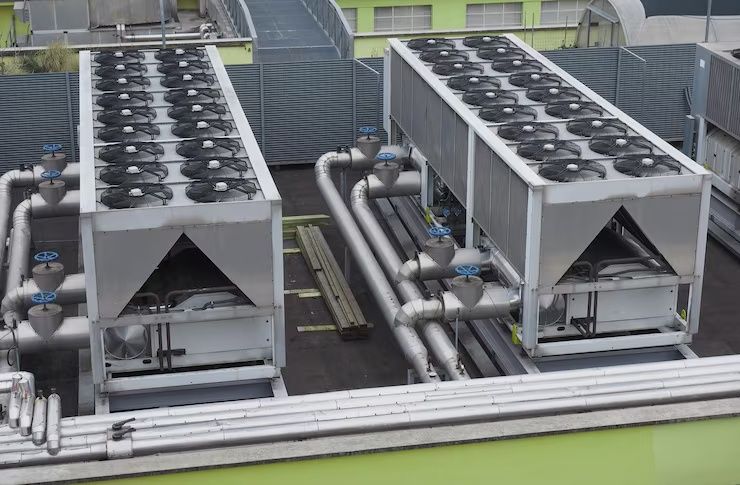
Industrial water chillers are cooling systems designed to remove heat from industrial processes, HVAC systems, and equipment operations. These chillers circulate cooled water to maintain optimal temperatures in manufacturing, food processing, chemical plants, and data centers.
Unlike domestic air conditioners, industrial water chillers operate on a larger scale and are engineered for continuous and high-capacity cooling. The system typically includes a compressor, evaporator, condenser, and a circulation pump, ensuring efficient heat transfer from the process or environment.
Importance of industrial water chillers today
Industrial water chillers are vital for operational efficiency, safety, and product quality:
-
Temperature control – Maintains consistent temperatures for industrial processes and sensitive equipment.
-
Energy efficiency – Reduces operational energy costs with optimized cooling systems.
-
Equipment protection – Prevents overheating, which can cause equipment failure or downtime.
-
Product quality – Ensures precision in processes such as chemical reactions, food preservation, and plastics extrusion.
-
Environmental compliance – Reduces reliance on inefficient cooling methods and minimizes emissions.
Industrial water chillers are indispensable across sectors that require precise and continuous temperature management.
Recent updates and trends in industrial water chillers
The past year has seen significant technological advancements:
-
Energy-efficient chillers (2023–2024): Variable speed compressors and high-efficiency pumps reduce energy consumption.
-
Smart monitoring: Integration with IoT devices allows real-time monitoring and predictive maintenance.
-
Environmentally friendly refrigerants: Transition to low-GWP (global warming potential) refrigerants reduces environmental impact.
-
Compact modular designs: Smaller footprints and modular configurations allow flexible installation and scalability.
-
Integration with renewable energy: Some systems now pair with solar or geothermal energy to reduce operating costs.
These trends reflect a growing focus on sustainability, automation, and efficiency in industrial cooling.
Laws and policies affecting industrial water chillers
Industrial water chillers are regulated to ensure safety, efficiency, and environmental compliance:
-
Refrigerant regulations: Many countries follow Montreal Protocol guidelines for phasing out high-GWP refrigerants.
-
Energy efficiency standards: Regulations like ASHRAE and EU EcoDesign standards govern performance ratings and energy consumption.
-
Occupational safety: OSHA and similar agencies mandate safe installation, operation, and maintenance practices.
-
Environmental compliance: Rules limit water discharge, chemical use, and refrigerant emissions.
-
Sustainable building codes: Chiller installation often falls under green building certifications like LEED and BREEAM.
Compliance ensures operational safety, environmental responsibility, and cost-efficient performance.
Tools and resources for learning more
Several tools and resources help professionals understand and optimize industrial water chillers:
-
Chiller sizing calculators – Determine required cooling capacity based on process or HVAC needs.
-
Energy efficiency guides – Provide insights on reducing electricity use and optimizing operations.
-
Simulation software – Models cooling systems and predicts thermal performance.
-
Industry journals and publications – Cover trends, case studies, and technological innovations.
-
Training programs – Offer knowledge on maintenance, installation, and energy management for chillers.
These resources assist engineers, facility managers, and students in improving efficiency and understanding system performance.
Frequently asked questions
What industries use industrial water chillers?
Industries include HVAC for commercial buildings, plastics extrusion, food and beverage processing, pharmaceuticals, chemical plants, and data centers.
How does a water chiller work?
It circulates water through a heat exchanger, where a refrigerant absorbs heat from the water and releases it externally via a condenser.
Are industrial water chillers energy-intensive?
Yes, but modern designs with variable speed compressors and smart controls significantly reduce energy consumption.
Can water chillers use eco-friendly refrigerants?
Yes, new systems often use low-GWP refrigerants that minimize environmental impact.
How long does a chiller last?
With proper maintenance, industrial water chillers can last 15–20 years or more, depending on operating conditions.
Conclusion
Industrial water chillers are essential for precise temperature control, energy efficiency, and operational safety across numerous industries. They support manufacturing, HVAC, and process industries by maintaining optimal conditions for equipment and products.
Recent advancements in energy efficiency, smart monitoring, and environmentally friendly refrigerants make these systems more sustainable and reliable than ever. Understanding industrial water chillers is critical for engineers, facility managers, and industrial operators aiming to optimize performance, reduce costs, and meet modern environmental standards.