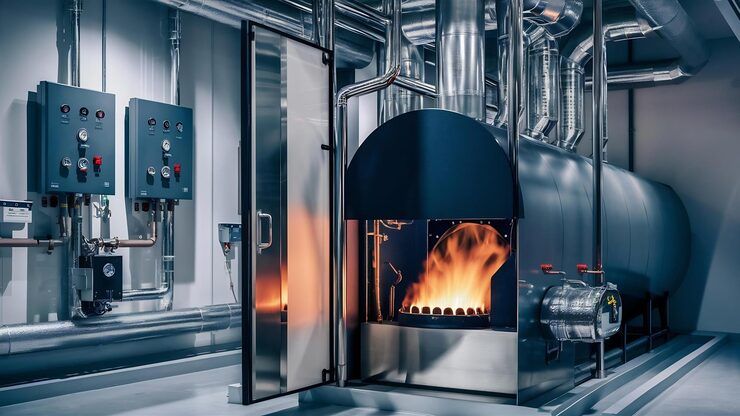
Industrial heat treatment is a controlled process used to change the physical and sometimes chemical properties of metals and alloys. A heat treatment furnace plays a central role in this process by providing a controlled environment where materials are heated, held at a specific temperature, and then cooled at a defined rate. These processes have been used for centuries, evolving from simple forge heating methods to advanced systems that operate with precise digital controls.
Heat treatment is commonly applied in industries such as automotive, aerospace, construction, and manufacturing. The goal is to improve properties like strength, hardness, flexibility, and resistance to wear or corrosion. Different types of furnaces are used depending on the material and the desired outcome. These include vacuum heat treatment furnace systems, continuous heat treatment furnace setups, and gas or electric heat treatment furnace configurations.
Each furnace type is designed to control temperature, atmosphere, and timing. This ensures consistent results across large batches of materials. As manufacturing processes have become more complex, heat treatment technology has also advanced to meet higher quality and efficiency requirements.
Importance
Heat treatment furnaces are essential in modern production because they directly influence the performance and lifespan of metal components. Without proper heat treatment, many materials would not meet the strength or durability requirements needed for everyday applications.
Industries rely on industrial heat treatment to ensure safety and reliability. For example, components used in vehicles or machinery must withstand stress, pressure, and temperature changes. Heat treatment helps achieve these properties by altering the internal structure of the material.
Several key challenges are addressed through heat treatment:
- Improving durability: Metals become more resistant to wear and fatigue, which extends their usability.
- Enhancing strength: Components can handle higher loads without breaking or deforming.
- Controlling flexibility: Some processes make materials less brittle, reducing the risk of sudden failure.
- Ensuring consistency: Large-scale production requires uniform properties across all parts.
The use of different furnace types also allows manufacturers to adapt to various materials and production volumes. For example, a continuous heat treatment furnace is often used in high-volume production, while a vacuum heat treatment furnace is preferred when precise control and minimal contamination are required.
Recent Updates
From 2024 to 2026, several trends have influenced the development of heat treatment furnaces. One major trend is the increasing use of automation and digital monitoring systems. Modern furnaces now include sensors and software that track temperature, pressure, and gas composition in real time.
Another development is the shift toward energy-efficient systems. Electric heat treatment furnace designs are becoming more common because they can provide precise temperature control and reduce emissions compared to some traditional fuel-based systems. At the same time, gas heat treatment furnace systems are being improved to use cleaner fuels and better combustion techniques.
Vacuum technology has also advanced, making vacuum heat treatment furnace systems more accessible for specialized applications. These furnaces reduce oxidation and contamination by removing air from the chamber, which is especially useful for high-performance materials.
Additionally, there is growing interest in environmentally responsible practices. Manufacturers are exploring ways to reduce energy consumption and emissions while maintaining consistent results. This includes improved insulation, heat recovery systems, and optimized process cycles.
Laws or Policies
Heat treatment processes are influenced by various regulations related to safety, environmental impact, and industrial standards. These rules vary by country but generally focus on ensuring safe operation and reducing environmental harm.
In many regions, industrial heat treatment facilities must comply with:
- Workplace safety regulations: These ensure that workers are protected from high temperatures, gases, and mechanical hazards. Proper training and protective equipment are required.
- Emission standards: Gas heat treatment furnace systems may be subject to limits on emissions such as carbon dioxide or nitrogen oxides. This encourages the use of cleaner technologies.
- Energy efficiency guidelines: Governments often promote the use of energy-efficient equipment, including modern electric heat treatment furnace systems.
- Material standards: Industries such as aerospace and automotive follow strict standards for heat-treated components to ensure reliability and safety.
International standards organizations also provide guidelines for heat treatment processes. These standards help maintain consistency across different manufacturers and regions.
Tools and Resources
Understanding and managing heat treatment processes often involves specialized tools and resources. These tools help engineers and operators maintain accuracy and consistency.
Some commonly used tools include:
- Temperature monitoring systems: Digital controllers and sensors track furnace conditions in real time.
- Simulation software: Programs can model heat treatment processes to predict outcomes before actual production.
- Material databases: These provide information about how different metals respond to heat treatment.
- Process calculators: Tools that estimate heating and cooling times based on material type and thickness.
Below is a simple table showing common types of heat treatment furnaces and their general characteristics:
| Furnace Type | Atmosphere Control | Typical Use Case | Key Feature |
|---|---|---|---|
| Vacuum heat treatment furnace | High (no air present) | Precision components, aerospace parts | Minimal oxidation |
| Continuous heat treatment furnace | Moderate to high | Large-scale manufacturing | Continuous processing |
| Gas heat treatment furnace | Controlled gas atmosphere | General industrial applications | Flexible fuel use |
| Electric heat treatment furnace | High precision control | Laboratory and controlled environments | Accurate temperature regulation |
These tools and systems support consistent outcomes and help reduce errors during production.
FAQs
What is a heat treatment furnace used for?
A heat treatment furnace is used to heat and cool metals in a controlled way to change their physical properties. This process improves strength, durability, and resistance to wear.
What is the difference between a vacuum heat treatment furnace and a gas heat treatment furnace?
A vacuum heat treatment furnace removes air to prevent oxidation and contamination, making it suitable for high-precision components. A gas heat treatment furnace uses controlled gases to create specific atmospheric conditions during heating.
How does a continuous heat treatment furnace work?
A continuous heat treatment furnace processes materials in a steady flow. Parts move through different temperature zones on a conveyor system, allowing consistent treatment in high-volume production.
Why is an electric heat treatment furnace used?
An electric heat treatment furnace is used for its precise temperature control and cleaner operation. It is often applied in environments where accuracy and reduced emissions are important.
What industries use industrial heat treatment?
Industrial heat treatment is used in automotive, aerospace, construction, and manufacturing industries. It is essential for producing components that meet strength and safety requirements.
Conclusion
Heat treatment furnaces play a critical role in shaping the properties of metals used in everyday products and industrial applications. Different types of furnaces, including vacuum, continuous, gas, and electric systems, provide flexibility for various needs. Advances in automation and energy efficiency continue to influence how these systems operate. Regulations and standards help ensure safety and consistency across industries. Overall, heat treatment remains a foundational process in modern manufacturing.