HMI Panels for Factories: Complete Guide to Industrial Control and Machine Monitoring
Human Machine Interface (HMI) panels have become an essential part of modern manufacturing and industrial automation.
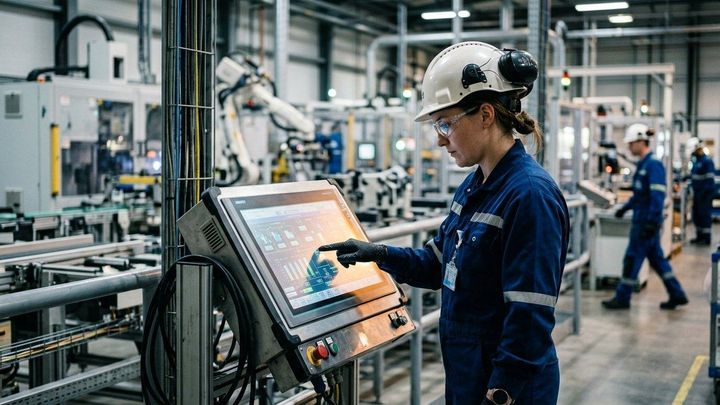
These interactive display units allow operators to communicate with machines, monitor production processes, and control industrial equipment from a single interface. As factories continue to adopt automation, HMI panels improve efficiency, productivity, and workplace safety by providing real-time access to operational information.
From food processing plants and packaging facilities to automotive manufacturing and chemical production, HMI panels help operators supervise complex machinery with greater accuracy. Instead of relying on multiple switches and indicator lights, workers can use a touchscreen interface to view machine performance, receive alerts, adjust operating parameters, and respond quickly to changing production conditions.
This guide explains what HMI panels are, how they work, their major types, practical applications, benefits, and future developments in industrial automation.
Understanding the Concept
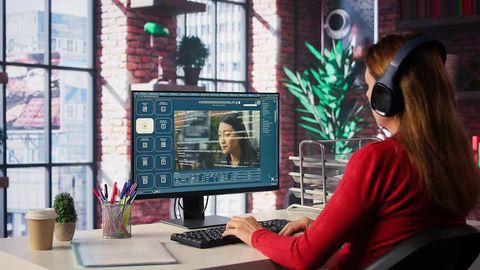
An HMI panel is an electronic display device that enables communication between people and industrial machines. It acts as the visual control center of an automation system by displaying operational data and allowing users to interact with equipment.
Most HMI panels connect with industrial PLC controllers, industrial control systems, SCADA systems, industrial sensors, and factory automation equipment. Information collected from machines appears on the display as charts, indicators, alarms, graphs, and control buttons.
For example, a production line operator can monitor conveyor speed, machine temperature, motor status, production counts, and alarm notifications from one screen instead of checking multiple control cabinets.
Modern HMI panels simplify machine operation while supporting industrial process automation and smart manufacturing.
Key Types or Categories
Basic HMI Panels
Basic HMI panels are designed for simple machine control and monitoring.
Typical features include:
- Status indicators
- Start and stop controls
- Production counters
- Alarm notifications
- Touchscreen operation
They are commonly used on standalone industrial machines.
Advanced Touchscreen HMI Panels
Advanced HMI panels provide greater functionality for complex manufacturing environments.
Features often include:
- High-resolution displays
- Multi-touch controls
- Interactive graphics
- Real-time production monitoring
- Historical data visualization
- User access management
These panels support large production facilities with multiple machines.
Industrial Panel PCs
Industrial panel PCs combine an HMI display with a powerful industrial computer.
Applications include:
- Manufacturing execution systems
- Industrial data collection
- Quality inspection
- Process visualization
- Factory management dashboards
They are suitable for demanding industrial environments.
Remote HMI Panels
Remote HMI panels allow operators to monitor equipment from centralized control rooms or secure locations.
These systems improve supervision across multiple production lines while reducing unnecessary movement within the factory.
Important Subsections
Touchscreen Interface
Touchscreen technology allows operators to interact directly with machine controls.
Users can:
- Start production
- Stop equipment
- Adjust machine settings
- View operating data
- Acknowledge alarms
The intuitive interface reduces operator training time.
Real-Time Monitoring
HMI panels continuously display operational information such as:
- Machine status
- Production output
- Temperature
- Pressure
- Speed
- Energy consumption
Immediate access to this information supports better operational decisions.
Alarm Management
Industrial automation systems generate alarms when abnormal conditions occur.
Examples include:
- Motor overload
- High temperature
- Low pressure
- Emergency stop activation
- Sensor failure
Prompt notifications allow operators to respond quickly.
Data Visualization
Modern HMI panels display information using:
- Trend graphs
- Charts
- Dashboards
- Process diagrams
- Performance indicators
Visual presentation makes complex production data easier to understand.
How It Works
HMI panels operate through a structured communication process.
Step 1: Data Collection
Industrial sensors measure operating conditions such as temperature, pressure, speed, flow rate, and machine position.
Step 2: PLC Processing
Industrial PLC controllers receive sensor information and execute programmed control logic.
The PLC determines machine responses based on operating conditions.
Step 3: Information Display
The HMI panel receives processed information and displays it using graphical screens, indicators, and production dashboards.
Operators can instantly view machine conditions.
Step 4: Operator Interaction
Users interact with the touchscreen to:
- Start equipment
- Stop production
- Change operating parameters
- Reset alarms
- View production reports
Commands entered through the HMI are transmitted to the PLC controller.
Step 5: Continuous Monitoring
The communication cycle repeats continuously, allowing real-time monitoring and rapid response to production changes.
Benefits and Advantages
HMI panels provide numerous benefits for factory operations.
Improved Productivity
Operators can monitor multiple production processes from one interface, reducing manual supervision.
Better Machine Visibility
Real-time dashboards provide clear information about equipment performance and production status.
Faster Problem Identification
Alarm notifications help operators detect equipment issues before they become larger operational problems.
Reduced Human Error
Simple graphical interfaces reduce mistakes that may occur when operating complex machinery.
Improved Industrial Automation
HMI panels integrate with industrial automation systems, improving communication between operators and machines.
Enhanced Workplace Safety
Emergency controls, warning messages, and equipment monitoring contribute to safer factory environments.
Simplified Maintenance
Maintenance personnel can quickly identify faults by reviewing machine status and diagnostic information displayed on the HMI.
Real-World Examples or Applications
HMI panels are widely used across industrial sectors.
Manufacturing Plants
Production lines use HMI panels to monitor assembly equipment, robotic systems, conveyor belts, and packaging machinery.
Food Processing Facilities
Operators supervise mixing, filling, labeling, temperature control, and packaging processes using centralized displays.
Chemical Processing
Chemical plants monitor pressure, flow rates, tank levels, and environmental conditions through industrial HMI systems.
Water Treatment Facilities
Treatment plants use HMI panels to supervise pumps, filtration equipment, chemical dosing systems, and water quality monitoring.
Automotive Manufacturing
Automotive factories rely on HMI panels to coordinate robotic welding, painting systems, assembly lines, and quality inspection processes.
Important Factors to Understand
Several factors influence HMI panel selection.
Display Size
Screen size should match the complexity of the production process and the amount of information displayed.
Environmental Protection
Factory environments may require panels resistant to dust, moisture, vibration, and temperature changes.
Communication Compatibility
HMI panels should support communication with PLC controllers, industrial networks, sensors, and SCADA systems.
User Interface Design
Simple, well-organized screens improve operator efficiency and reduce training requirements.
Expandability
Factories often expand production capacity, making scalable HMI solutions valuable for future growth.
Future Trends and Industry Insights
Industrial HMI technology continues advancing with automation and digital manufacturing.
Smart Factory Integration
HMI panels increasingly connect with Industry 4.0 platforms, enabling real-time monitoring across entire production facilities.
Artificial Intelligence
Artificial intelligence analyzes machine performance, predicts maintenance needs, and provides operational recommendations.
Cloud Connectivity
Cloud-based monitoring enables managers to review production data from multiple factory locations.
Advanced Data Analytics
Modern HMI systems generate detailed performance reports that help improve efficiency and reduce downtime.
Enhanced Cybersecurity
As industrial networks become more connected, manufacturers continue strengthening cybersecurity measures to protect automation systems and operational data.
Conclusion
HMI panels have become a fundamental component of modern factory automation by providing an efficient interface between operators and industrial machinery. Their ability to display real-time production data, simplify machine control, improve workplace safety, and support industrial automation makes them valuable across manufacturing, food processing, automotive, chemical, and utility industries.
By integrating with PLC controllers, industrial sensors, and factory automation systems, HMI panels improve operational visibility, reduce manual intervention, and support informed decision-making. As smart manufacturing, artificial intelligence, and Industry 4.0 continue to evolve, HMI technology will play an increasingly important role in creating more connected, efficient, and intelligent industrial environments.