How a Laboratory Centrifuge Works: Complete Guide
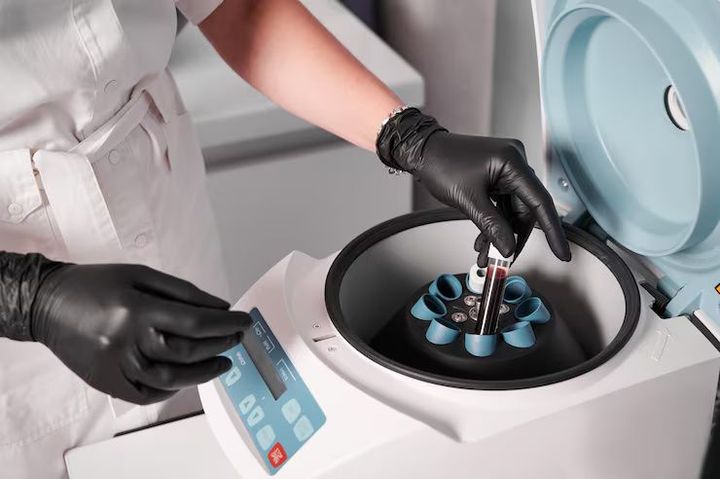
A laboratory centrifuge is one of the most common pieces of equipment found in research, healthcare, educational, and industrial laboratories. While it may look like a simple machine, it plays an important role in separating different parts of a sample quickly and accurately. Whether working with blood, chemicals, cells, or other materials, a centrifuge helps researchers and technicians prepare samples for testing and analysis. The basic idea behind a laboratory centrifuge is easy to understand. Instead of waiting for heavier particles to settle naturally over a long period, the machine spins samples at very high speeds.
This spinning creates centrifugal force, causing heavier materials to move outward while lighter materials remain closer to the center. The result is a clear separation of substances within minutes.
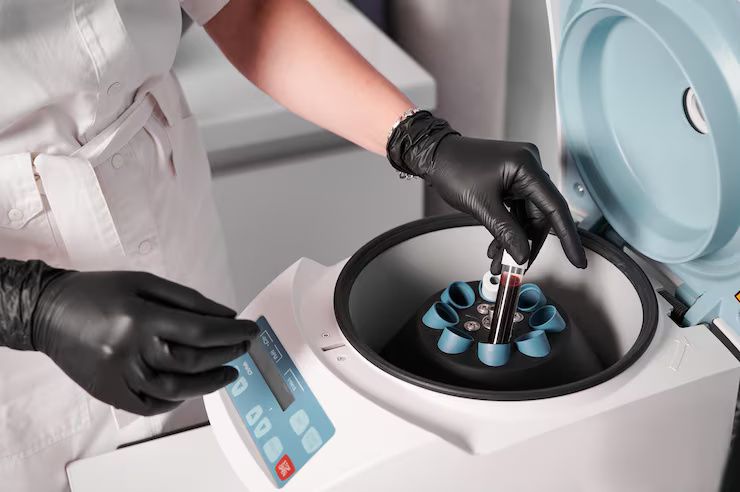
Understanding how a laboratory centrifuge works, its different types, safety practices, and common applications helps explain why it has become such an essential part of modern laboratory work.
What Is a Laboratory Centrifuge?
A laboratory centrifuge is a machine designed to separate components of liquids or mixtures according to their density. Samples are placed inside special tubes, which are then inserted into a rotating component called a rotor. As the rotor spins, particles with greater density move toward the bottom of the tube, while lighter materials remain above them.
This process creates distinct layers, making it easier to collect or examine specific parts of a sample. Depending on the application, centrifuges can operate at moderate or extremely high speeds.
Many laboratories rely on centrifuges every day because they provide consistent sample preparation for scientific analysis.
How Does a Laboratory Centrifuge Work?
The working principle is based on centrifugal force. During rotation, the spinning motion creates acceleration that pushes denser particles outward more rapidly than gravity alone.
The process generally follows these steps:
- Samples are placed into centrifuge tubes.
- The tubes are balanced evenly inside the rotor.
- The desired speed and running time are selected.
- The rotor begins spinning.
- Components separate according to their density.
- After the cycle finishes, the separated layers are ready for further examination.
This simple yet effective process supports many laboratory procedures across different scientific fields.
Main Components of a Laboratory Centrifuge
Although models vary in size and complexity, most laboratory centrifuges contain similar parts.
Rotor
The rotor holds the sample tubes during spinning. Different rotor designs are suitable for different applications.
Motor
The motor provides the rotational movement needed to generate centrifugal force.
Control Panel
Modern centrifuges include digital controls that allow users to set speed, running time, and sometimes temperature.
Lid and Safety Lock
The lid remains securely locked while the machine is operating, helping prevent accidental opening.
Sample Tubes
Samples are placed into specially designed tubes made from materials that can withstand high rotational forces.
Types of Laboratory Centrifuges
Different laboratory activities require different centrifuge designs.
Clinical Centrifuge
Often found in healthcare laboratories, this type separates blood components for diagnostic testing.
Microcentrifuge
A microcentrifuge works with very small sample volumes, making it useful in biology and molecular research.
Refrigerated Centrifuge
Some biological samples are sensitive to heat. Refrigerated centrifuges maintain low temperatures during operation to help preserve sample quality.
High-Speed Centrifuge
These machines rotate much faster than standard centrifuges and are suitable for separating smaller particles.
Ultracentrifuge
Ultracentrifuges reach extremely high rotational speeds, allowing scientists to separate tiny particles such as viruses, proteins, and other microscopic materials used in advanced research.
Common Applications
Laboratory centrifuges support many scientific activities.
Medical Laboratories
Blood samples are commonly separated into plasma, serum, and blood cells before testing. This preparation helps laboratories perform many routine diagnostic procedures.
Biological Research
Researchers use centrifuges to separate cells, DNA, RNA, proteins, and other biological materials for detailed analysis.
Chemical Laboratories
Different liquid mixtures can be separated to prepare samples for chemical testing.
Pharmaceutical Development
Centrifuges assist in sample preparation during various stages of medicine research and quality evaluation.
Environmental Studies
Water and soil samples often contain suspended particles that require separation before analysis.
Food and Beverage Testing
Scientists examine ingredients, contaminants, and quality characteristics by separating materials from liquid samples.
Why Sample Balancing Matters
Balancing is one of the most important steps before starting a centrifuge.
Every sample tube should have another tube directly opposite it with nearly the same weight. An unbalanced rotor can create excessive vibration, reduce accuracy, and place unnecessary stress on the equipment.
Many modern centrifuges include imbalance detection systems that stop operation if the load is uneven, but careful preparation remains an important responsibility for laboratory personnel.
Factors That Affect Separation
Several settings influence how effectively a centrifuge separates materials.
Rotational Speed
Higher rotational speeds generally produce stronger centrifugal force.
Running Time
Longer spinning periods allow particles additional time to separate.
Rotor Type
Different rotor designs produce different separation patterns depending on the application.
Sample Density
Materials with greater differences in density usually separate more easily.
Temperature
Some samples require temperature control throughout the centrifugation process to maintain their stability.
Safety Practices
Although laboratory centrifuges are designed with multiple safety features, proper handling remains essential.
Important safety practices include:
- Read operating instructions before use.
- Balance every sample carefully.
- Inspect tubes for cracks or damage.
- Close and lock the lid completely.
- Wait until the rotor stops before opening the machine.
- Clean spills immediately.
- Perform routine inspection and maintenance according to laboratory procedures.
These simple habits help maintain safe operation while supporting accurate laboratory results.
Routine Maintenance
Regular maintenance helps keep a laboratory centrifuge operating reliably over time.
Maintenance activities may include:
- Cleaning the rotor after use
- Inspecting seals and moving parts
- Checking electrical connections
- Looking for signs of corrosion
- Verifying speed accuracy
- Examining sample holders for wear
Keeping equipment clean also helps prevent sample contamination between different laboratory procedures.
Choosing the Right Laboratory Centrifuge
Different laboratories have different needs, so selecting a centrifuge depends on several factors.
Important considerations include:
- Sample volume
- Required rotational speed
- Rotor compatibility
- Temperature requirements
- Available laboratory space
- Expected frequency of use
- Safety features
- Maintenance requirements
Matching these factors to the intended laboratory work helps support efficient sample preparation.
Recent Developments
Modern laboratory centrifuges continue to improve through advances in engineering and digital technology.
Many current models include programmable operating cycles, digital touch displays, automatic imbalance detection, electronic data recording, quieter operation, and energy-efficient motors. These improvements make daily laboratory work more consistent while helping users operate the equipment with greater confidence.
As laboratory techniques continue to evolve, centrifuge technology is also adapting to support increasingly precise scientific investigations.
Conclusion
A laboratory centrifuge is an essential piece of laboratory equipment that uses centrifugal force to separate materials according to their density. From medical diagnostics and biological research to environmental studies and chemical analysis, it supports accurate sample preparation across many scientific disciplines.
Although the machine operates using a straightforward principle, achieving reliable results depends on selecting appropriate settings, balancing samples correctly, following safe operating practices, and maintaining the equipment regularly. With continued improvements in design and technology, laboratory centrifuges remain an important tool that helps laboratories perform efficient and dependable scientific analysis.