Automatic Loading Systems Guide: Explore Types, Components, Capacity, Applications, and Safety Factors
An automatic loading system is a mechanical or automated arrangement used to move, position, load, or transfer materials and products with limited manual handling. Automatic loading systems are used in manufacturing plants, warehouses, distribution centers, packaging operations, logistics facilities, and other environments where materials must move between different stages of a process.
Traditional loading often depends heavily on workers, forklifts, pallet equipment, or manual positioning. As production and material-handling processes became more organized, automated equipment was developed to move products according to defined routes and sequences.
An automatic loading system can include conveyors, lifting mechanisms, robotic arms, sensors, control panels, rollers, transfer units, loading platforms, and other components. The exact arrangement depends on what is being loaded, where it needs to move, its weight and dimensions, and the required operating sequence.
How Automatic Loading Systems Developed
Early material-handling systems focused on simple mechanical movement, including rollers, chutes, hoists, and conveyor belts. Later systems added motors, switches, sensors, and programmable controls, allowing equipment to perform repeated movements with less direct human intervention.
Modern systems can connect several machines into one material flow. For example, a package may move from a conveyor to a positioning station, pass through an inspection point, and then continue toward a loading area.
What Automatic Loading Means
Automatic loading does not always mean that an entire process operates without people. In many facilities, automation handles repetitive movement while workers monitor equipment, perform inspections, manage exceptions, or carry out activities that require judgment.
The level of automation can range from partially automated loading equipment to integrated systems using programmable logic controllers, sensors, robotic equipment, and warehouse-management or production-control software.
Importance
Automatic loading systems are important because material movement can become a significant part of industrial and logistics operations. Moving heavy, repetitive, or frequently handled materials manually can require considerable physical effort and careful coordination.
Automation can help organize the movement of products between defined points. It can also make material flow more predictable when equipment is correctly configured and maintained.
Problems Addressed by Automatic Loading
Automatic loading systems can address several common material-handling challenges:
- Repetitive movement between production stages
- Transfer of heavy or bulky materials
- Loading and unloading at defined stations
- Irregular material flow
- Limited space around loading areas
- Manual positioning of standardized products
- Repeated loading sequences
- Coordination between conveyors and processing equipment
The actual effect depends on the equipment design, operating environment, material characteristics, and control system.
Who Uses Automatic Loading Systems?
These systems can be found in industries such as:
- Manufacturing
- Automotive production
- Food and beverage processing
- Packaging
- Warehousing
- E-commerce distribution
- Agriculture
- Pharmaceutical manufacturing
- Consumer goods production
- Mining and bulk material handling
Different industries use different loading methods because products may range from lightweight cartons to pallets, containers, bags, components, or bulk materials.
Types of Automatic Loading Systems
Automatic loading systems can be classified according to the method used to move and position materials.
Conveyor-Based Loading Systems
Conveyor systems use belts, rollers, chains, or other moving surfaces to transport products from one location to another. They are frequently integrated with sensors and automated controls to regulate product movement.
Belt conveyors are suitable for many packaged products, while roller conveyors can be used for cartons, containers, pallets, and other relatively stable loads.
Robotic Loading Systems
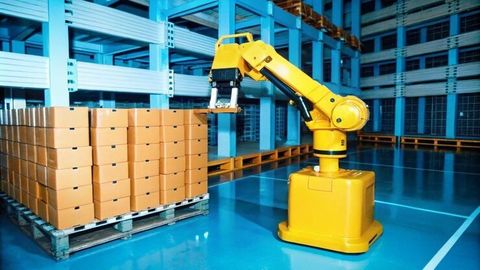
Robotic systems use programmable robotic arms or other automated positioning equipment to pick, move, orient, and place products. They can be integrated with conveyors, vision systems, sensors, and safety equipment.
Robotic loading is particularly useful where products must be positioned according to a repeated pattern or transferred between different process stages.
Pallet Loading Systems
Pallet loading systems are designed to place products onto pallets or move prepared pallets into a designated area. They can include conveyors, pallet dispensers, lifting mechanisms, palletizers, and transfer units.
The system must account for pallet dimensions, product arrangement, load distribution, and maximum permitted weight.
Truck and Container Loading Systems
These systems help move products between a facility and a truck or container. Depending on the design, equipment may use telescopic conveyors, extendable conveyors, rollers, lifting platforms, or automated positioning mechanisms.
Loading arrangements vary according to the vehicle, product type, loading height, available space, and facility layout.
Bulk Material Loading Systems
Bulk loading equipment is used for materials such as grains, minerals, aggregates, powders, and other loose products. Systems can use conveyors, screw conveyors, bucket elevators, hoppers, feeders, or loading chutes.
The capacity of these systems is often described using a mass-flow or volume-flow measurement rather than the number of individual products handled.
Components of Automatic Loading Systems
An automatic loading system is usually made up of several interconnected components.
Conveyors and Transfer Mechanisms
Conveyors provide the physical route for moving materials. Depending on the application, the system may use belts, rollers, chains, screws, buckets, or specialized transfer mechanisms.
Motors and Drive Units
Electric motors provide mechanical power to conveyors, rollers, pumps, lifting equipment, or other moving components. Gearboxes may be used to adjust speed and torque according to the application.
Sensors
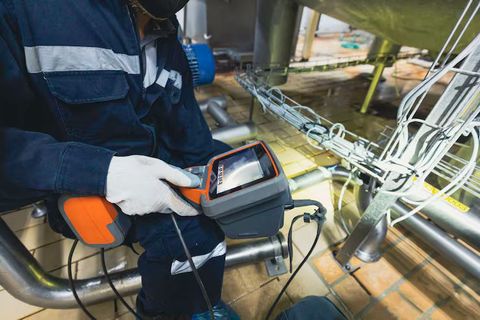
Sensors detect the presence, position, movement, or condition of materials. Photoelectric sensors, proximity sensors, limit switches, encoders, and other devices may be used.
Sensors allow the control system to determine when an item has reached a particular location or when an action should begin or stop.
Control System
The control system coordinates the different components. A programmable logic controller, commonly called a PLC, can receive signals from sensors and activate motors, valves, actuators, alarms, and other equipment according to programmed logic.
Actuators
Actuators create physical movement. They may include pneumatic cylinders, hydraulic cylinders, electric linear actuators, servo motors, or other mechanisms.
Safety Equipment
Safety components can include emergency-stop devices, guards, safety switches, light curtains, interlocks, warning indicators, and protective barriers. Their arrangement depends on the machinery and risk assessment.
Capacity of Automatic Loading Systems
Capacity describes how much material an automatic loading system can handle within a specified period. It is one of the important factors when evaluating system performance.
Capacity may be expressed as units per hour, pallets per hour, kilograms per hour, tonnes per hour, or cubic meters per hour.
| System type | Common capacity measurement | Main capacity factors |
|---|---|---|
| Carton conveyor | Units per hour | Product size, spacing, belt speed |
| Pallet conveyor | Pallets per hour | Pallet dimensions, transfer time |
| Robotic loading | Cycles or units per hour | Robot movement, payload, layout |
| Bulk conveyor | Tonnes per hour | Material density, belt width, speed |
| Screw conveyor | Volume or mass per hour | Screw diameter, pitch, material properties |
| Truck loading conveyor | Units or mass per hour | Conveyor length, loading pattern, vehicle layout |
Rated capacity should not automatically be treated as actual operating capacity. Accumulation, product variation, stoppages, loading patterns, maintenance requirements, and safety controls can affect real operating performance.
Factors That Determine Capacity
Several factors influence automatic loading capacity:
- Product weight and dimensions
- Conveyor width and speed
- Spacing between products
- Loading and unloading cycle time
- Robot payload and movement range
- Number of loading stations
- Transfer distance
- Accumulation capacity
- Equipment layout
- Control-system response
- Frequency of interruptions
Capacity calculations should therefore consider the complete system rather than one component alone.
Applications of Automatic Loading Systems
Automatic loading systems are used in many operations where products or materials must move repeatedly between defined locations.
Manufacturing
Manufacturing plants can use automatic loading equipment to transfer components between production stations. Conveyor systems may connect machining, assembly, inspection, packaging, and storage areas.
Warehousing
Warehouses can use automated conveyors, pallet handling equipment, and robotic systems to move goods between storage and dispatch areas.
Packaging
Packaging operations often require products to move at controlled intervals. Automatic loading equipment can position containers, cartons, or packaged products for subsequent processing.
Logistics
Distribution facilities use automated material-handling equipment to organize movement between receiving, storage, sorting, staging, and dispatch areas.
Agriculture and Bulk Handling
Agricultural and bulk-material facilities may use automated loading equipment to transfer grains, feed, seeds, aggregates, and other materials into storage or transport containers.
Safety Factors
Safety is an important part of automatic loading system design because moving equipment can create hazards involving crushing, trapping, impact, falling loads, unexpected movement, and access to moving components.
A risk assessment should identify hazards associated with the entire system, including conveyors, lifting devices, robotic movement, loading points, electrical equipment, and interaction between people and machines.
Guarding and Restricted Areas
Guards and barriers can prevent unintended access to hazardous moving parts. Where access is necessary for inspection or maintenance, appropriate isolation procedures should be followed.
Emergency Stops
Emergency-stop devices can provide a means of stopping machinery when an unsafe situation occurs. Their placement and operation should correspond to the machinery layout and applicable safety requirements.
Load Limits
Equipment should operate within its specified load and operating limits. Lifting equipment and related components require particular attention to safe working loads and inspection requirements.
Under the Factories Act, 1948, lifting machines, chains, ropes, and lifting tackles used in factories are subject to requirements concerning construction, maintenance, examination, safe working loads, and record keeping.
Training and Operating Procedures
People working around automated equipment should understand normal operating procedures, restricted areas, emergency controls, and isolation requirements. Maintenance activities require additional controls because equipment may restart or move unexpectedly if energy sources are not properly isolated.
Recent Updates
From 2024 through 2026, automatic loading technology has increasingly developed around robotics, connected sensors, machine monitoring, and integration with broader material-handling systems.
Robotic loading can combine programmable motion with sensors and machine-vision technology. These systems can identify product positions, adjust movement, and coordinate loading sequences where the application supports such functions.
Conveyor technology has also continued to evolve. The Bureau of Indian Standards' recent materials on conveyor systems cover different conveyor categories and associated Indian Standards, reflecting the wide range of equipment used for material handling.
India has also continued developing standards for material-handling equipment. For example, BIS lists IS 5563:2024 for screw conveyors used for industrial applications.
Digital monitoring is another ongoing trend. Sensors and controllers can collect information about equipment movement, operating conditions, and system interruptions. Such information can support process monitoring and maintenance planning.
Integration With Automated Facilities
Modern automatic loading systems are increasingly designed as part of larger material-handling networks rather than as isolated machines. Conveyors, robots, sensors, warehouse software, production controls, and inspection equipment may exchange information within one operating environment.
This approach can improve coordination between different stages, although the complexity of the system also increases the need for appropriate controls, testing, documentation, and maintenance.
Laws or Policies
In India, workplace machinery and material-handling activities are influenced by occupational safety legislation, applicable state requirements, technical standards, and sector-specific rules.
The Ministry of Labour and Employment provides the Occupational Safety, Health and Working Conditions Code, 2020 along with related implementation material and Central Rules. The ministry's current labour-code resources also include 2026 Central Rules and related notifications.
The Occupational Safety, Health and Working Conditions Code contains provisions concerning the safety of plant and machinery. It states that people responsible for erecting or installing articles for use in factories should ensure, as far as practicable, that the installation does not create an unsafe condition when used by workers. The Code's definition of an article includes plant and machinery.
The Factories Act, 1948 also contains provisions concerning lifting machines and lifting equipment, including examination by a competent person, safe working loads, and maintenance requirements.
BIS provides a “Know Your Standard” portal where Indian Standards can be searched by IS number or keyword. The portal can provide access to standard documents, amendments, notifications, testing information, and related details.
BIS also maintains machinery safety information under its conformity-assessment framework. Its current resources include product-specific information for machinery safety certification under Scheme-X.
The exact requirements applicable to an automatic loading system depend on its design, location, electrical configuration, lifting function, material handled, and industrial activity. Applicable central and state requirements should therefore be checked for the specific installation.
Tools and Resources
Several tools can help with understanding and planning automatic loading systems.
Capacity Calculators
Conveyor capacity calculators can estimate material flow using variables such as belt width, speed, product dimensions, spacing, or material density. For automated unit handling, cycle-time calculations can estimate the number of products handled during a defined operating period.
Layout Software
Computer-aided design and facility-layout software can help visualize conveyor routes, loading stations, equipment positions, access areas, and material-flow paths before physical installation.
Load and Throughput Records
A simple process record can track product dimensions, weight, cycle time, equipment speed, interruptions, and throughput. These records can help identify differences between theoretical capacity and actual system performance.
Standards and Regulatory Resources
BIS resources are useful for researching applicable Indian Standards. The Know Your Standard portal allows searches using a standard number or product-related keyword.
The Ministry of Labour and Employment provides the Occupational Safety, Health and Working Conditions Code and associated regulatory resources for workplace safety information.
Equipment Manuals
Manufacturer manuals remain important references for specific equipment. They normally contain rated loads, operating limits, electrical requirements, control information, inspection procedures, and safety instructions.
FAQs
What is an automatic loading system?
An automatic loading system is equipment designed to move, position, transfer, or load materials with limited direct manual handling. It can include conveyors, robots, sensors, actuators, and programmable controls.
How does an automatic loading system work?
An automatic loading system uses sensors and control logic to coordinate mechanical equipment. A sensor can detect a product, the controller can process that information, and a conveyor, actuator, or robot can then perform the programmed movement.
What determines automatic loading system capacity?
Capacity depends on factors such as product dimensions, product weight, conveyor speed, spacing, cycle time, equipment layout, robot movement, and the number of loading stations. Rated capacity and actual operating throughput can differ.
What are the main components of an automatic loading system?
Common components include conveyors or transfer equipment, motors, drives, sensors, PLCs or other controllers, actuators, structural frames, loading stations, and safety devices. The exact configuration depends on the application.
What safety factors should be considered for automatic loading systems?
Important factors include guarding, emergency stops, safe working loads, access control, electrical safety, risk assessment, maintenance procedures, and protection from unexpected machine movement. Applicable workplace regulations and equipment-specific instructions should also be followed.
Conclusion
Automatic loading systems combine mechanical equipment, sensors, controls, and safety components to move materials through defined loading processes. Common configurations include conveyor-based, robotic, pallet, truck, container, and bulk-material systems. Capacity depends on equipment characteristics, material properties, cycle times, and system layout rather than on one component alone. Recent developments have increased the use of robotics, connected monitoring, and integrated material-handling systems, while Indian safety requirements and technical standards provide important references for applicable installations.